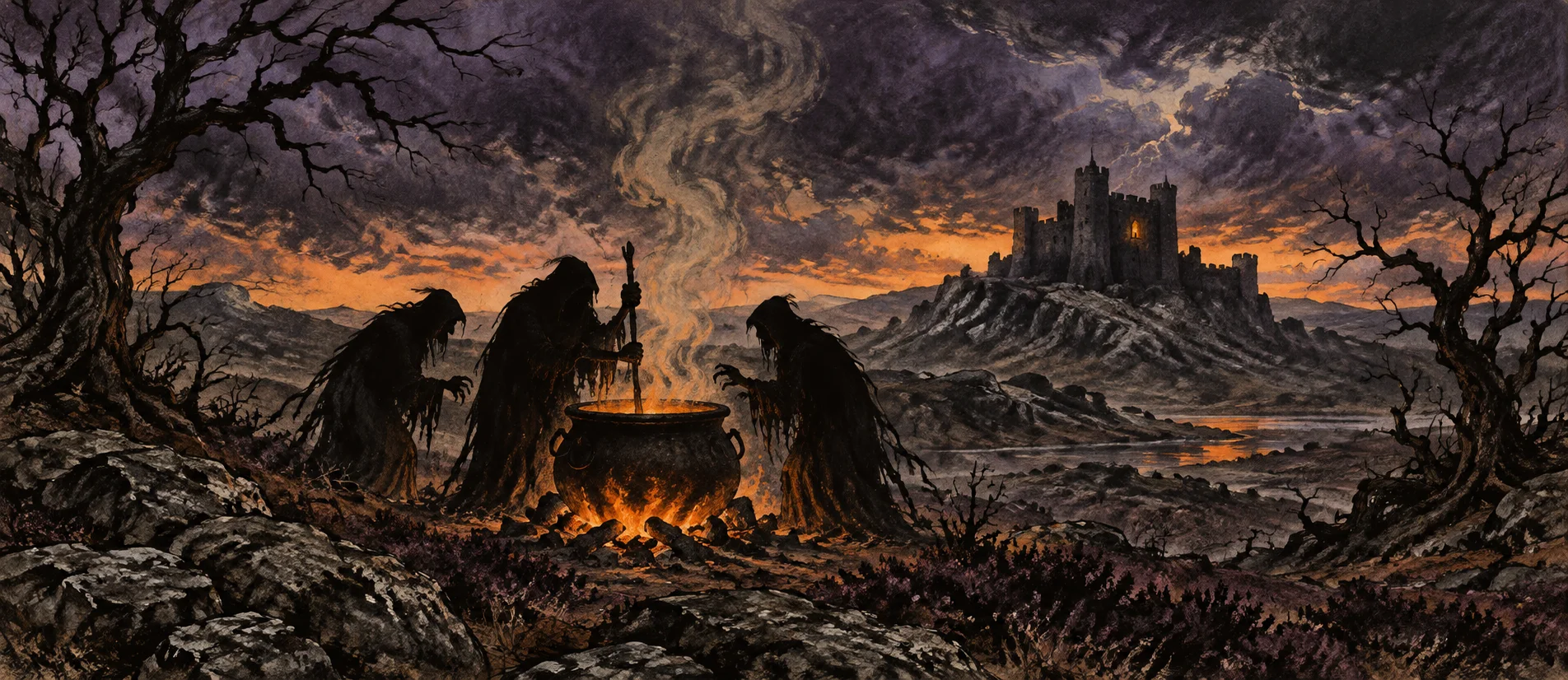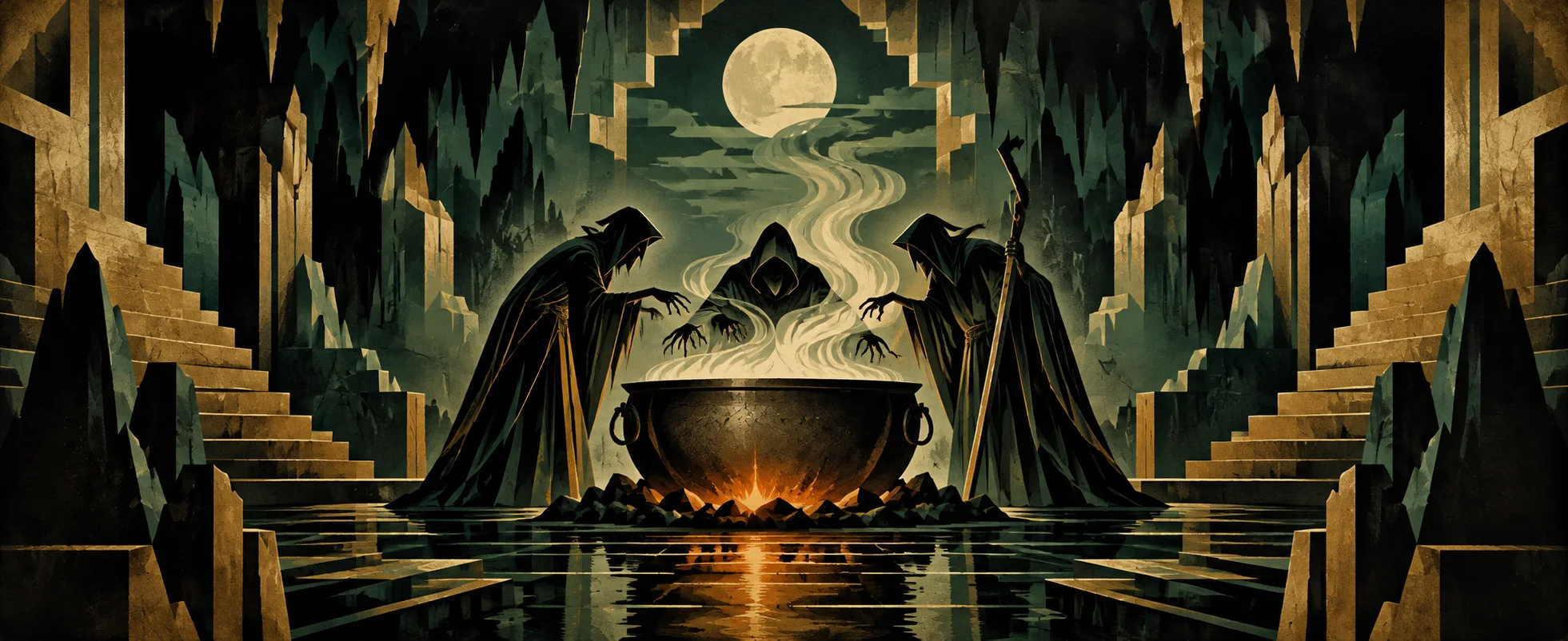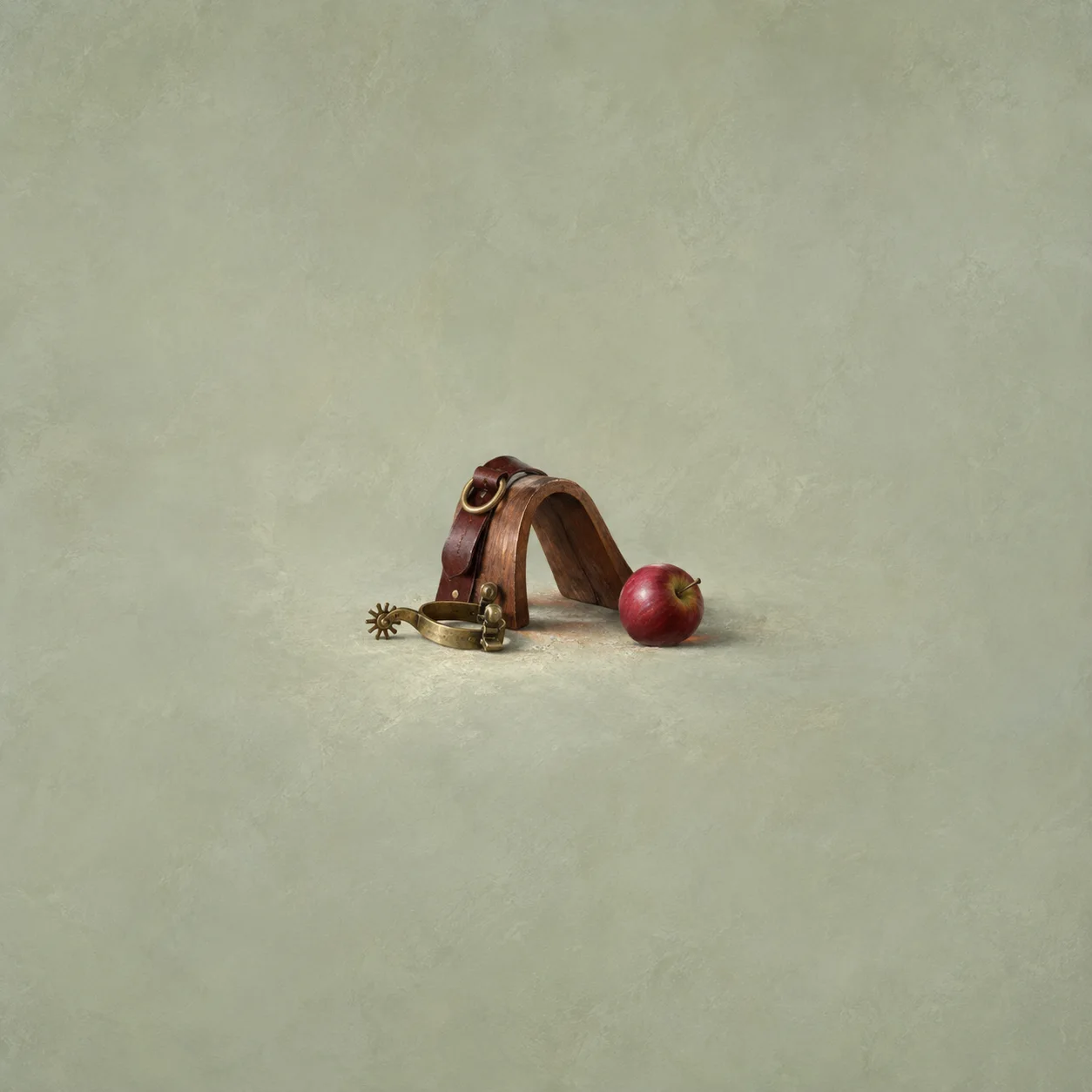
Original artwork, not a still
Macbeth ‧ 1623
If it were done, when 'tis done, then 'twere well it were done quickly.
Behind the line
What it means
Our interpretation.
The speaker says swift action would be preferable if doing the deed could also bring it entirely to an end. That condition matters: the line questions whether consequences can really stop with the act itself. Its repeated forms of “done” turn apparent decisiveness into uncertainty.
Context reviewed