Original artwork, not a still
Macbeth · 1623
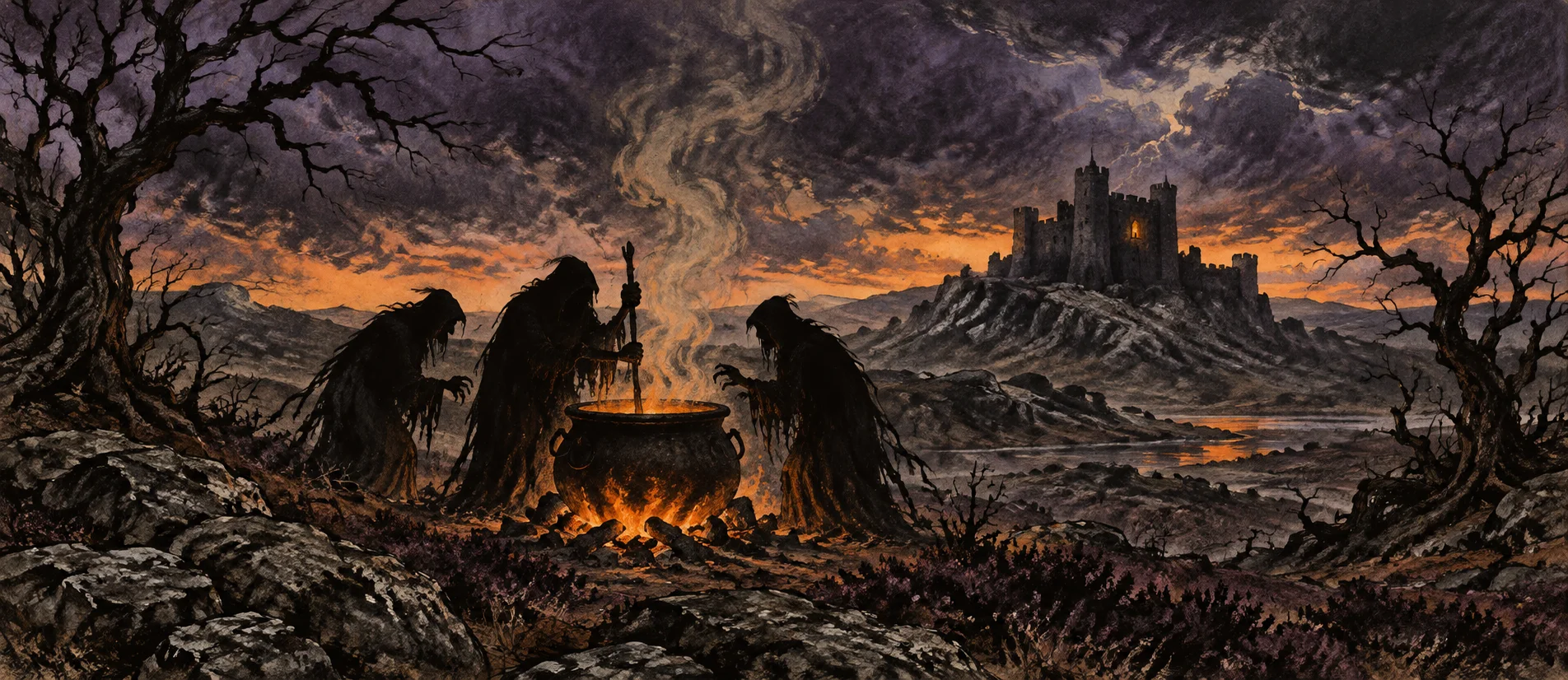
Double, double toil and trouble; Fire burn and cauldron bubble.
Behind the line
What it means
Our interpretation.
The sisters' spell is the most famous bit of stage witchcraft there is, with a driving rhythm that sounds like a pot stirring itself. It sets up the play's central irony: they hand Macbeth riddles that sound like guarantees. The couplet has become shorthand for any bubbling mess or mischief, from Halloween cards to pantomime, and it has been borrowed by countless fantasy stories as the standard way to write a coven.
Context reviewed
In context
Spoilers for MacbethShow the scene
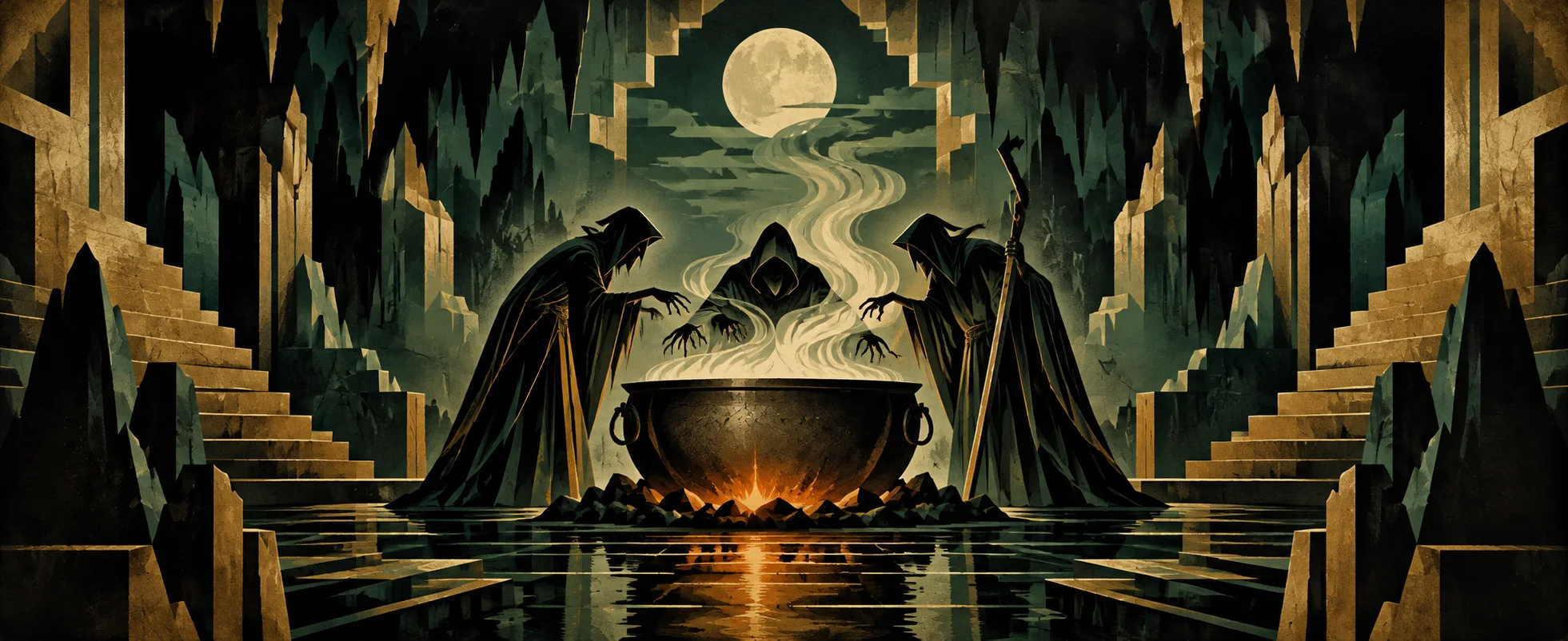
In Act 4, Scene 1 of Macbeth, three witches gather around a bubbling cauldron in a cavern and chant these words as a refrain while they drop in ingredients. Macbeth, now king of Scotland and desperate to be sure of his future, arrives and demands answers. They summon apparitions, each a prophecy: a crowned child holding a tree says he is safe until Great Birnam Wood moves to Dunsinane Hill, and another says no man born of woman can harm him. Macbeth takes both as promises of invincibility, and the play shows how wrong he is. Scholars think the play was written after James I took the English throne in 1603.
Sources (2)
- Wikipedia: MacbethSynopsis, Acts 4 and 5; DateReference checked
- Wikiquote: MacbethAct IVReference checked
Context reviewed