Original artwork, not a still
Animal Farm · 1945
The pigs' last commandment, George Orwell's Animal Farm (1945)
All animals are equal, but some animals are more equal than others.
Behind the line
What it means
Our interpretation.
The original rule was 'All animals are equal'; the pigs edit it by adding one clause, and the sentence breaks. It is the shortest possible account of how a revolution ends up with a new ruling class. Politicians and columnists have borrowed it for decades whenever a rule is bent for the people who wrote it.
Context reviewed
In context
Spoilers for Animal FarmShow the scene
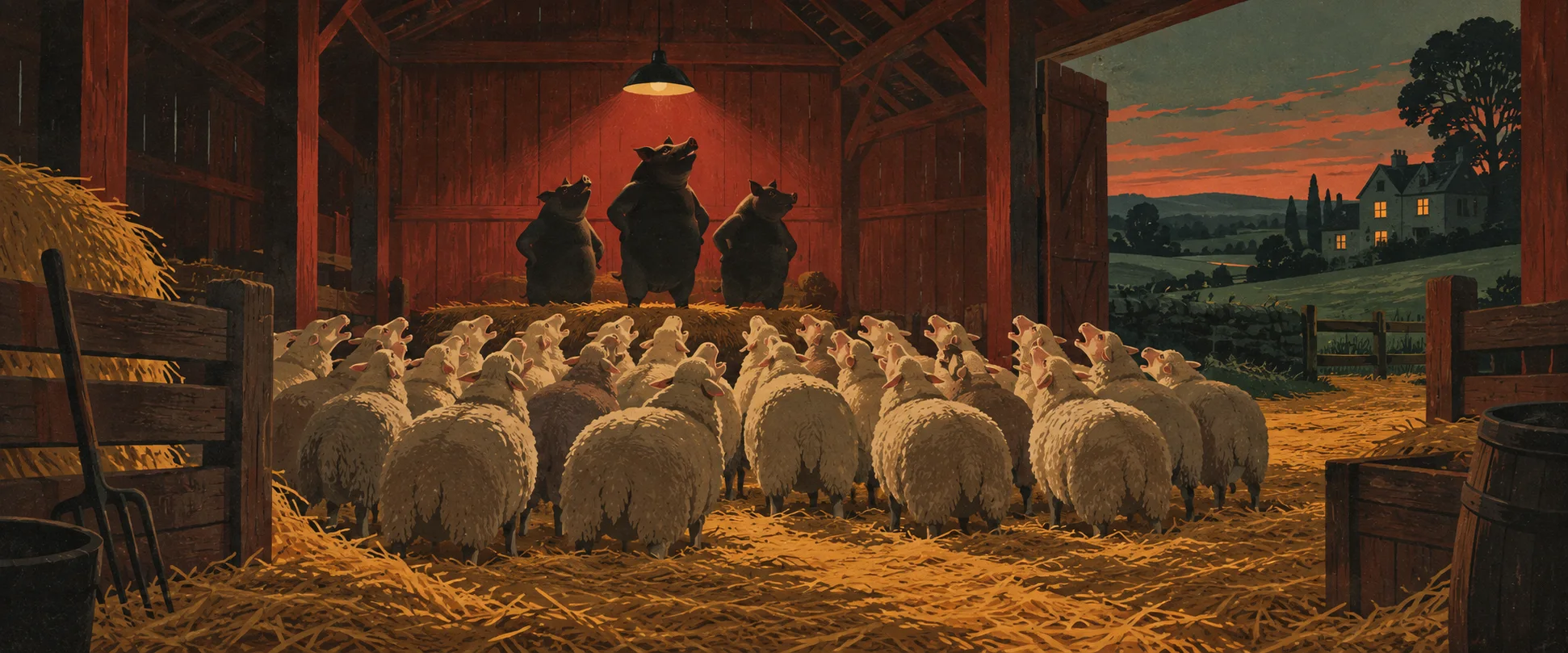
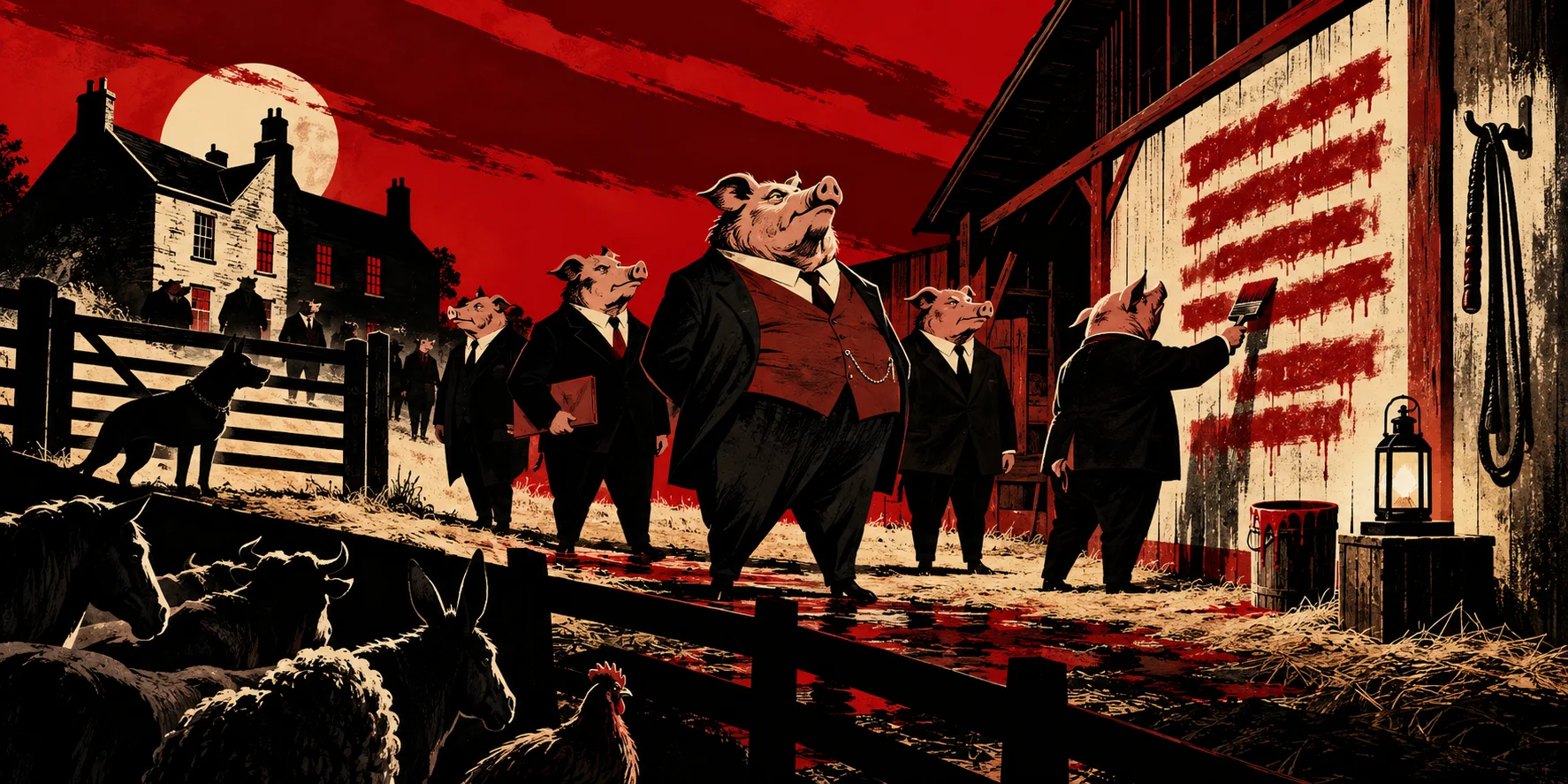
In the closing chapter of Orwell's fable, Napoleon and the pigs have taken to walking on two legs, and the sheep who once bleated "four legs good, two legs bad" now bleat that two legs are better. Then the animals see that the Seven Commandments painted on the barn have been boiled down to a single sentence: all animals are equal, but some animals are more equal than others. Soon after, the pigs entertain the neighbouring farmer Mr. Pilkington at dinner and Napoleon announces that the farm's old name, Manor Farm, is back. Animal Farm was first published in England on 17 August 1945.
Sources (2)
- Animal Farm (Wikiquote)Quotes from the closing chapterReference checked
- Animal Farm (Wikipedia)Lead; Plot summaryReference checked
Context reviewed