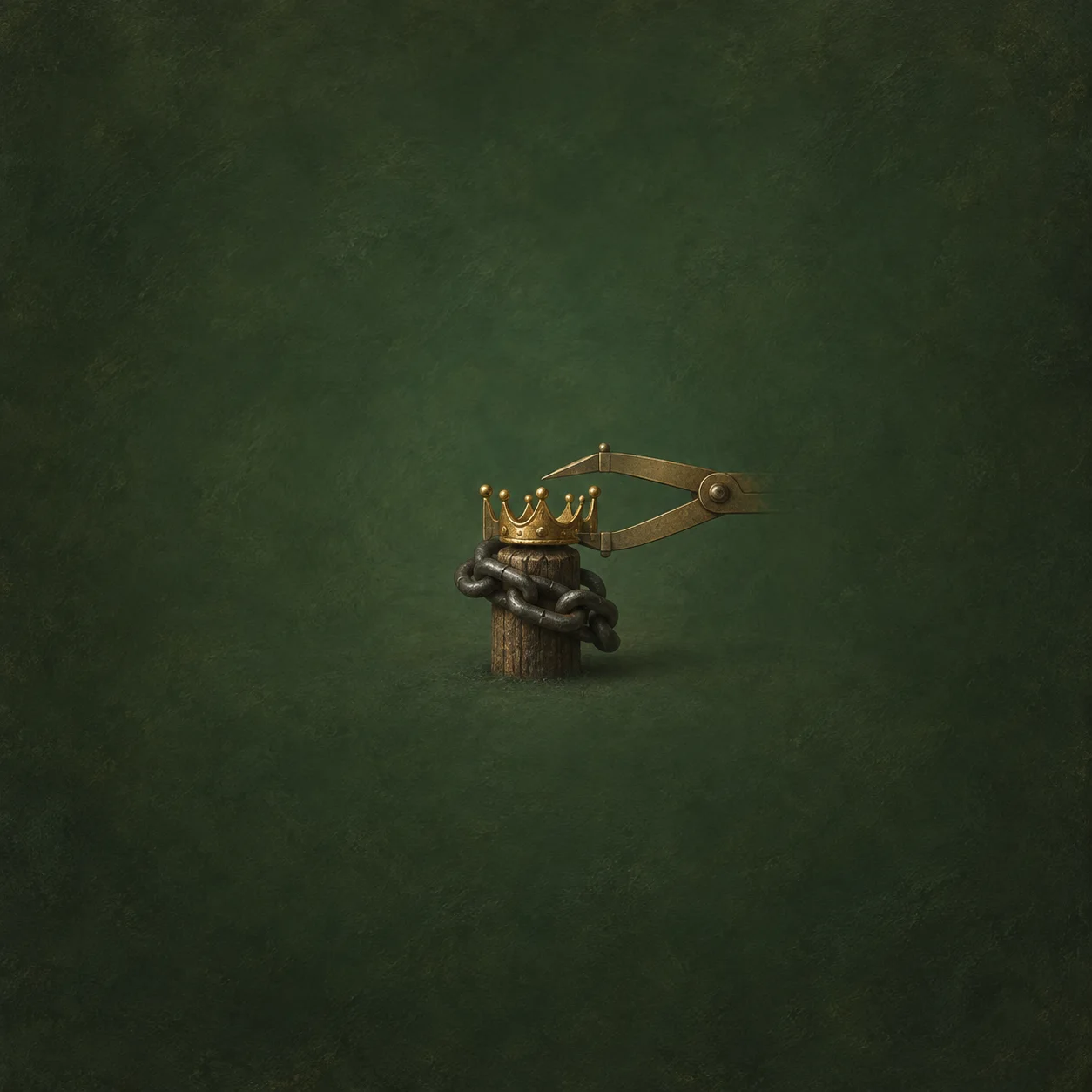
Original artwork, not a still
There’s nothing in the world so demoralizing as money.
Behind the line
What it means
Our interpretation.
Creon speaks it as an accusation, which makes it ironic: he is the one so sure of his own righteousness that he blames cash for what is in fact Antigone's defiance. As a stand-alone line it reads as a plain, cynical truth about greed, which is why quotation lists keep it. Fans of the play still cite it as a clue to Creon's suspicious, authoritarian mind.
Context reviewed
In context
Spoilers for AntigoneShow the scene
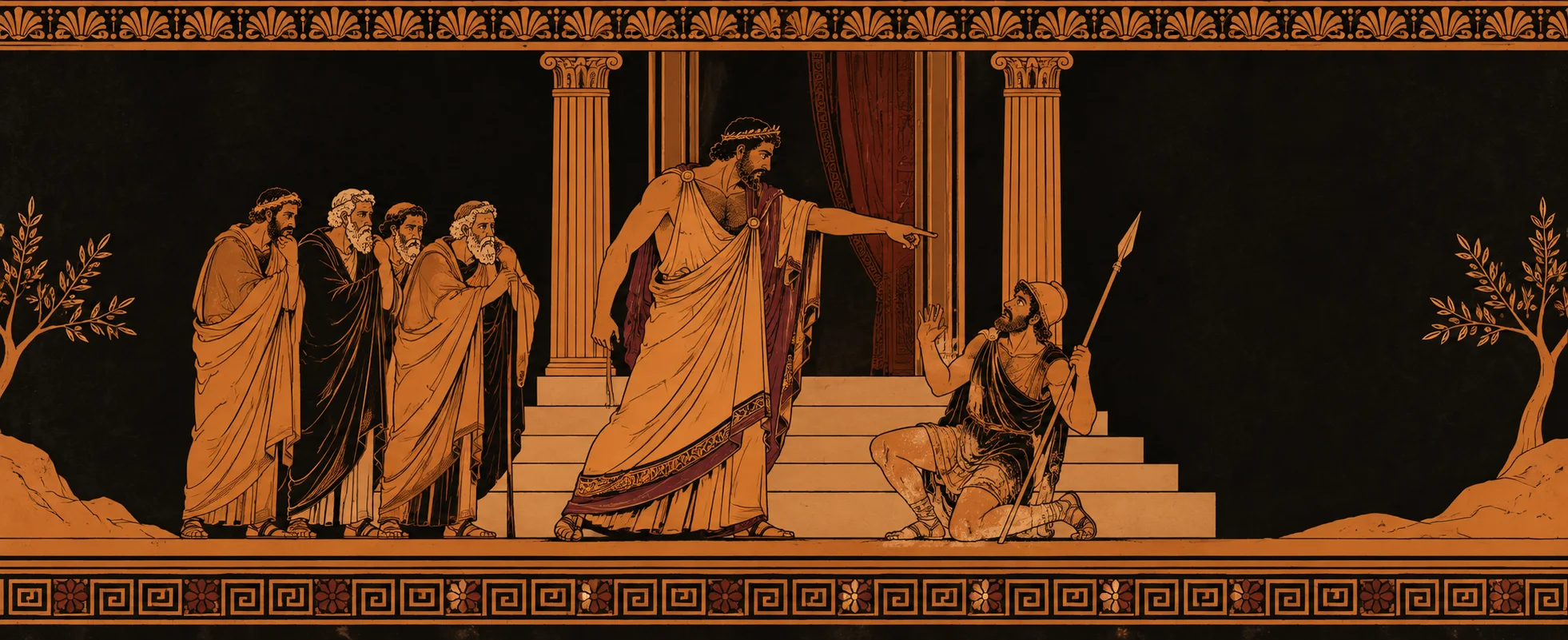
In Sophocles's Antigone, King Creon has forbidden burial of Polyneices, who attacked Thebes. A guard arrives nervously to report that someone has covered the body with dust, and Creon, furious and refusing to believe the gods could favour a traitor, decides that his political enemies must have bribed the watchmen. His rant against money follows, claiming it wrecks cities, drives men from their homes and teaches people every kind of wickedness (about lines 295-303). This wording is the Fitts and Fitzgerald version of 1938, and the line's number there is 295; other translators word it differently. Creon then threatens the guards with punishment unless they produce the culprit.
Sources (2)
- Wikiquote: SophoclesAntigone, line 295Reference checked
- Project Gutenberg: The Seven Plays in English VerseAntigone, Creon's speech to the GuardReference checked
Context reviewed