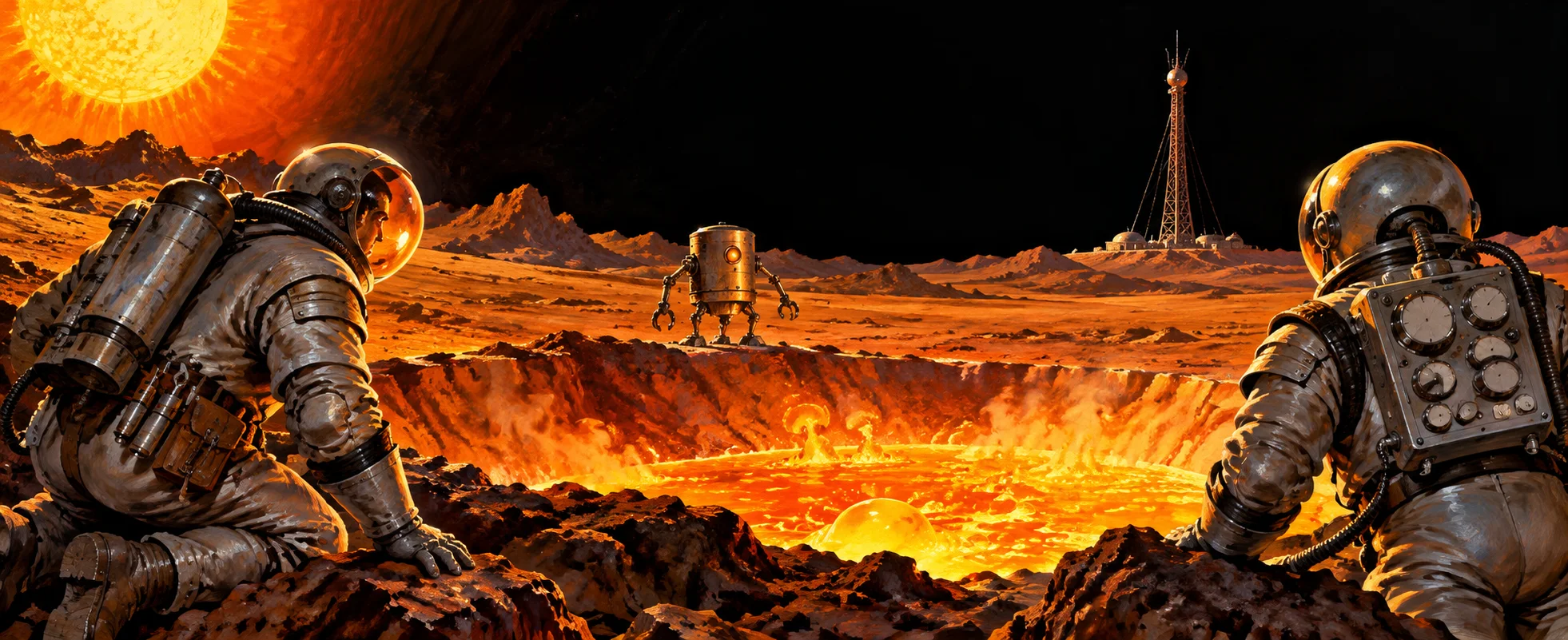
Original artwork, not a still
I, Robot · 1950
A robot may not injure a human being or, through inaction, allow a human being to come to harm.
Behind the line
What it means
Our interpretation.
The line sits at the top of a priority ladder, and the drama of Asimov's robot stories is that ladder under strain. The "through inaction" clause makes a robot answerable for harm it merely allows, a clause Asimov traced to an Arthur Hugh Clough poem. It is now the shorthand people reach for whenever AI safety or killer robots come up, although many of Asimov's stories are about the Laws failing in odd ways.
Context reviewed
In context
Spoilers for I, RobotShow the scene
The First Law is stated in "Runaround", written in October 1941 and published in the March 1942 issue of Astounding Science Fiction, later collected in I, Robot (1950). It is one of three rules from the fictional Handbook of Robotics, 56th Edition, 2058 A.D. In the story, set in 2015, Powell and Donovan are on Mercury, where the robot Speedy circles a selenium pool because the Second and Third Laws balance out. Powell finally walks out into the heat, counting on the First Law to override both and force Speedy to save him.
Sources (2)
- Wikipedia: Runaround (story)Introduction and Plot summaryReference checked
- Wikipedia: Three Laws of RoboticsThe LawsReference checked
Context reviewed