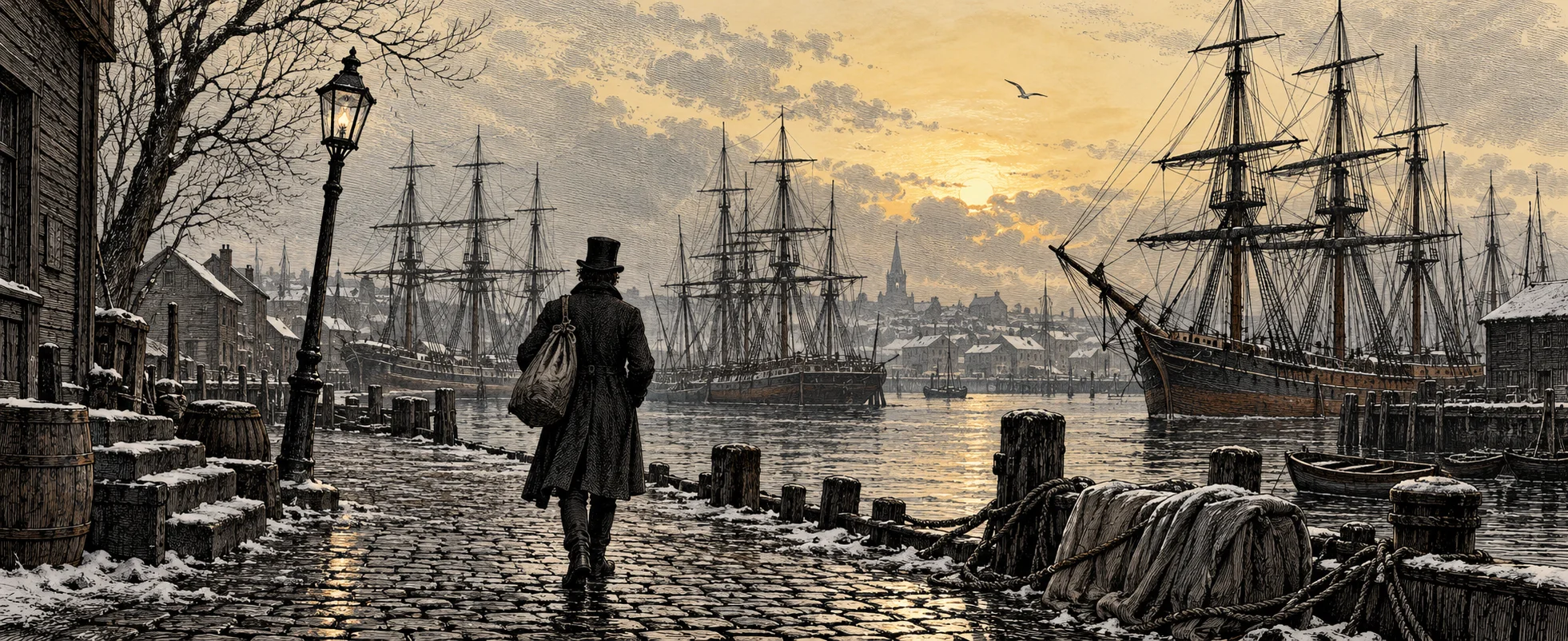
Original artwork, not a still
Moby-Dick • 1851
Call me Ishmael.
Behind the line
What it means
Our interpretation.
The invitation is half introduction, half dare. Ishmael never says that this is his name, only that we may use it, and then he disappears into the story to let Ahab and the whale take over, which is why readers still treat him as a voice more than a person. It is the model of a first line that sounds like a stranger sitting down beside you, and it is parodied, borrowed and recited more than almost any other opening in English.
Context reviewed
In context
Spoilers for Moby-DickShow the scene
These three words open Herman Melville's novel, in the first chapter, "Loomings". The narrator offers a name rather than stating one, then explains in a single long breath why he went to sea: some years ago, short of money and with nothing to hold him on shore, he decided to sail about and see the watery part of the world, a cure for the gloom of a damp, drizzly November in his soul. He ships on the whaler Pequod. At the end, he alone survives its destruction and is picked up by the Rachel. The book appeared in London as The Whale in October 1851, then in New York as Moby-Dick that November.
Sources (2)
- Wikiquote: Moby-Dicksection Loomings (1)Reference checked
- Wikipedia: Moby-Dicklead, Plot, PublicationReference checked
Context reviewed