Original artwork, not a still
Time eases all things.
Behind the line
What it means
Our interpretation.
It is Creon's cold comfort to a man whose world has just ended: not a cure for grief, but the idea that grief too has its season. In the play it sounds both kind and dismissive, hurrying Oedipus out of sight. Standing alone, it is one of the oldest forms of 'time heals', and the translation's four plain words travel far better than the situation they come from.
Context reviewed
In context
Spoilers for Oedipus RexShow the scene
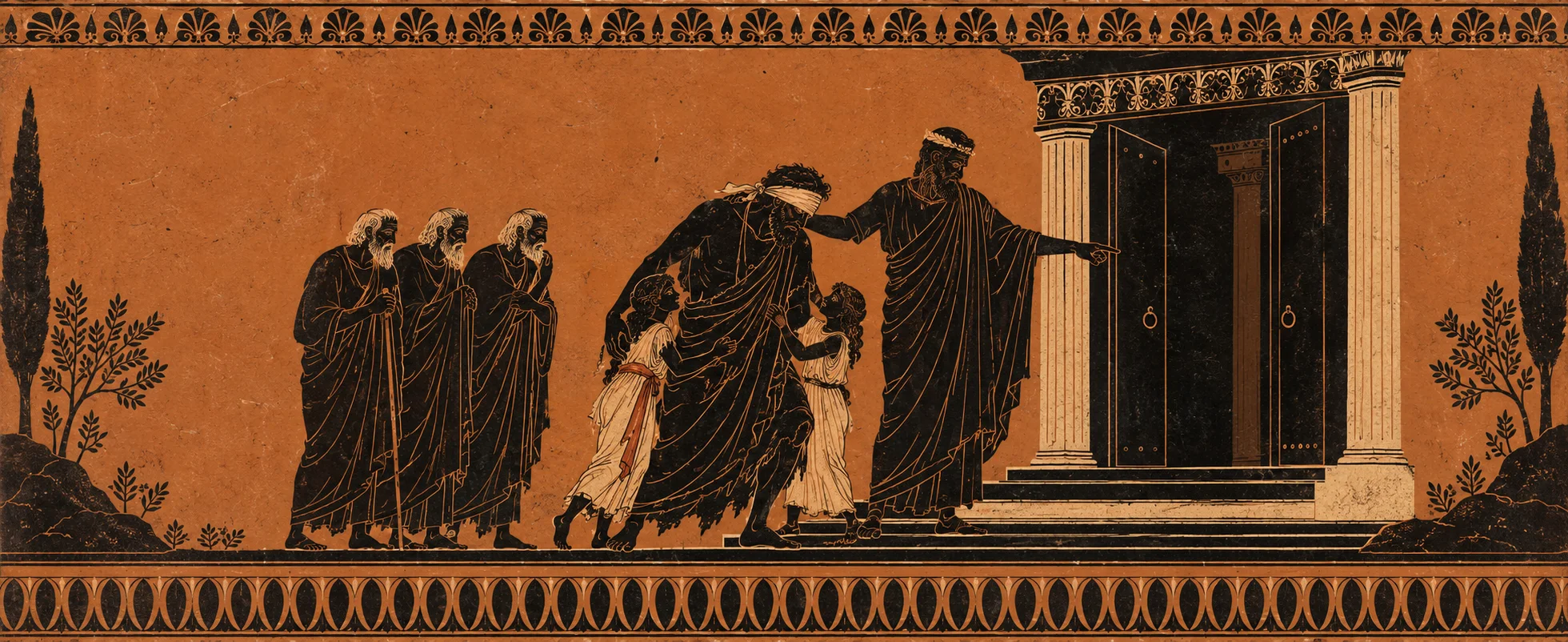
The words are spoken by Creon in the closing scene of Sophocles's Oedipus Rex, not by the playwright. Oedipus has learned the truth about himself and blinded himself, and in the last exchange Creon tells him he has wept enough and must go inside. When Oedipus bargains over exile and over his daughters, Creon cuts across his grief with a short saying. Dudley Fitts and Robert Fitzgerald's 1949 version, which gives the popular wording, renders it as "Time eases all things" (line 1516); F. Storr's older version says everything must have its day. The Chorus then closes the play.
Sources (2)
- Wikiquote: SophoclesOedipus Rex, line 1516 (tr. Fitts and Fitzgerald, 1949)Reference checked
- Plays of Sophocles, tr. F. Storr (Project Gutenberg #31)Oedipus the King, final sceneReference checked
Context reviewed