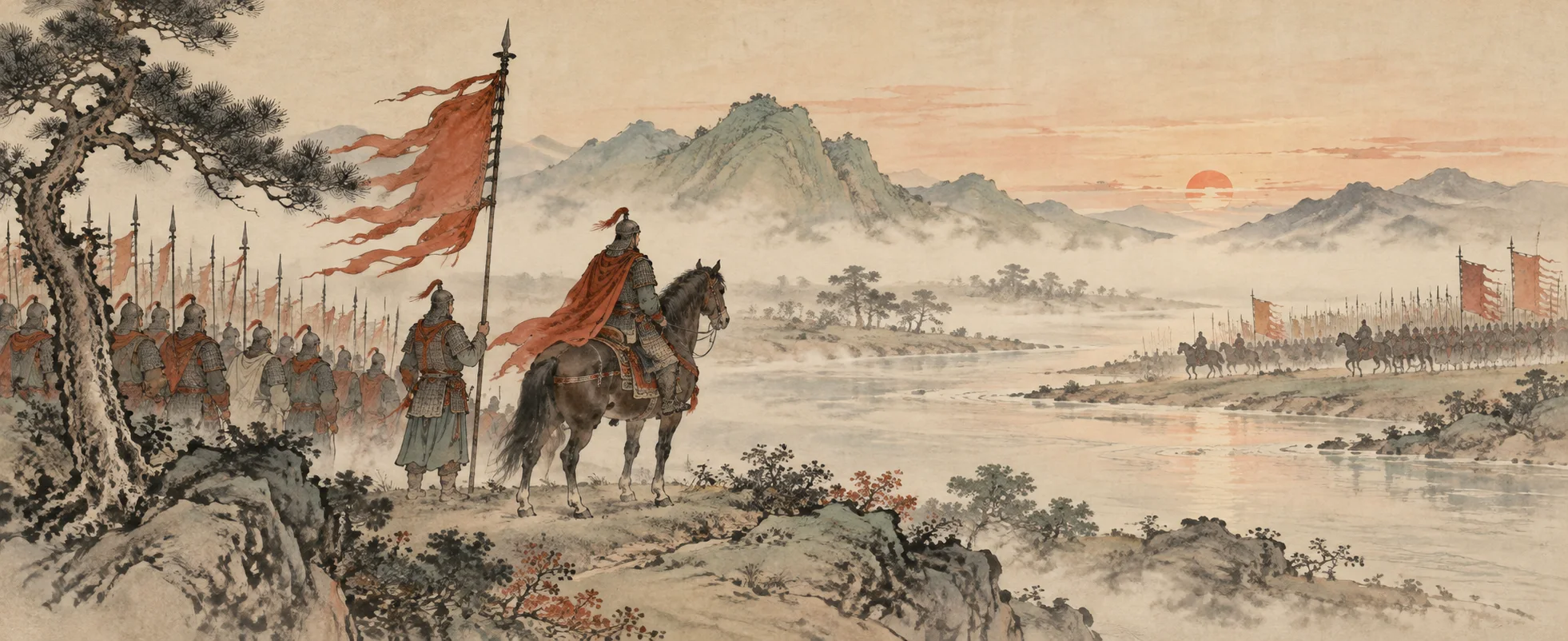
Original artwork, not a still
If you know the enemy and know yourself, you need not fear the result of a hundred battles. If you know yourself but not the enemy, for every victory gained you will also suffer a defeat. If you know neither the enemy nor yourself, you will succumb in every battle.
Behind the line
What it means
Our interpretation.
The passage is a three-part rule of thumb: self-knowledge plus knowledge of the enemy wins, one without the other loses half the time, neither loses always. It outgrew the battlefield long ago and now turns up in business books, politics and esports, most often shortened to 'know your enemy'. The popular compression drops the second and third halves, which is where the actual warning sits: knowing yourself alone is not enough.
Context reviewed
In context
Spoilers for The Art of WarShow the scene
The passage comes from the third of the thirteen chapters of The Art of War, the ancient Chinese treatise credited to the general Sun Tzu, 'Master Sun'. The chapter is about winning without fighting and how a commander should judge what he faces. This three-part wording comes from Lionel Giles's 1910 translation, the first annotated English edition. Other translators render the same Chinese differently, usually saying that knowing both yourself and your enemy means you will not be imperilled in a hundred battles. Historians doubt that a single Sun Tzu wrote the book, and some think it is the work of a later descendant, Sun Bin.
Sources (2)
- Wikipedia: The Art of Warintro, authorship and translation sectionsReference checked
- Wikiquote: Sun TzuChapter IIIReference checked
Context reviewed