Original artwork, not a still
The Lorax ‧ 1971
I speak for the trees, for the trees have no tongues.
Behind the line
What it means
Our interpretation.
The Lorax is a grumpy fairytale prophet, and this is his whole job description: someone has to talk for the things that cannot talk. The line does not argue with the Once-ler so much as shame him, and it moved far past the book. Fans use it for any environmental stance, and its echo, "We speak for the trees", turned up on a placard at the 2017 People's Climate March.
Context reviewed
In context
Spoilers for The LoraxShow the scene
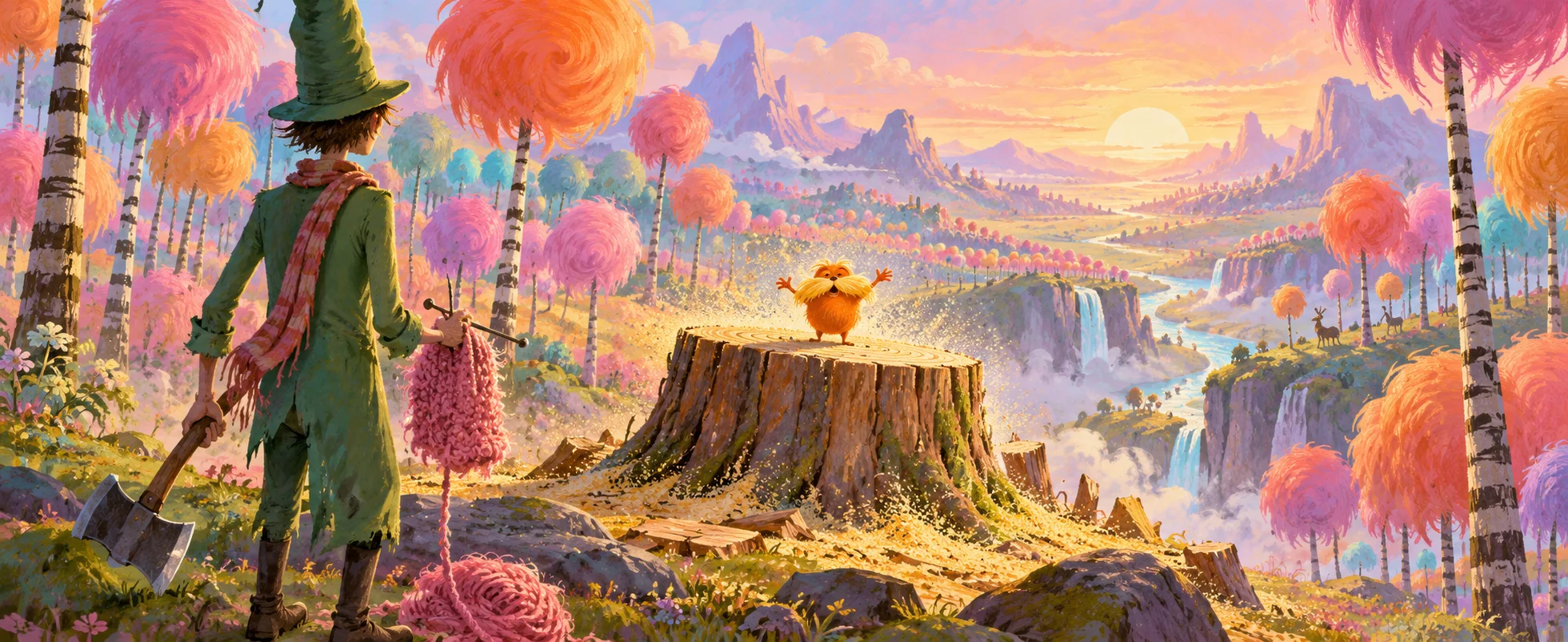
In the Once-ler's story, the young Once-ler has found a valley of Truffula trees, chopped one down and knitted its soft tuft into the first Thneed. Just then a small, furious creature pops up out of the stump with a sawdusty sneeze. He introduces himself as the Lorax, says he speaks for the trees because trees have no tongues, and demands at the top of his lungs to know what the thing is that the Once-ler has made from his Truffula tuft. The Once-ler ignores him, sells the Thneed, and brings in his relatives to expand. Dr. Seuss published the book in 1971; the CBS television special followed on February 14, 1972.
Sources (3)
- Wikiquote: Dr. Seuss, The Lorax (1971)The Lorax (1971) sectionReference checked
- Wikipedia: The LoraxPlot; 1972 television specialReference checked
- Wikipedia: The Lorax (TV special)InfoboxReference checked
Context reviewed