Behind the line
What it means
Our interpretation.
The joke is the NES-era RPG's gentle contempt for the illusion of choice: the hero's feelings are not up for negotiation, and the prompt simply loops until you agree. The script's stiff 'thou' and 'art' English gave it extra comic weight in the translation. It became shorthand for any game that offers a choice with only one real answer, and it is still quoted whenever one does.
Context reviewed
In context
Spoilers for Dragon QuestShow the scene
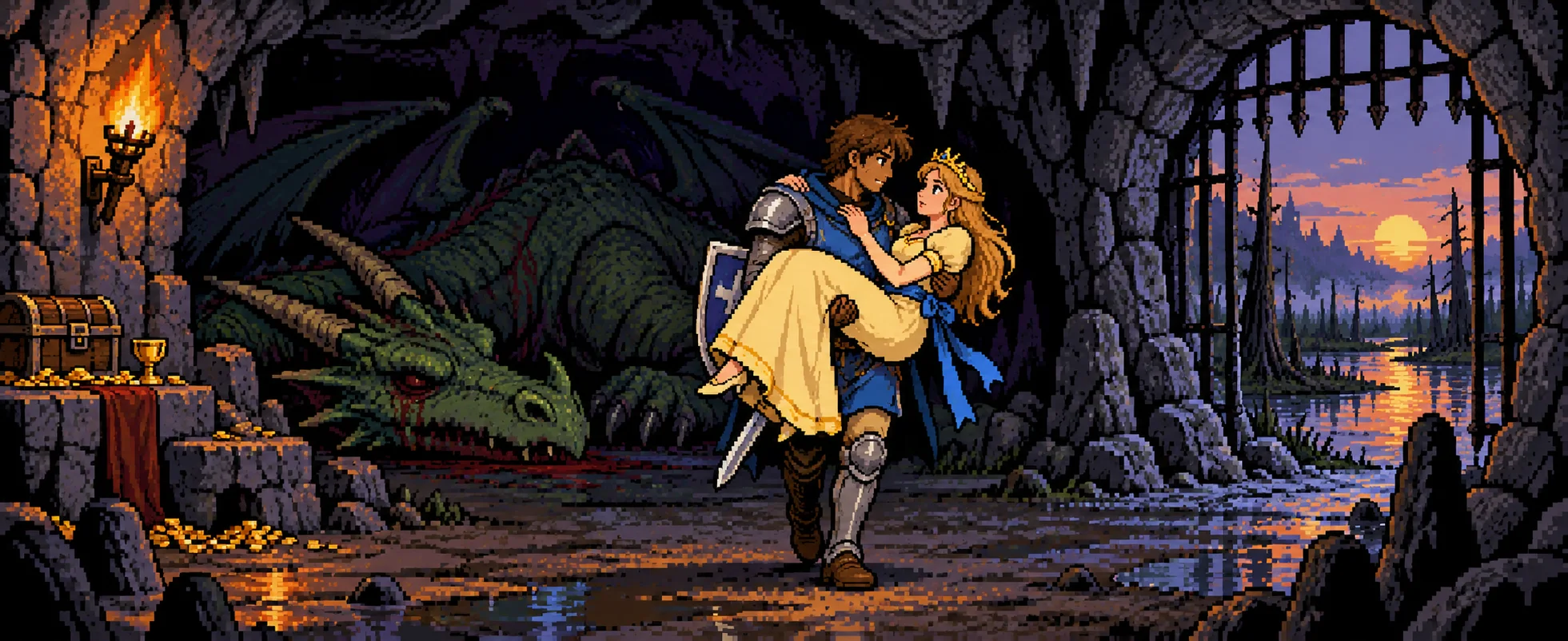
In Dragon Quest, released in North America as Dragon Warrior, the Dragonlord has captured King Lorik's daughter, Princess Gwaelin. The hero can fight a green dragon in Quagmire Cave, south of Kol, and carry her back to Tantegel Castle. Afterwards she sits on the throne beside her father, and when spoken to she asks the hero whether he loves her. Answering yes plays a short love theme. Answering no gets the refusal refused: "But thou must!", and the same yes/no question comes back.
Sources (3)
- Dragon Quest Wiki: Princess GwaelinAppearances > Dragon QuestReference checked
- Wikipedia: Dragon Quest (video game)PlotReference checked
- Wikipedia: Wizards & Warriors IIIDevelopmentReference checked
Context reviewed