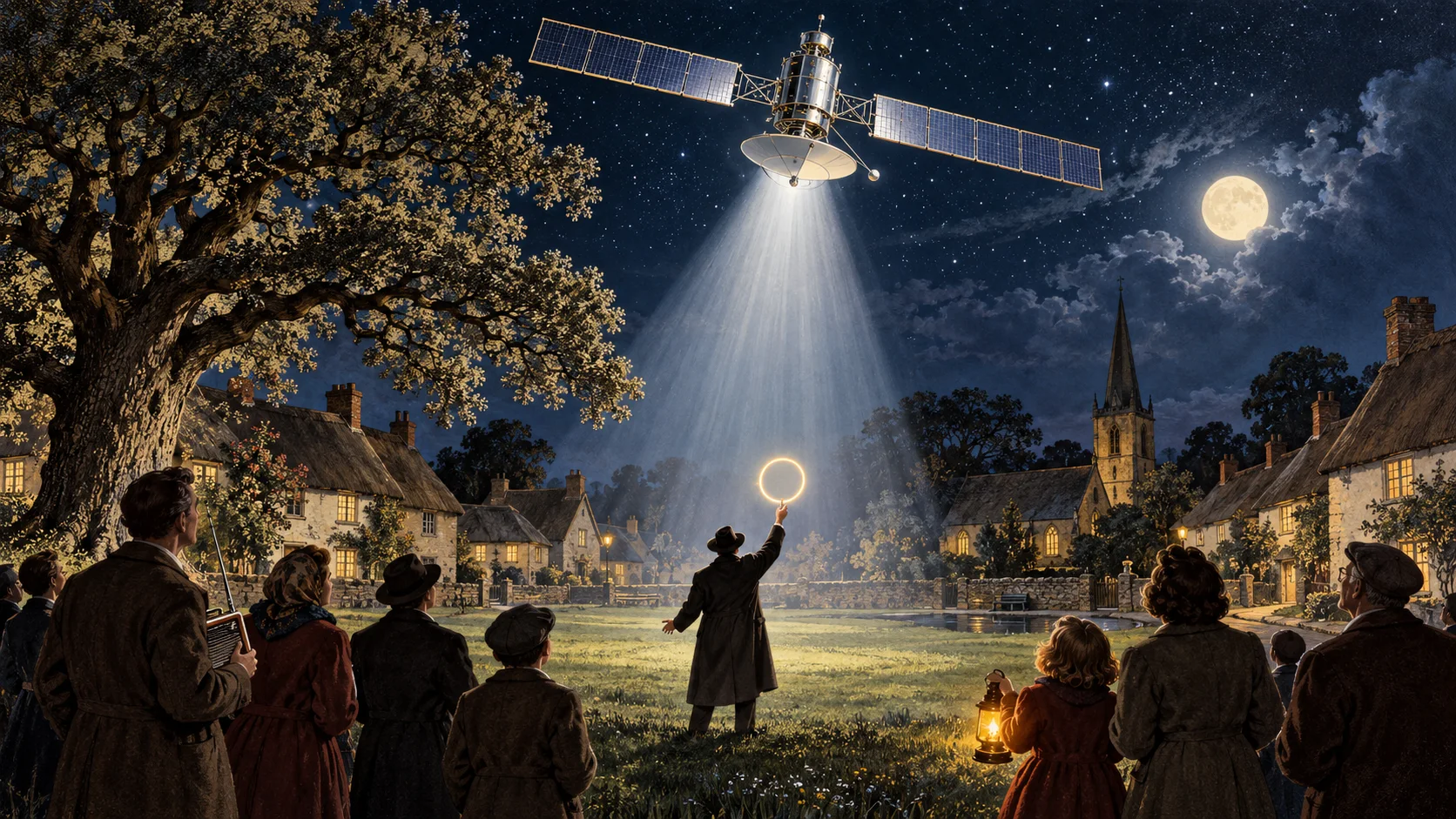
Original artwork, not a still
When a distinguished but elderly scientist states that something is possible, he is almost certainly right. When he states that something is impossible, he is very probably wrong.
Behind the line
What it means
Our interpretation.
It is a warning against confident experts, from a man who predicted communications satellites in 1945. The asymmetry is the point: saying something can be done needs one example, while saying it can't needs certainty nobody has. Engineers and science-fiction fans cite it whenever an authority declares a technology impossible, and it opened the door to the third law, which became far more famous than the first.
Context reviewed
In context
May contain spoilersShow the scene
This is the first of Arthur C. Clarke's three laws, and the only one in its original form. It appears in his essay "Hazards of Prophecy: The Failure of Imagination", first published in the book Profiles of the Future in 1962, where it was simply called "Clarke's Law". The second law was a related remark in the same essay that others later numbered, and Clarke added the famous third law about sufficiently advanced technology and magic in the 1973 revision of the book, noting that three had been good enough for Newton. A French editor numbering his assertions is one account of how the set came to be called laws.
Sources (1)
- Wikipedia: Clarke's three lawsThe laws and Origins sectionsReference checked
Context reviewed