Original artwork, not a still
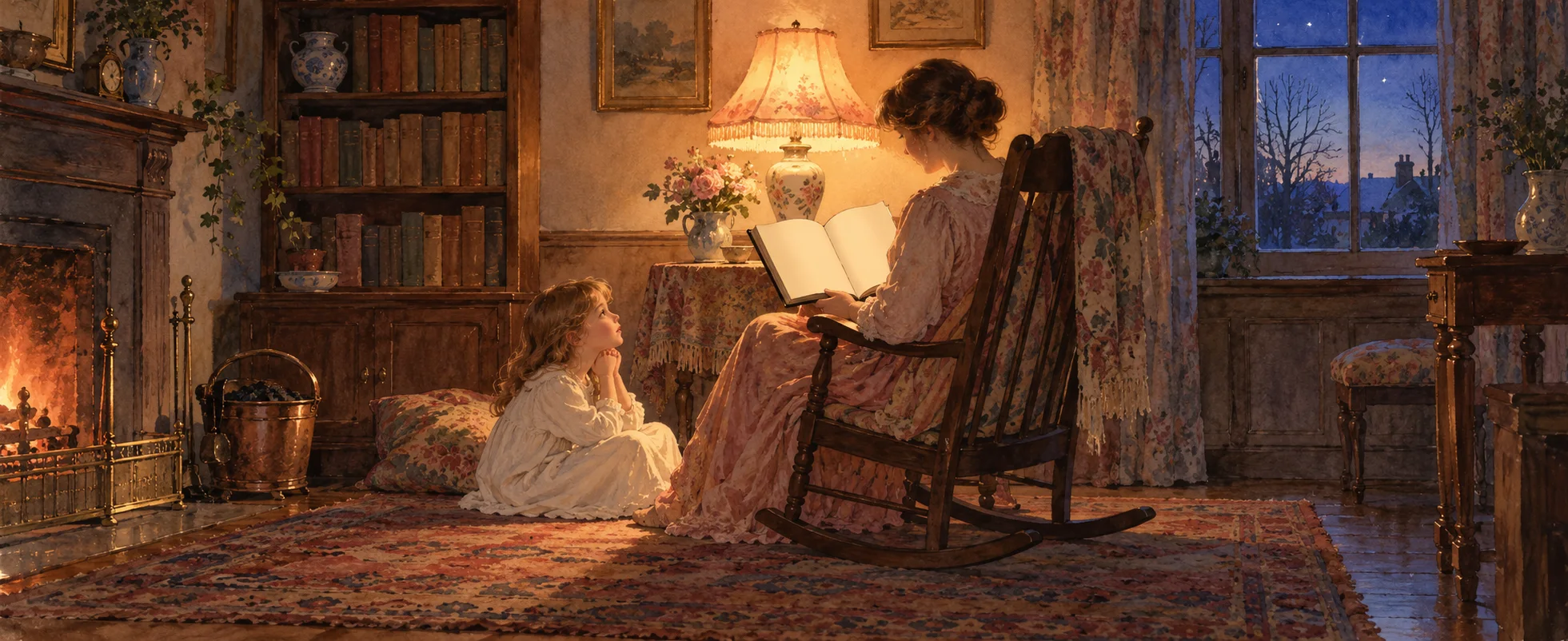
You may have tangible wealth untold; Caskets of jewels and coffers of gold. Richer than I you can never be — I had a Mother who read to me.
Behind the line
What it means
Our interpretation.
The poem's argument is that a childhood of being read to is a legacy worth more than a fortune, said in the plainest rhymed couplets. The last two lines are its punchline, and its warmest. It has become the standard Mother's Day and library-poster verse for reading aloud to children, quoted by teachers, librarians and parents who want a short verse for the point.
Context reviewed
In context
May contain spoilersShow the scene
These four lines are the closing quatrain of 'The Reading Mother', a poem by the American journalist, humorist and lecturer Strickland Gillilan (1869-1954), who is best known for it. The earlier verses each begin with the speaker's mother reading to him: sea sagas of pirates, old romances such as Marmion and Ivanhoe, the tale of the faithful hound Gelert, and wholesome stories for a boy. The quatrain then sets that gift against any amount of treasure. Wikiquote dates the poem only to the early twentieth century, and I could not confirm the year or the magazine of its first printing.
Sources (3)
- Strickland Gillilan, WikiquoteQuotes sectionReference checked
- The Reading Mother, full poem on Erin Fanning's blogFull poem as reproducedReference checked
- Strickland Gillilan, WikipediaLeadReference checked
Context reviewed