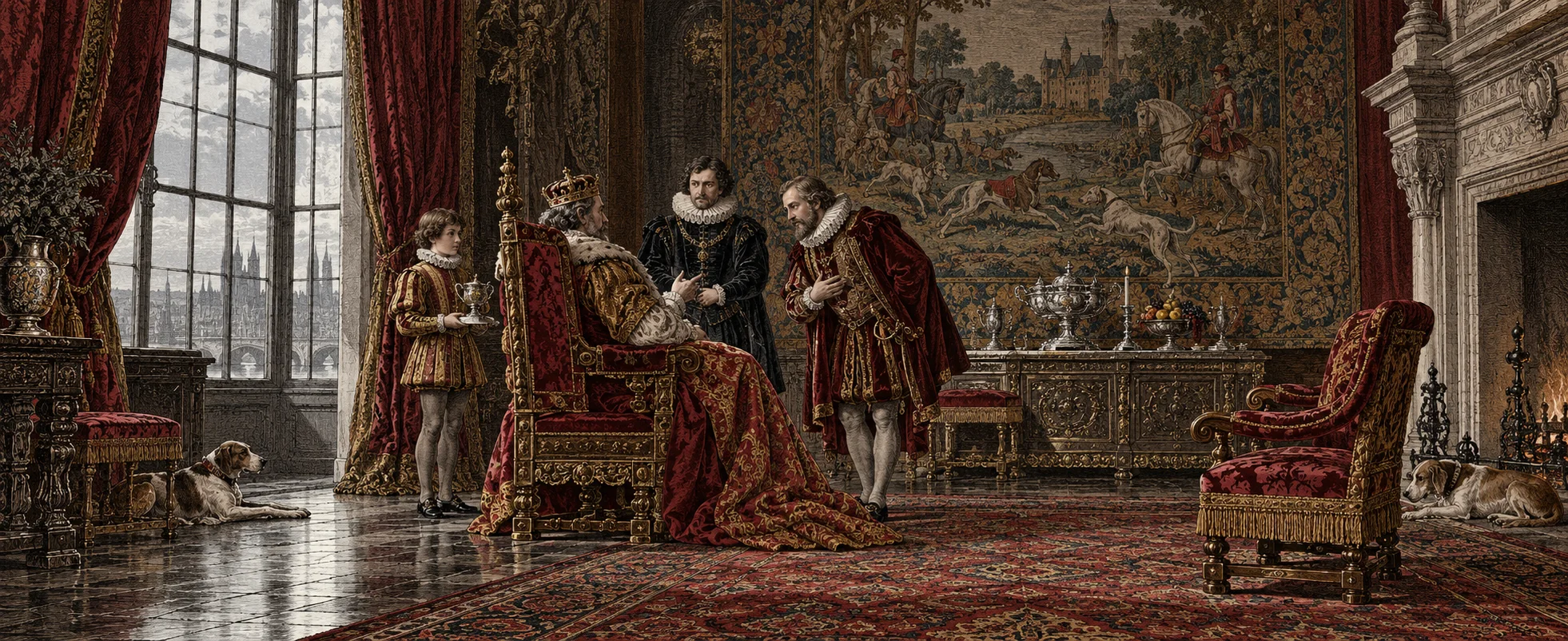
Original artwork, not a still
Let me not live, after my flame lacks oil, to be the snuff of younger spirits.
Behind the line
What it means
Our interpretation.
It is a dignified dread of outliving your usefulness: to burn down to a stub of wick while younger people, hungry only for novelty, treat you as the burnt-out snuff. The King is quoting Bertram's late father, so the words are a dead man's pride passed on by an ailing one. The candle image keeps the line in use for retirement speeches, obituaries and every anxious talk about being replaced by the young.
Context reviewed
In context
Spoilers for All's Well That Ends WellShow the scene
Act 1, Scene 2 of All's Well That Ends Well, in the King's palace in Paris. The sick King of France is talking with the young Count Bertram, newly arrived at court after the death of his father, the old Count of Rousillon. The King remembers the old man's courtly manner and recalls that he often said this on the heel of a pastime: let me not live, after my flame lacks oil, to be the snuff of younger spirits, who disdain anything but new things. The King says he wishes the same for himself, since he can bring home neither wax nor honey, and he should give the labourers room. He then asks how long since the physician at Bertram's father's house died, and leaves.
Sources (1)
- MIT Shakespeare: All's Well That Ends Well, Act 1, Scene 2King's speech to Bertram, mid-sceneReference checked
Context reviewed