Original artwork, not a still
The Tempest · 1623
Hell is empty, and all the devils are here.
Behind the line
What it means
Our interpretation.
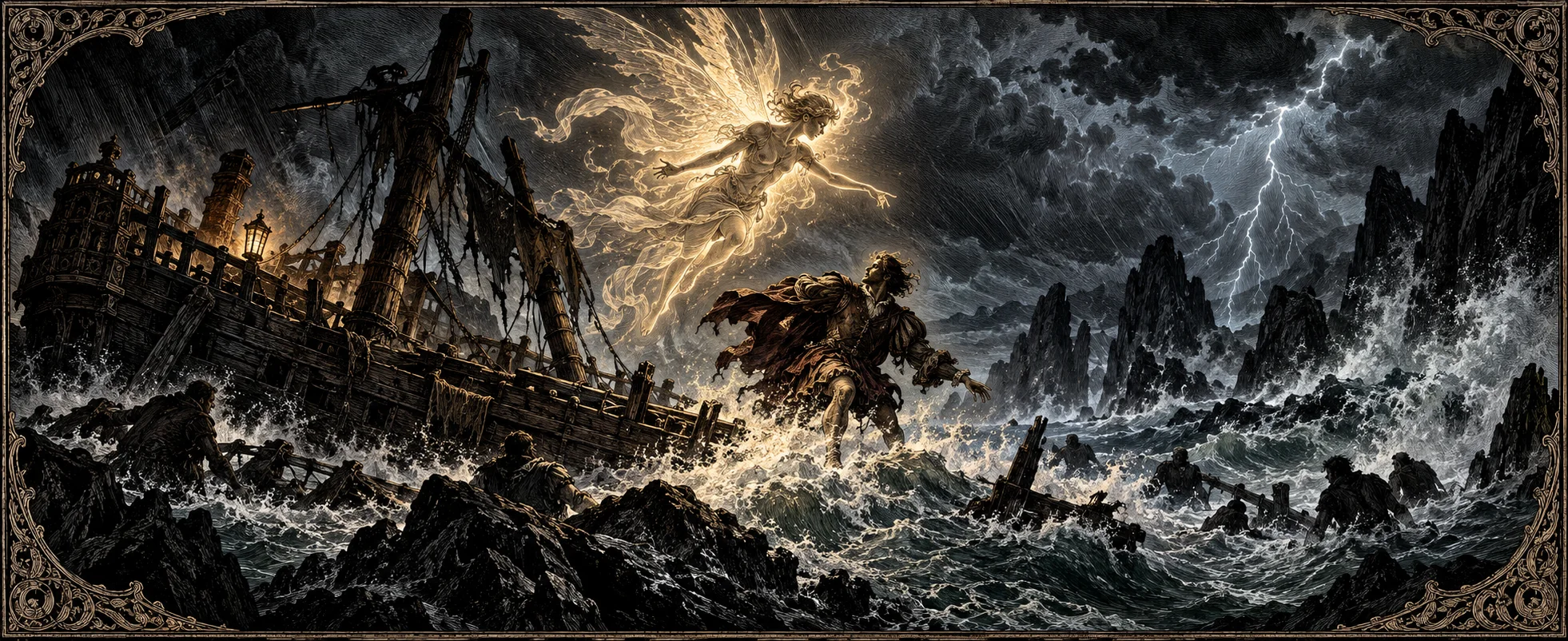
Ferdinand's cry is a sailor's panic dressed in theology: with the ship afire, even the sea looks like the only safe place, because the damned seem to have left Hell to come aboard. Later writers use it for any scene of cruelty or collapse where the evil is not elsewhere but in the room, and it has titled books, albums and a book on the 2008 financial crisis.
Context reviewed
In context
Spoilers for The TempestShow the scene
In Act 1, Scene 2 of The Tempest, Prospero has conjured the storm that wrecks the Neapolitan ship, and his spirit servant Ariel reports back on how it went. Ariel describes the passengers' panic, saying all but the mariners plunged into the sea and that the king's son Ferdinand, his hair standing on end, was the first to jump. Ariel quotes Ferdinand's cry as he leaps, and Prospero approves. Ariel adds that everyone is unharmed and has been scattered about the island. The earliest recorded performance is at the court of James I at Whitehall on 1 November 1611.
Sources (2)
- The Tempest, Act 1 Scene 2 (MIT Shakespeare)Ariel's report to Prospero on the shipwreckReference checked
- Wikipedia, The TempestPerformance history, Shakespeare's dayReference checked
Context reviewed