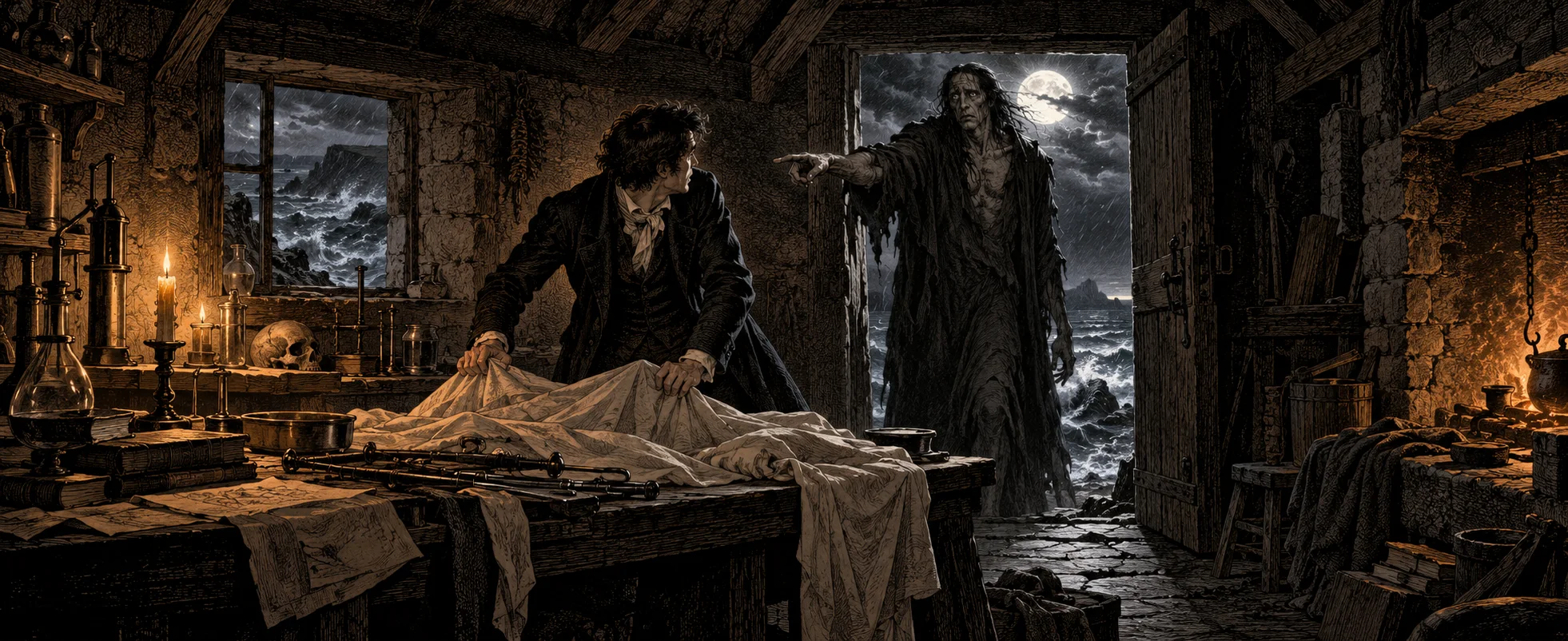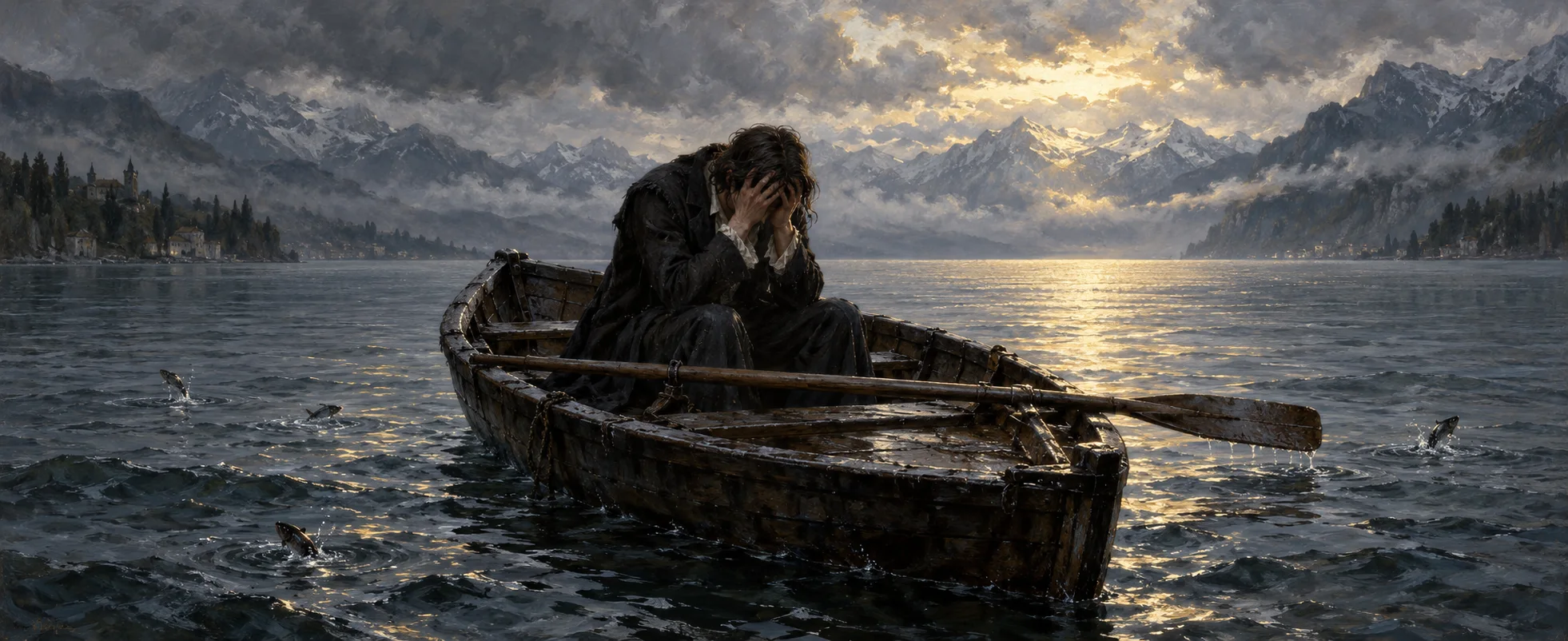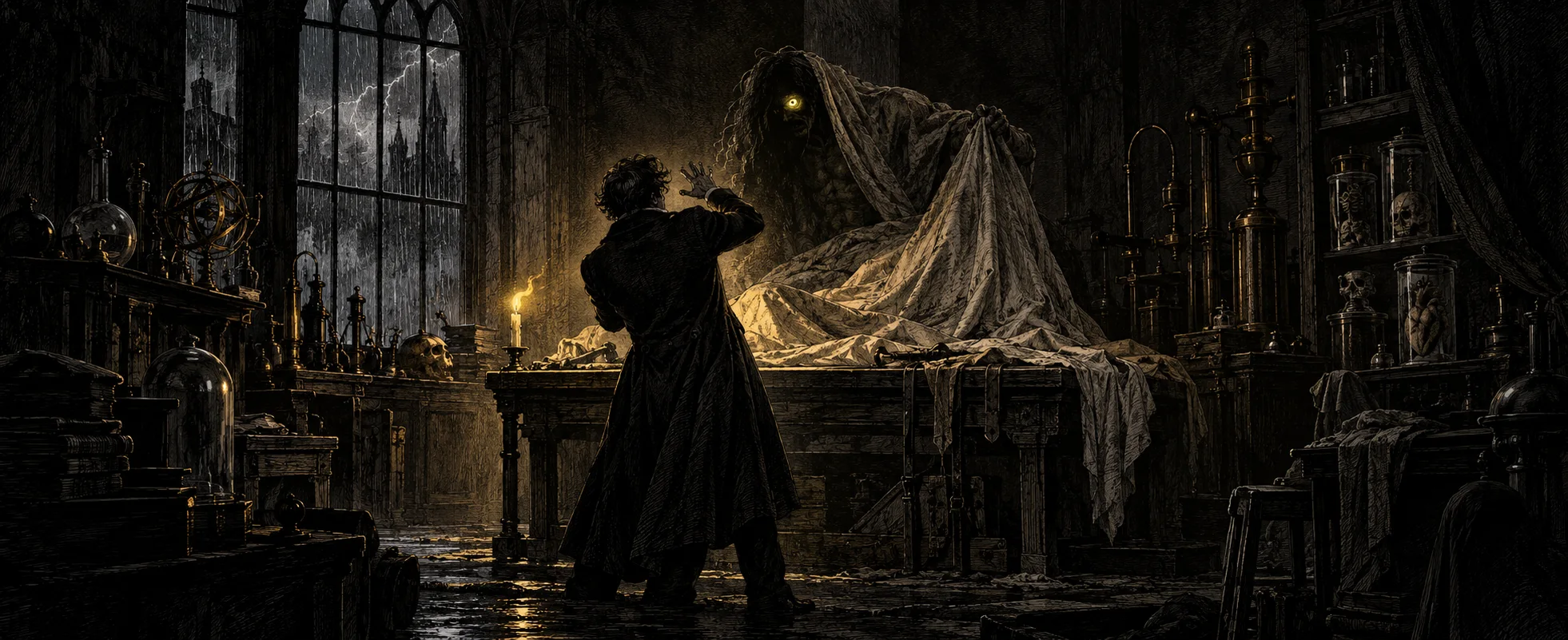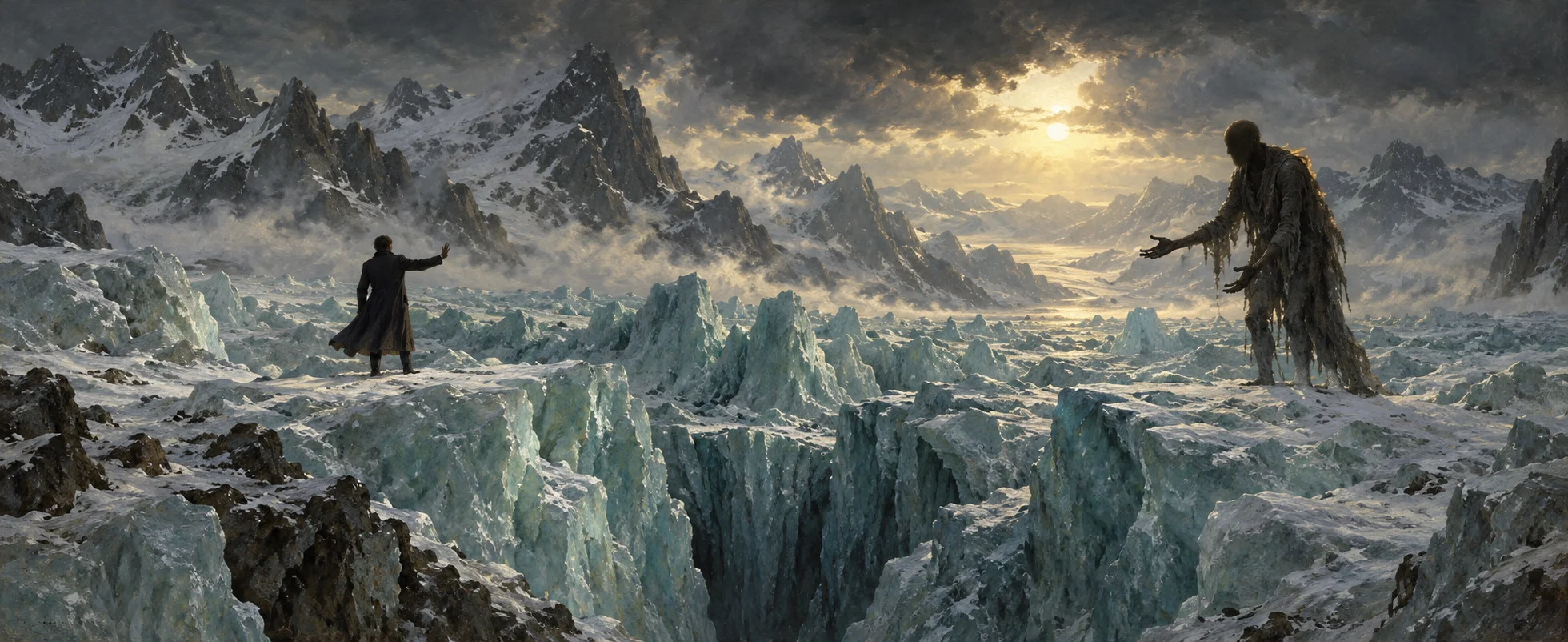
Original artwork, not a still
Frankenstein · 1818
Remember that I am thy creature; I ought to be thy Adam, but I am rather the fallen angel.
Behind the line
What it means
Our interpretation.
The creature recasts himself in Paradise Lost terms: a being who ought to have been loved by his maker, now cast out like Satan. It is the novel's sharpest argument that monsters are made by neglect, and it is why readers still say the 'monster' is the sympathetic one in the book. The Adam and fallen angel image echoes through every later retelling.
Context reviewed
In context
Spoilers for FrankensteinShow the scene
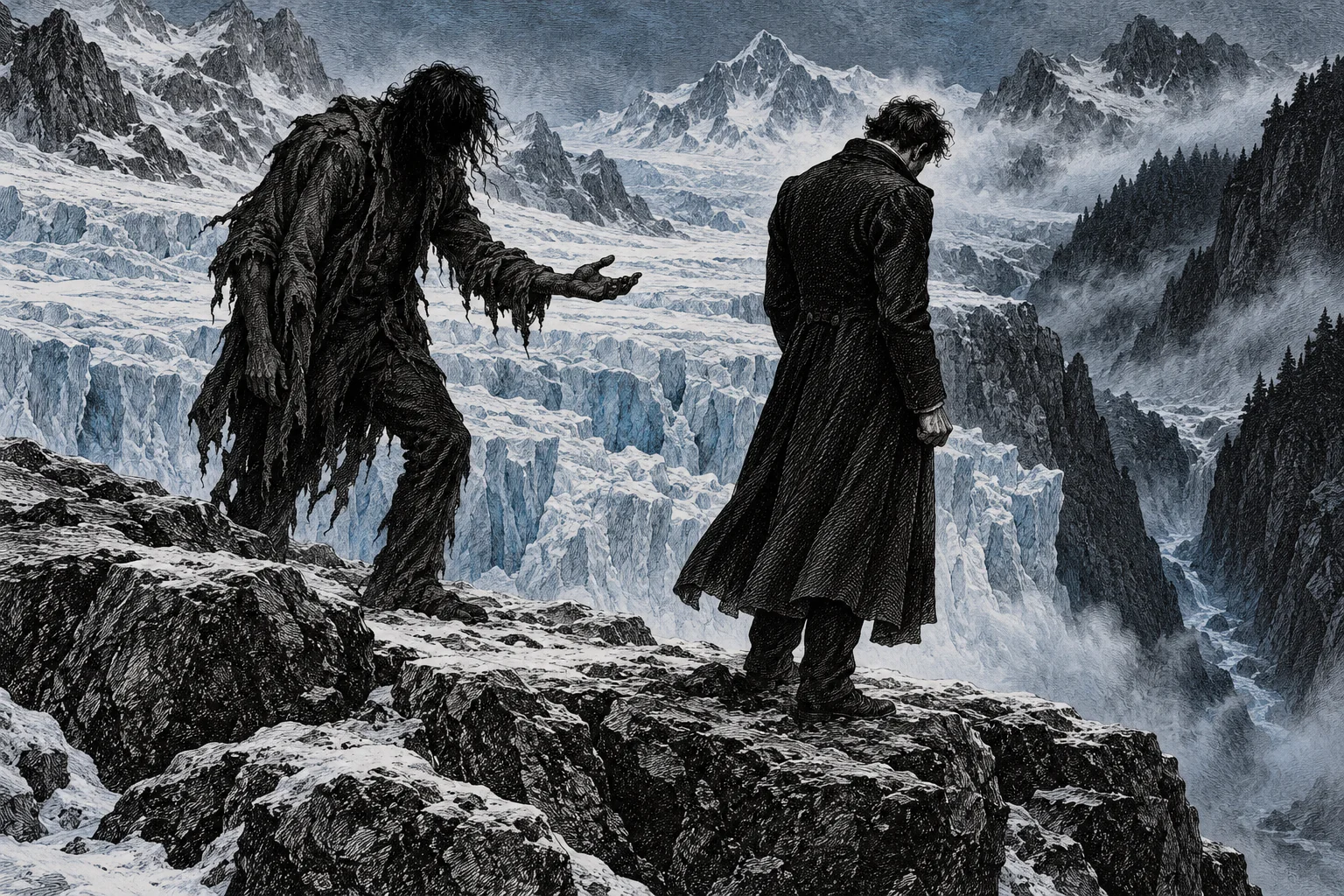
In Chapter 10 of Mary Shelley's 1818 novel, Victor Frankenstein climbs towards the glacier of Montanvert above Chamonix and meets the creature he made on the sea of ice. Victor orders it to begone and threatens a fight. The creature answers with a plea, telling him it is his creature and should have been his Adam, but is rather the fallen angel he drives from joy for no misdeed. He promises to be gentle if Victor will hear him, and Victor reluctantly follows him to listen to his story.
Sources (1)
- Frankenstein; or, The Modern Prometheus (Project Gutenberg #84)Chapter 10 (Volume II, Chapter 2), the meeting on the glacierReference checked
Context reviewed