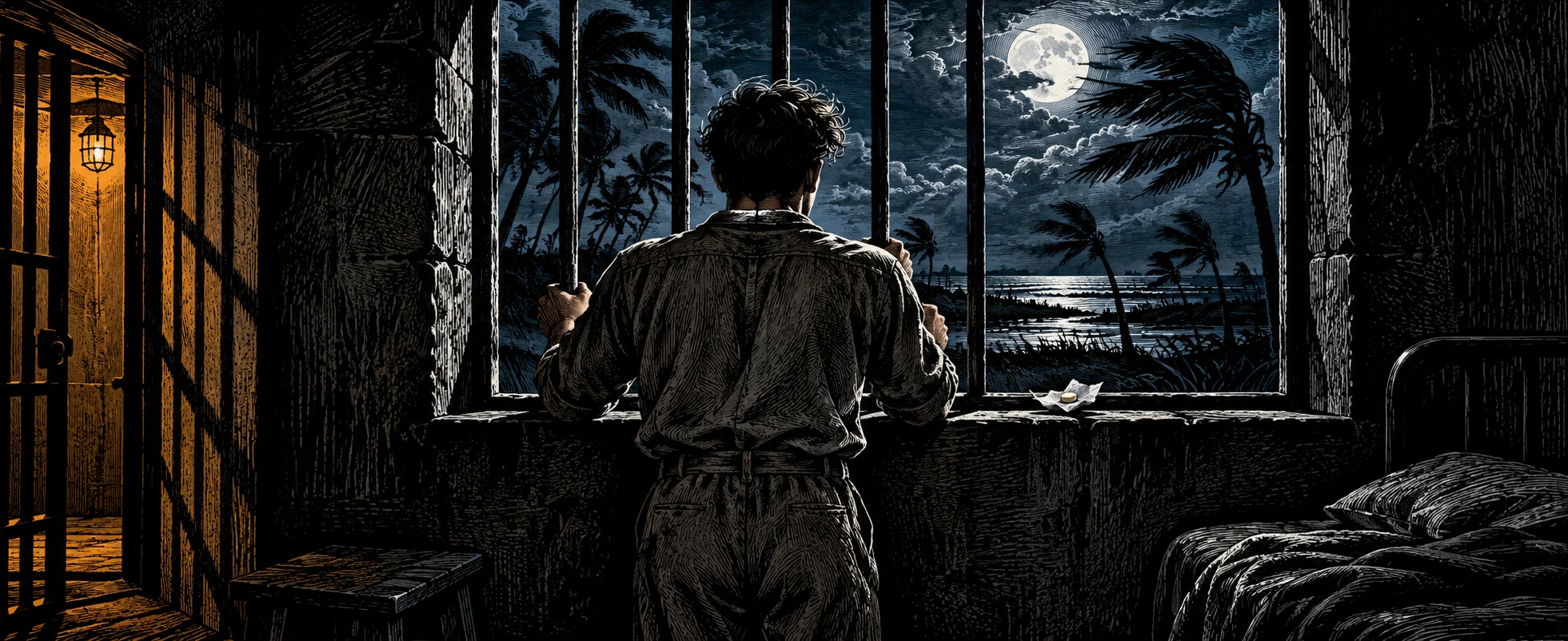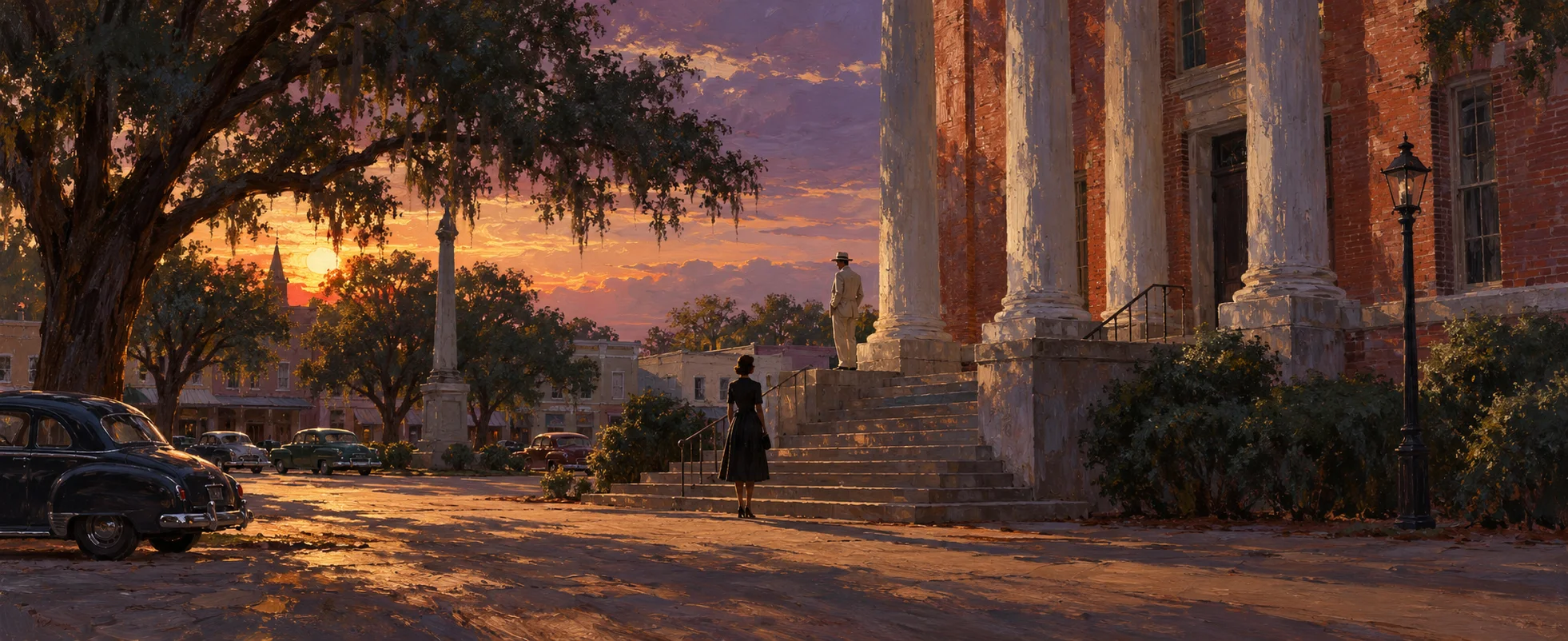
Original artwork, not a still
Requiem for a Nun • 1951
The past is never dead. It’s not even past.
Behind the line
What it means
Our interpretation.
Faulkner's best-known sentence about the South is really about guilt: what we did stays with us, because the past keeps shaping the present. In the play it is Gavin Stevens's warning that Temple cannot bury what she has done. It has become the all-purpose line for history that will not stay in the past, and Woody Allen's Midnight in Paris paraphrased it in 2011, which ended in a lawsuit by Faulkner's estate that was dismissed.
Context reviewed
In context
Spoilers for Requiem for a NunShow the scene
Requiem for a Nun (1951), Faulkner's sequel to Sanctuary, written as part novel, part play. Wikiquote places the line in Act 1, scene 3, and Wikipedia says it is spoken by the lawyer Gavin Stevens in a discussion about guilt and responsibility. The play is set in Jefferson, Mississippi, in 1937 and 1938, eight years after the events of Sanctuary, when Temple Drake Stevens, now married with a child, is forced to face her past because Nancy Mannigoe, her former nursemaid, has been sentenced to death for killing Temple's baby. Gavin is Nancy's defence lawyer and presses Temple for the truth.
Sources (3)
- Wikiquote: William Faulkner, Requiem for a Nun (1951)Requiem for a Nun (1951) section, first entryReference checked
- Wikipedia: Requiem for a Nunlead and SynopsisReference checked
- Wikipedia: Faulkner Literary Rights, LLC v. Sony Pictures Classics Inc.BackgroundReference checked
Context reviewed