Original artwork, not a still
Slaughterhouse-Five • 1969
So it goes.
Behind the line
What it means
Our interpretation.
Three words carry the book's whole stance on war: the dead are gone, nothing can be done, and the narrator will not pretend otherwise. Because it repeats after the huge and the trivial alike, it flattens grief into something both numb and terrible. Readers now use it as shorthand for fatalistic acceptance, and for Vonnegut himself.
Context reviewed
In context
Spoilers for Slaughterhouse-FiveShow the scene
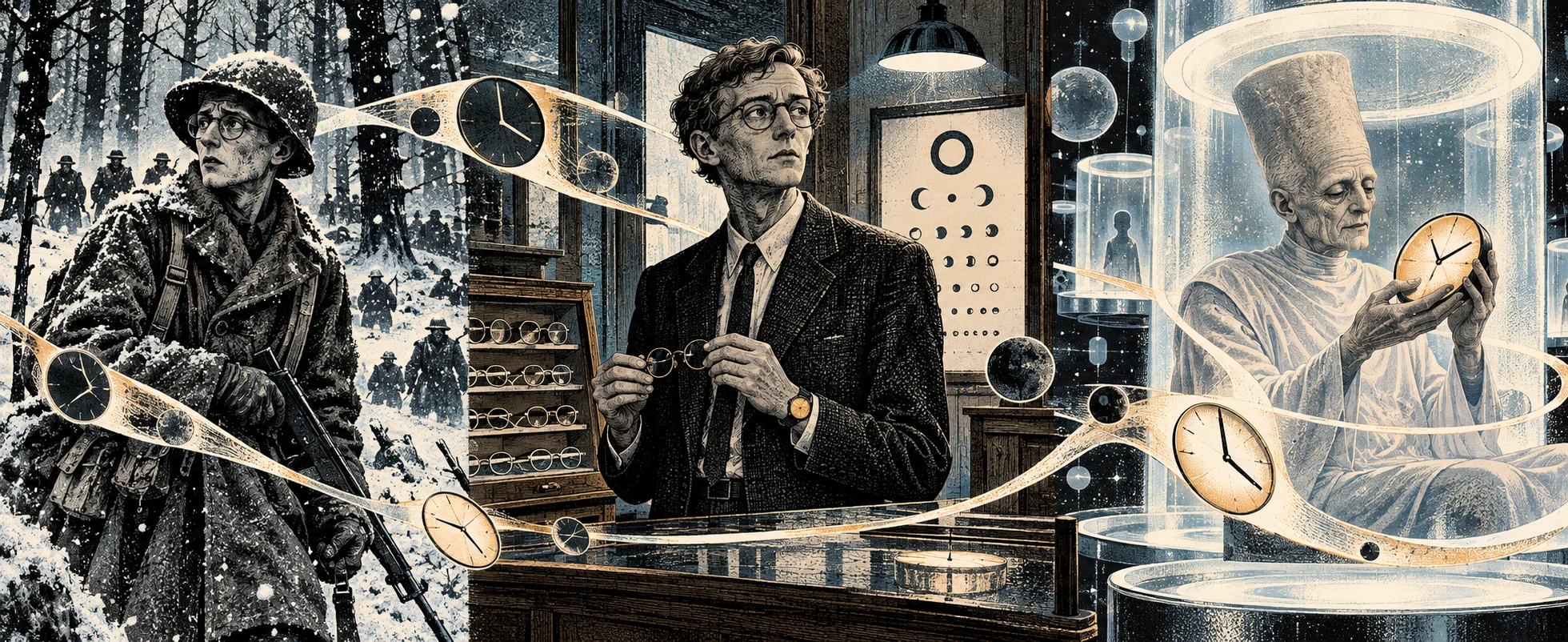
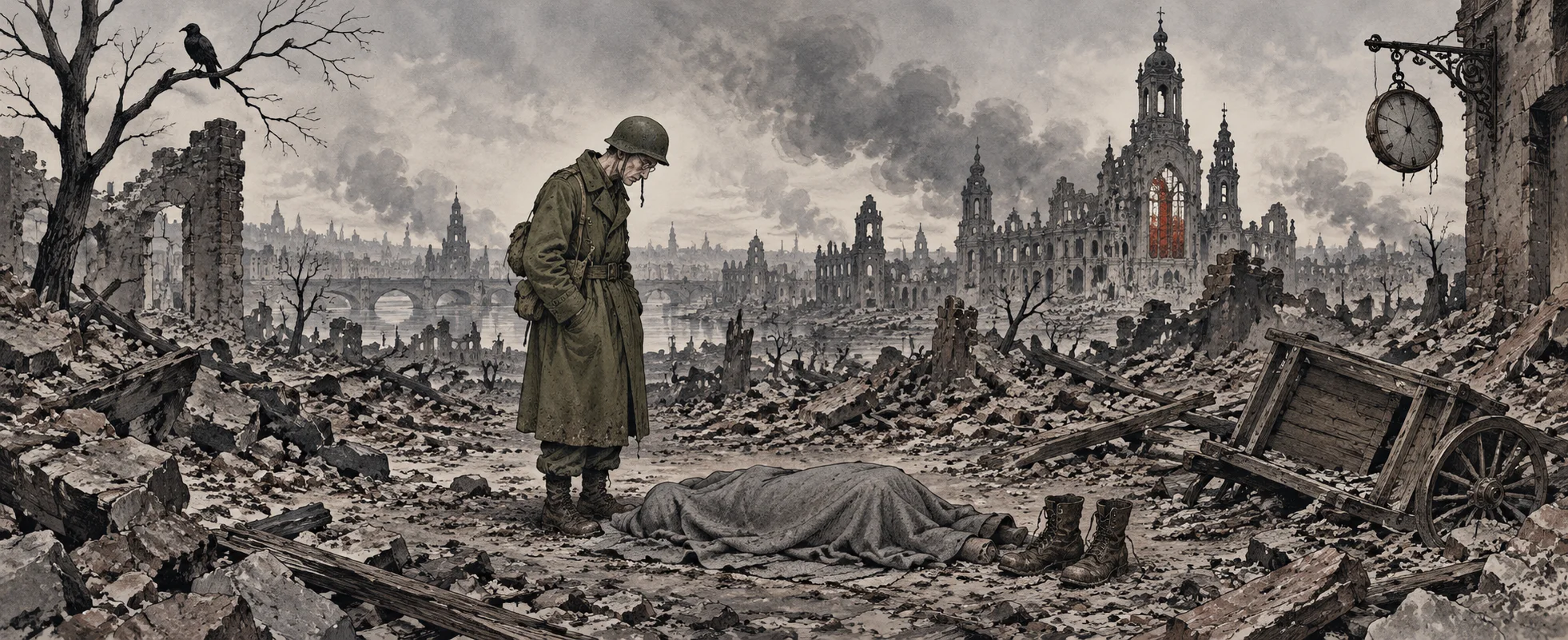
Vonnegut's narrator drops this tag after nearly every death in the novel, whether a soldier, a dying prisoner or the destruction of a city. It is a refrain in the 1969 book, appearing 106 times. It also works as a bridge to a new subject, as a reminder of mortality, as black comedy and as a way to wave off the unexplained. The words come from the Tralfamadorians, the four-dimensional aliens Billy Pilgrim meets. They see all of time at once and shrug at death in this way.
Sources (1)
- Slaughterhouse-Five (Wikipedia)Style section (refrain) and Plot section (Tralfamadorians)Reference checked
Context reviewed