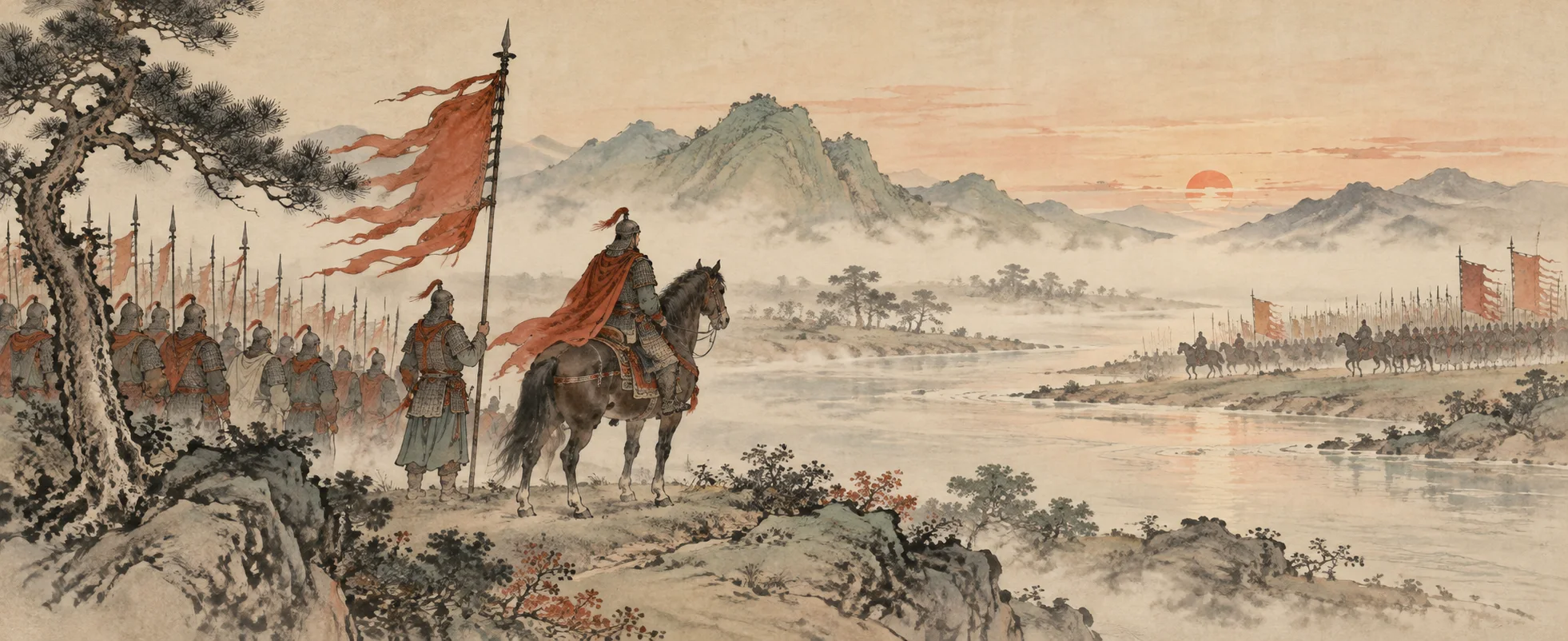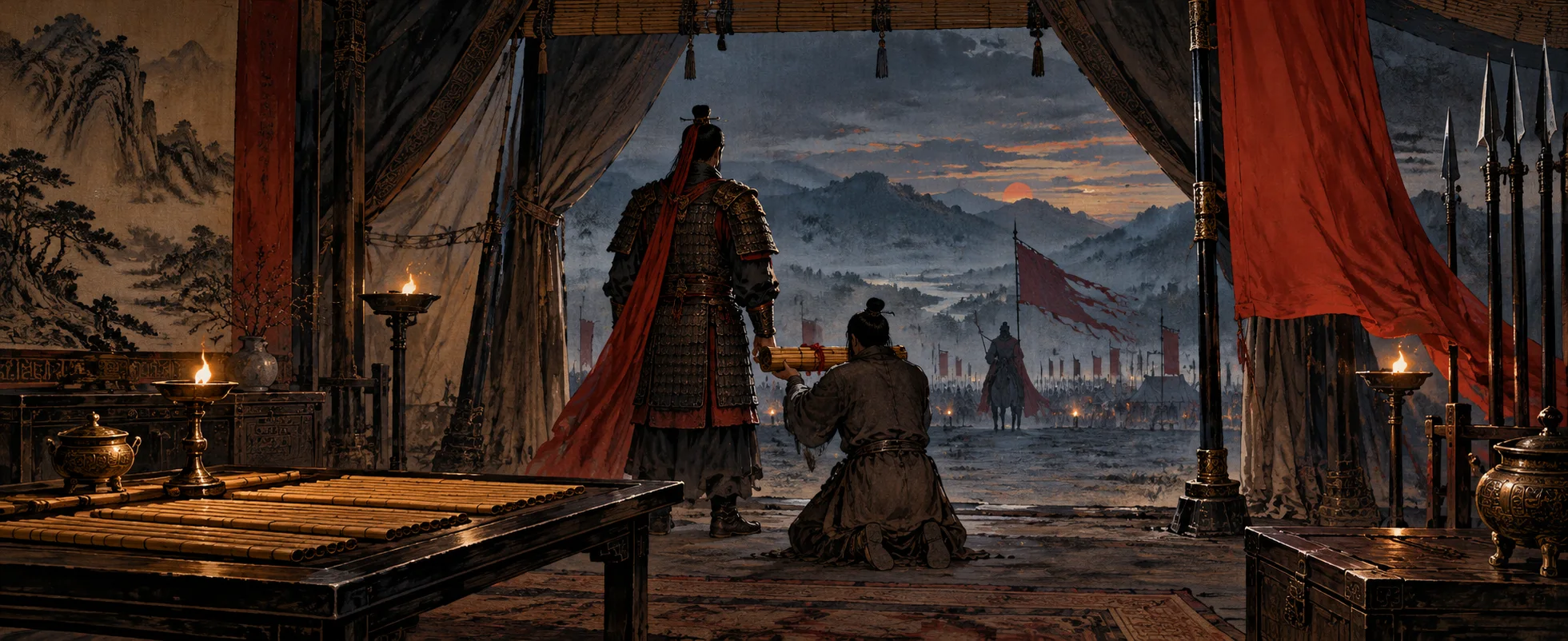
Original artwork, not a still
If fighting is sure to result in victory, then you must fight, even though the ruler forbid it; if fighting will not result in victory, then you must not fight even at the ruler's bidding.
Behind the line
What it means
Our interpretation.
A hard rule for a hard job: the man on the ground knows the odds, so a ruler's order should not override his judgement of whether a fight can be won. Business books, military colleges and managers quote it as licence to disobey a bad instruction from far away. Most readers stop at the first half and forget the second, where the same general must also refuse to fight a losing battle even when ordered.
Context reviewed
In context
Spoilers for The Art of WarShow the scene
This comes from the chapter on Terrain, the tenth in the standard thirteen-chapter Art of War, in Lionel Giles's 1910 English translation. Sun Tzu is setting out how a general reads the ground and his own chances, and here he says that the commander, not the ruler far away, must decide whether a battle can be won. The sentence that follows praises the general who advances without seeking glory and retreats without fearing blame, thinking only of his country and his ruler.
Sources (1)
- The Art of War, ch. 10 Terrain (Giles), Standard EbooksChapter X Terrain, 23rd paragraph as the page numbers itReference checked
Context reviewed