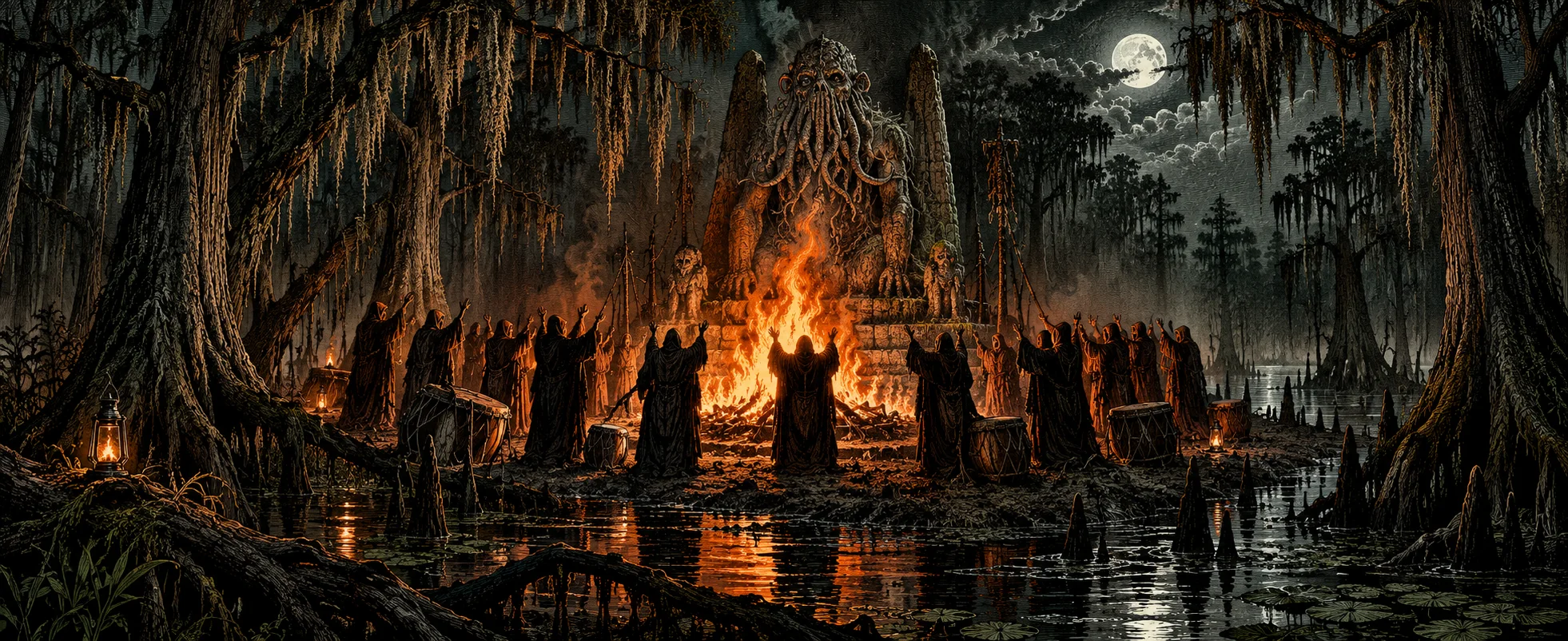
Original artwork, not a still
The Call of Cthulhu • 1928
The cultists' chant, H. P. Lovecraft's "The Call of Cthulhu" (1928)
Ph'nglui mglw'nafh Cthulhu R'lyeh wgah'nagl fhtagn.
Behind the line
What it means
Our interpretation.
The chant is nonsense on purpose: a mouthful that no reader can say comfortably is a better horror prop than any real language. Fans read it as a tongue-twister, a password and a dare, and it has been chanted at conventions, printed on shirts and worked into games and songs. The translation is deliciously short: a god asleep in a drowned house, and in no hurry.
Context reviewed
In context
Spoilers for The Call of CthulhuShow the scene
In "The Call of Cthulhu" the chant turns up first in Part II, "The Tale of Inspector Legrasse". At a 1908 meeting of an archaeological society, New Orleans police inspector John Raymond Legrasse shows a strange statuette taken in a swamp raid. Professor Webb says Greenland tribesmen he met decades earlier chanted almost the same words. Legrasse's prisoners gave a rough translation: in his house at R'lyeh dead Cthulhu waits dreaming. The words return when the raiding party hears the cultists chanting in the swamp. The tale was first published in Weird Tales in February 1928.
Sources (2)
- H. P. Lovecraft Archive: The Call of CthulhuPart II, The Tale of Inspector LegrasseReference checked
- Wikipedia: The Call of CthulhuLead, PlotReference checked
Context reviewed