Original artwork, not a still
The Call of Cthulhu · 1928
The most merciful thing in the world, I think, is the inability of the human mind to correlate all its contents.
Behind the line
What it means
Our interpretation.
This is Lovecraft's whole philosophy in one sentence: knowledge is the danger, and ignorance is a mercy we do not know we are receiving. It tells the reader the narrator will be wrong to look and right to be afraid. People quote it for cosmic horror, but also half-jokingly about the internet and the news, which says how well it has travelled.
Context reviewed
In context
Spoilers for The Call of CthulhuShow the scene
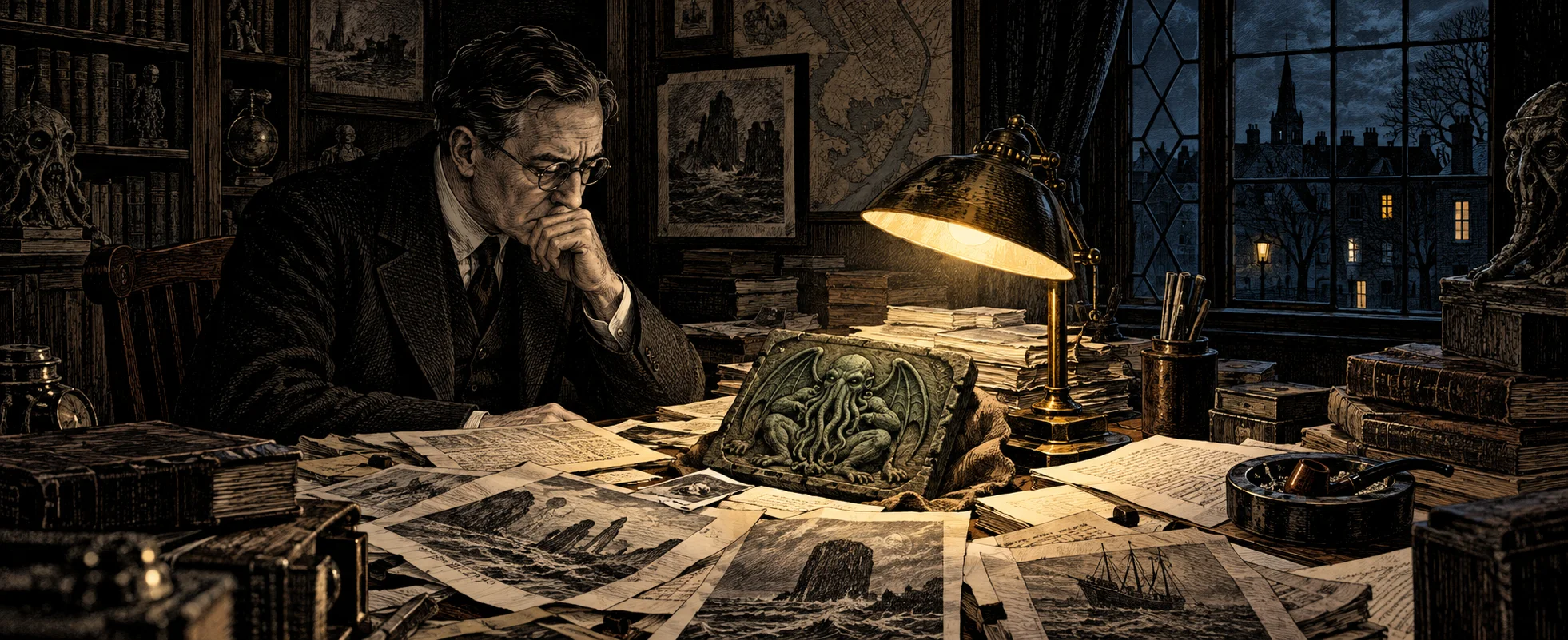
The first sentence of the story proper. "The Call of Cthulhu" opens with a Blackwood epigraph and the subtitle "Found Among the Papers of the Late Francis Wayland Thurston, of Boston", then Part I, "The Horror in Clay". Thurston begins by reflecting that humanity lives on a placid island of ignorance among black seas of infinity, and warns that when the sciences finally piece their separate findings together the picture will be terrifying. He is introducing the papers he found after the death of his great-uncle. The story ran in Weird Tales in February 1928.
Sources (2)
- H. P. Lovecraft Archive: The Call of CthulhuOpening of Part I, The Horror in ClayReference checked
- Wikipedia: The Call of CthulhuLead, PlotReference checked
Context reviewed