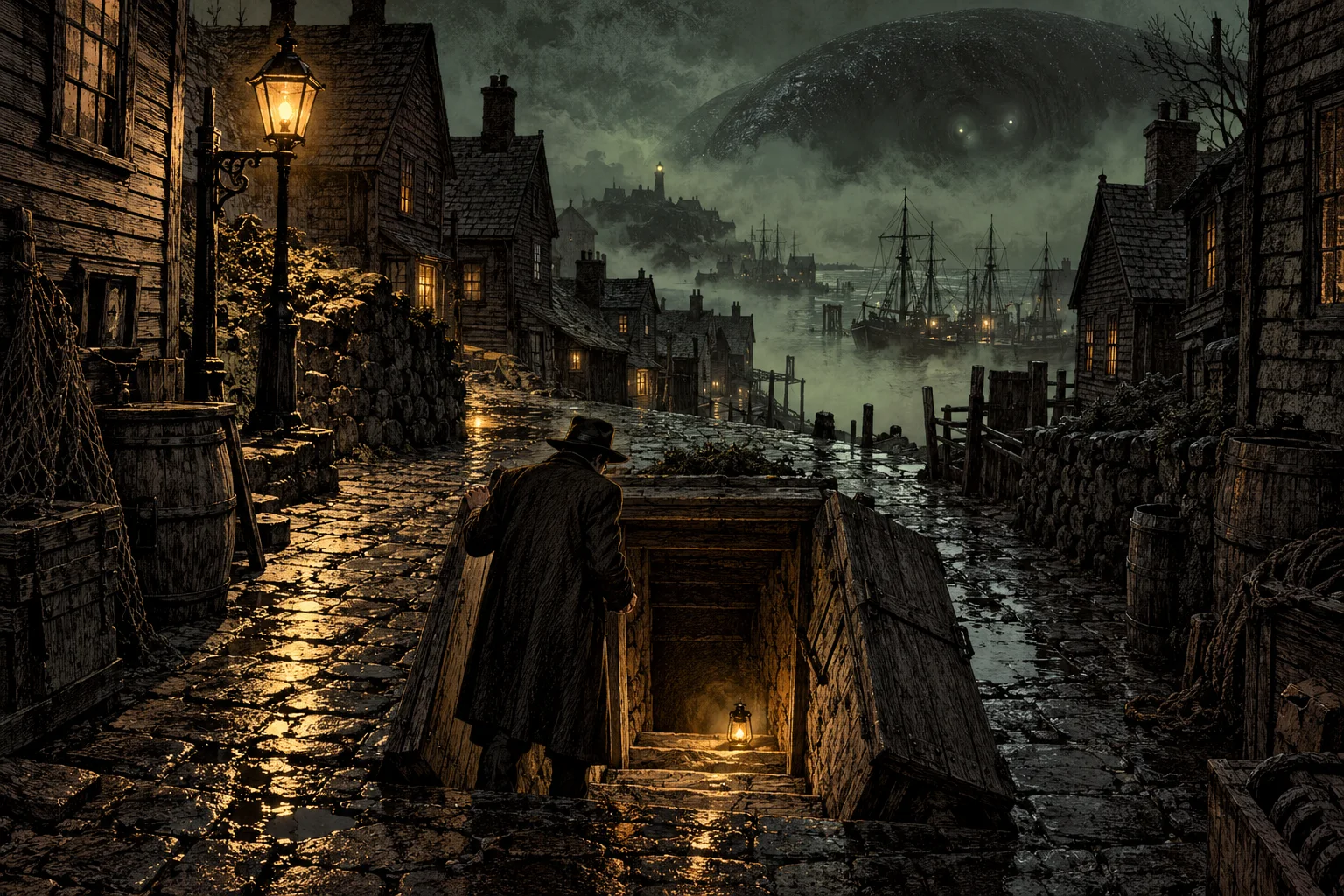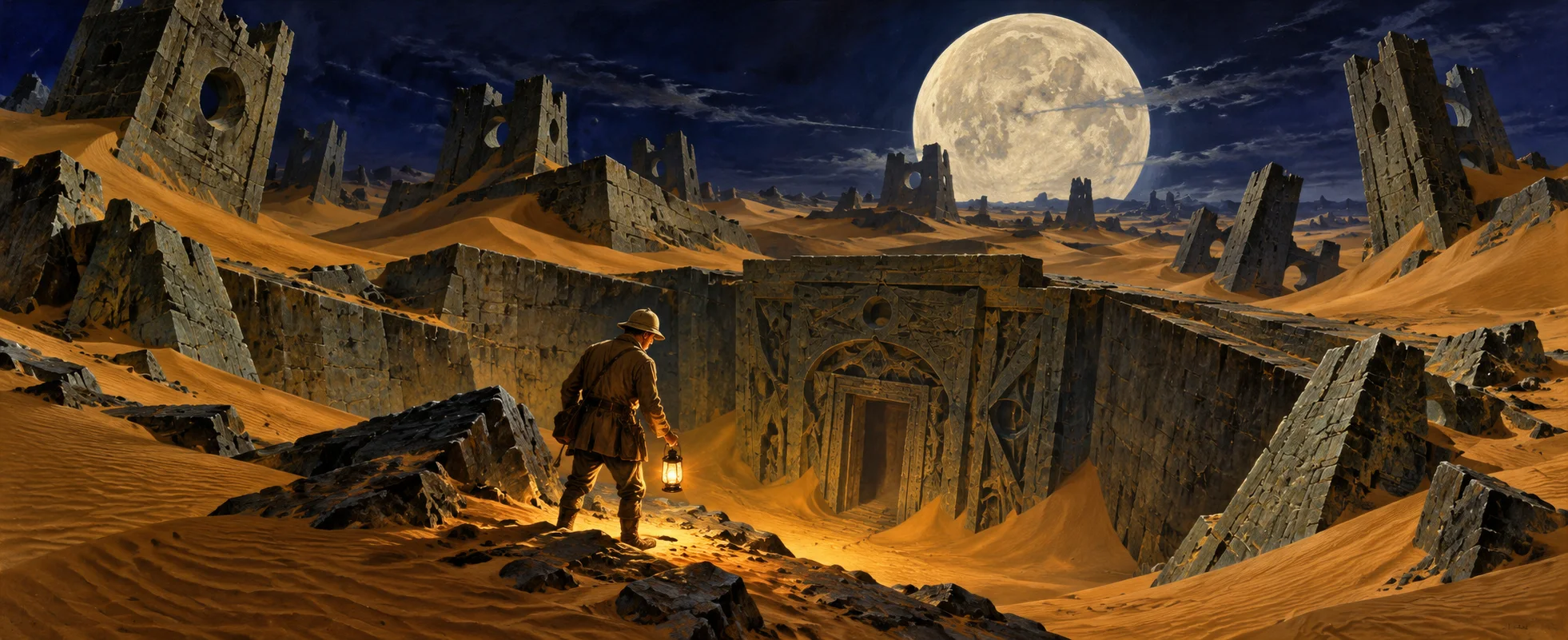
Original artwork, not a still
The Nameless City · 1921
That is not dead which can eternal lie, and with strange aeons even death may die.
Behind the line
What it means
Our interpretation.
It is the Cthulhu Mythos in miniature: the gods are not dead, only waiting, and even death is a temporary condition on a long enough clock. The riddle rhythm made it endlessly quotable, and it became shorthand for any horror that refuses to stay buried, from tabletop games to tattoos. In the story it belongs to a book that does not exist, which only adds to its pull.
Context reviewed
In context
Spoilers for The Nameless CityShow the scene
The couplet sits on the opening page of "The Nameless City", which Lovecraft wrote in January 1921. The narrator describes a forgotten city in the Arabian desert that every tribe avoids, and says it was of this place that the mad poet Abdul Alhazred dreamed the night before he sang his "unexplainable couplet". It was Lovecraft's first mention of Alhazred. Seven years later "The Call of Cthulhu" repeats the lines and ties them to the Necronomicon. The story first appeared in the amateur journal The Wolverine in November 1921.
Sources (3)
- H. P. Lovecraft Archive: The Nameless CityOpening paragraphsReference checked
- Wikipedia: The Nameless CityLead, ConnectionsReference checked
- H. P. Lovecraft Archive: The Call of CthulhuPart II, the cult's secrecyReference checked
Context reviewed