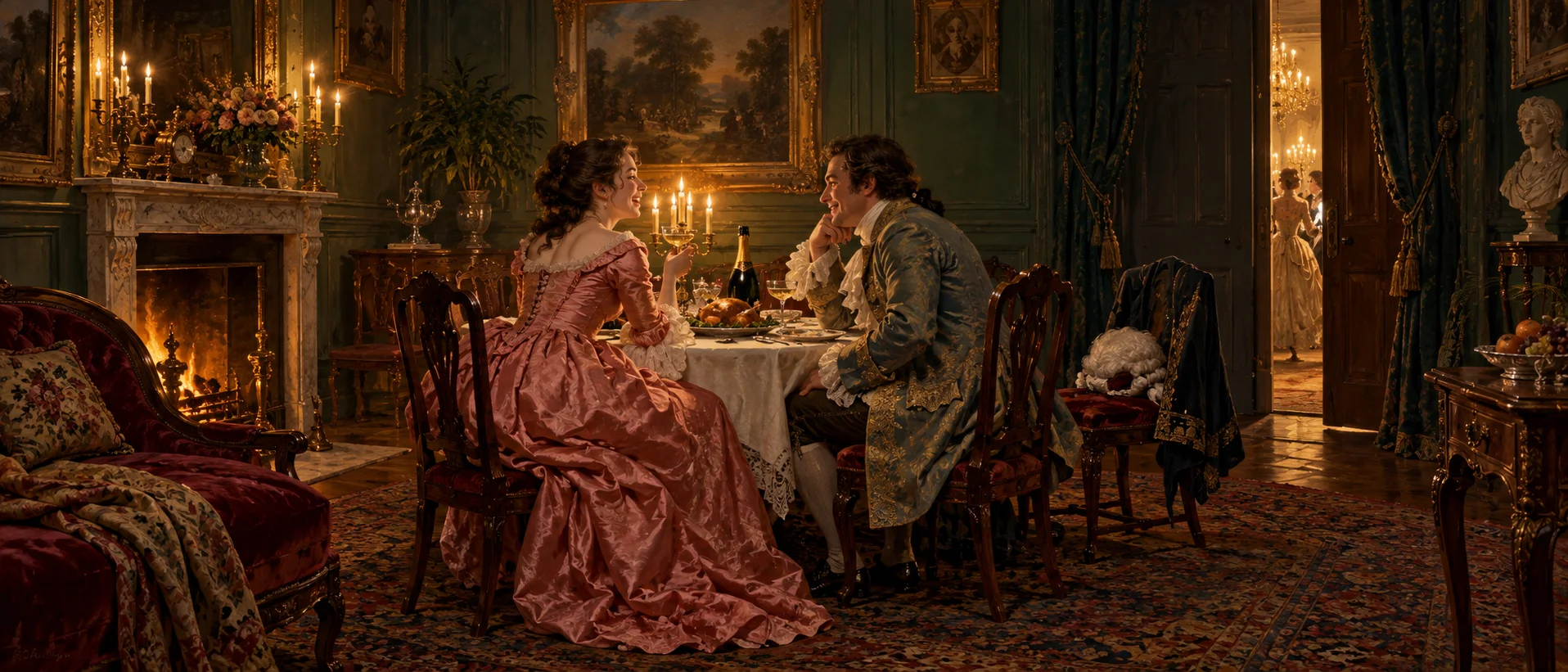
Original artwork, not a still
And we meet, with champagne and a chicken, at last.
Behind the line
What it means
Our interpretation.
It is the Georgian answer to a romantic fantasy: after all the performance of manners, what she wants is a quiet supper with someone who can finally drop the act. Montagu sets an unglamorous pleasure against grand passion, which is why it still gets quoted as the neatest picture of an intimate evening. Byron admired it enough to defend it as real poetry.
Context reviewed
In context
Spoilers for The LoverShow the scene
The line comes from Lady Mary Wortley Montagu's verse epistle "The Lover: A Ballad", addressed to the playwright William Congreve. Pressed by Congreve to explain her coolness, she answers by describing the lover she would actually accept: no pedant, no rake, faithful, and correct in public. Only then does she turn to the private evening, when the long hours of company are over and the pair settle to a supper of champagne and a chicken, free of discretion and fear. The collected edition spells it "champaign". Byron later singled the line out, as recorded in Thomas Moore's edition of his letters and journals, asking whether it was not poetry.
Sources (2)
- The Letters and Works of Lady Mary Wortley Montagu, vol. 2 (Poems), scan on the Internet ArchivePoems section, "The Lover: A Ballad. To Mr. Congreve"Reference checked
- Wikiquote: Lady Mary Wortley MontaguAbout sectionReference checked
Context reviewed