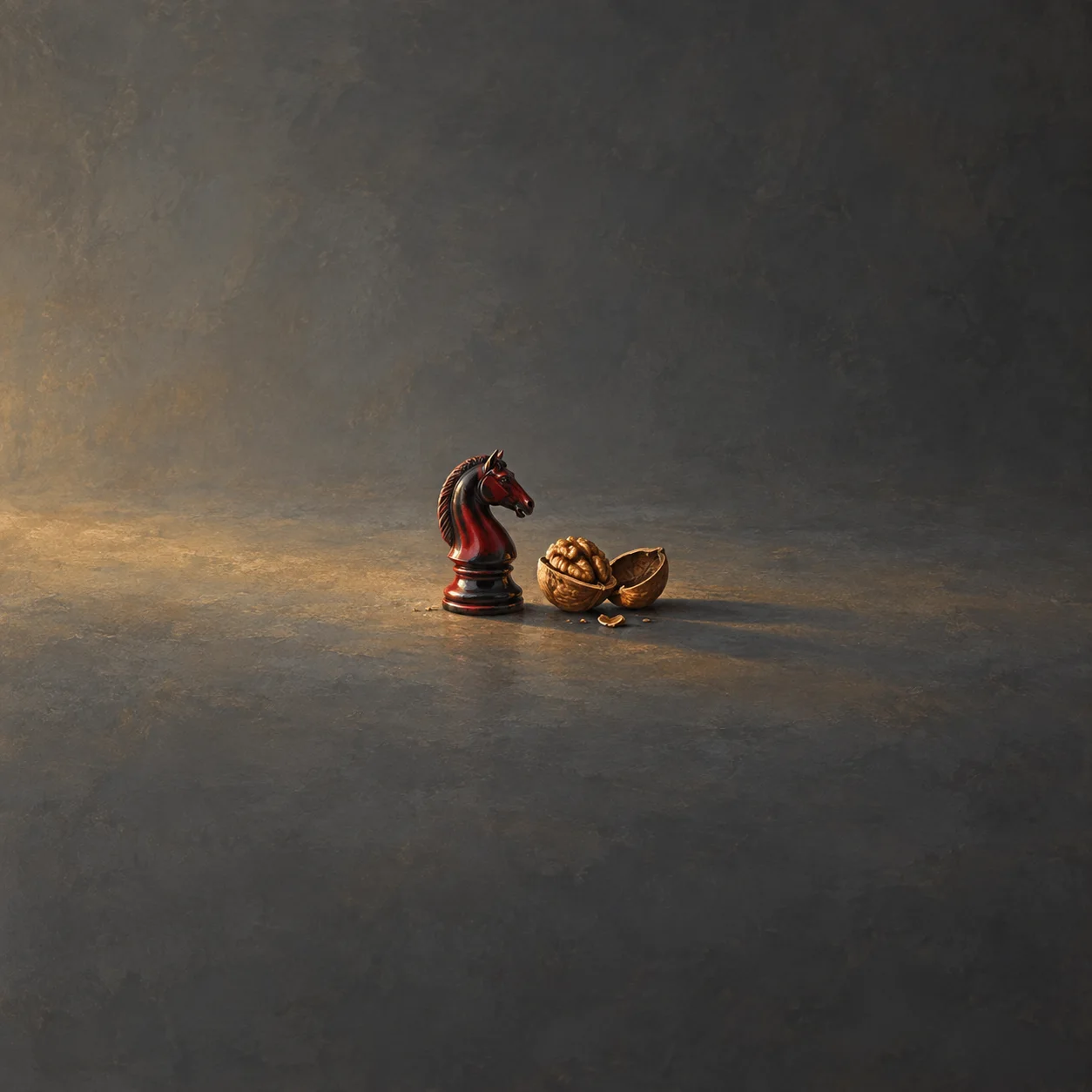
Original artwork, not a still
Time Enough for Love ‧ 1973
Your enemy is never a villain in his own eyes. Keep this in mind, it may offer a way to make him your friend. If not, you can kill him without hate, and quickly.
Behind the line
What it means
Our interpretation.
The passage begins by asking an enemy to be understood from their own perspective, then abruptly allows killing if friendship fails. That turn gives its apparent tolerance a chilling limit: understanding another person's motives is separated from sparing their life.
Context reviewed