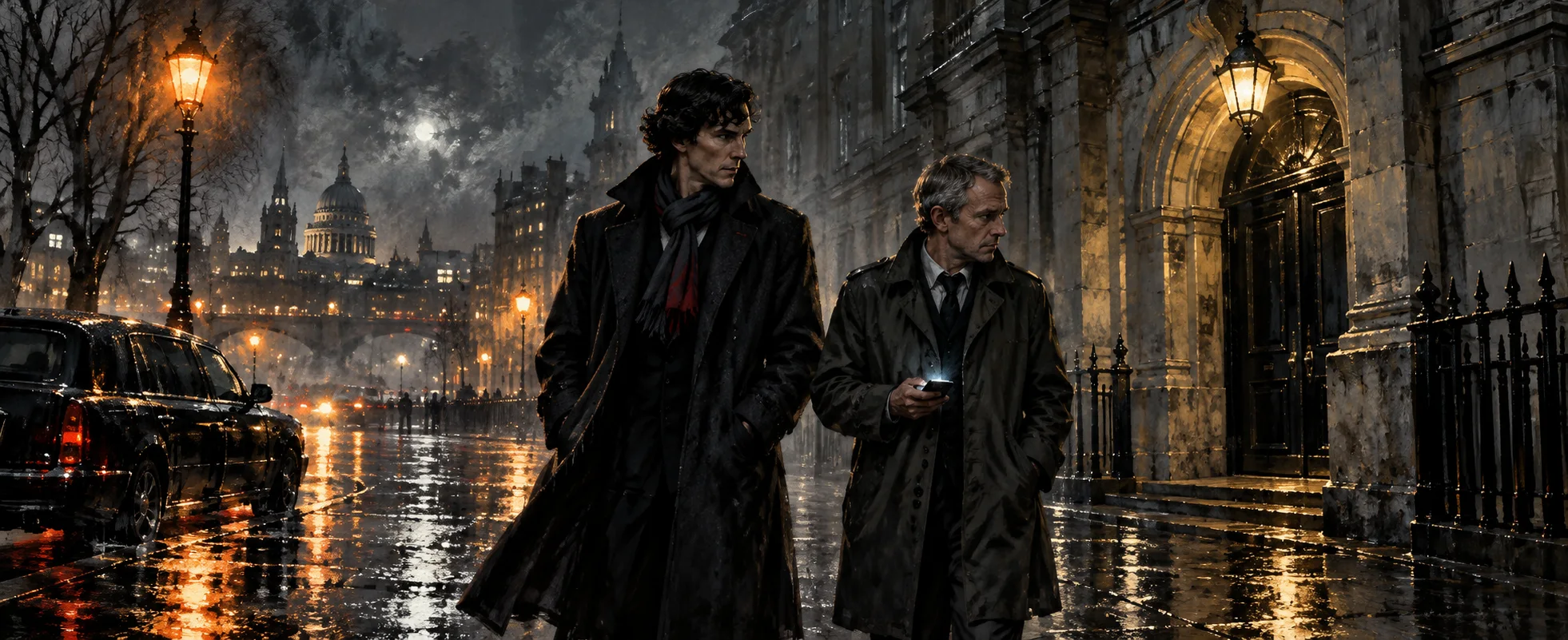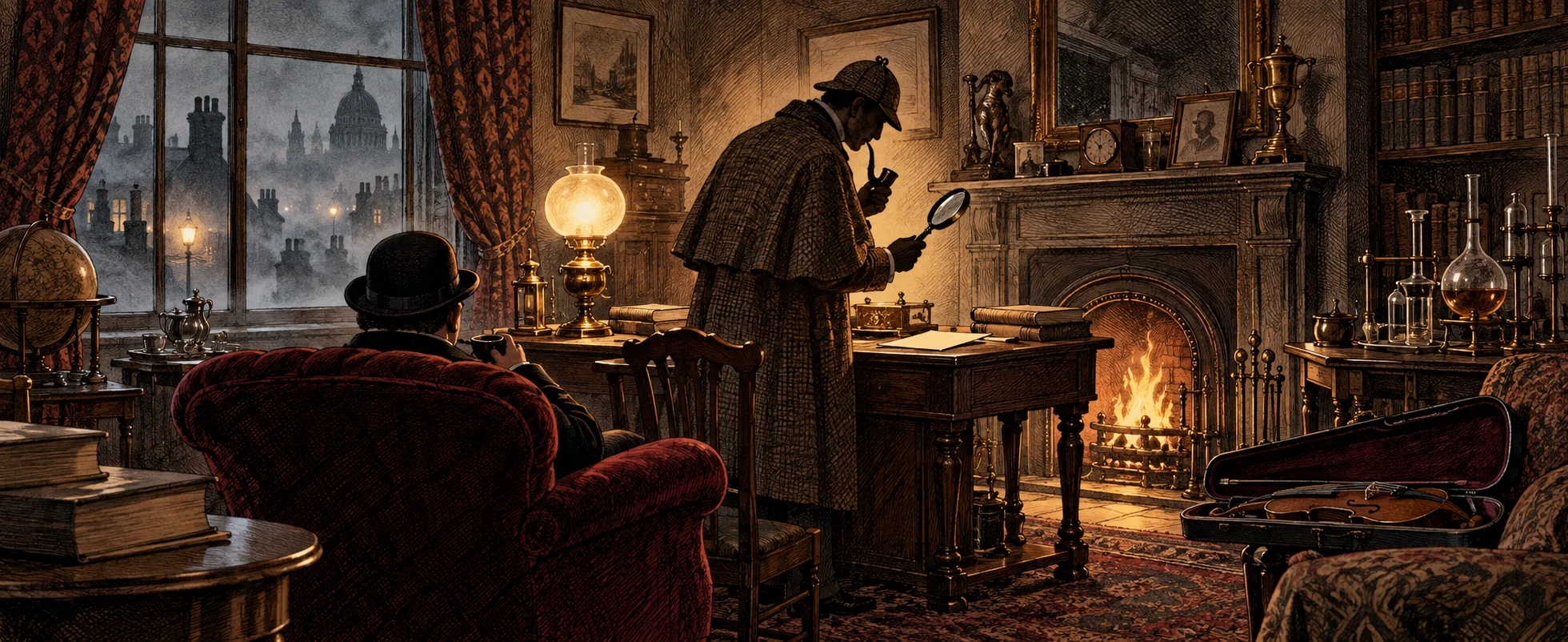
Original artwork, not a still
Elementary, my dear Watson.
— The Adventures of Sherlock Holmes · 1939
Behind the line
What it means
Our interpretation.
The line is the clearest example of a quote that is more famous than its source. Holmes never said it, yet it is the phrase everyone expects from him, shorthand for a brilliant answer delivered with a patient sigh at a slower friend. The 1939 film shows the joke running backwards, with Watson handing the line to Holmes, which only shows how soon it had become common property. Nearly every later Holmes adaptation either avoids it or winks at it.
Context reviewed
In context
Spoilers for The Adventures of Sherlock HolmesShow the scene
Sherlock Holmes never says it in any of Arthur Conan Doyle's sixty stories. Holmes calls things elementary and calls Watson "my dear Watson", but never in one breath. The exact phrase turns up in print by 1909, and P. G. Wodehouse used it in the January 1910 instalment of Psmith, Journalist. It became familiar to American audiences through the Basil Rathbone and Nigel Bruce films from 1939 to 1946. In the 1939 The Adventures of Sherlock Holmes, the second of that series, the closing scene runs the other way round: Watson swats a fly and remarks "Elementary, my dear Holmes, elementary."
Sources (2)
- Wikipedia: Sherlock Holmessection 'Elementary, my dear Watson'Reference checked
- Wikipedia: The Adventures of Sherlock Holmes (1939 film)lead and Plot, final paragraphReference checked
Context reviewed