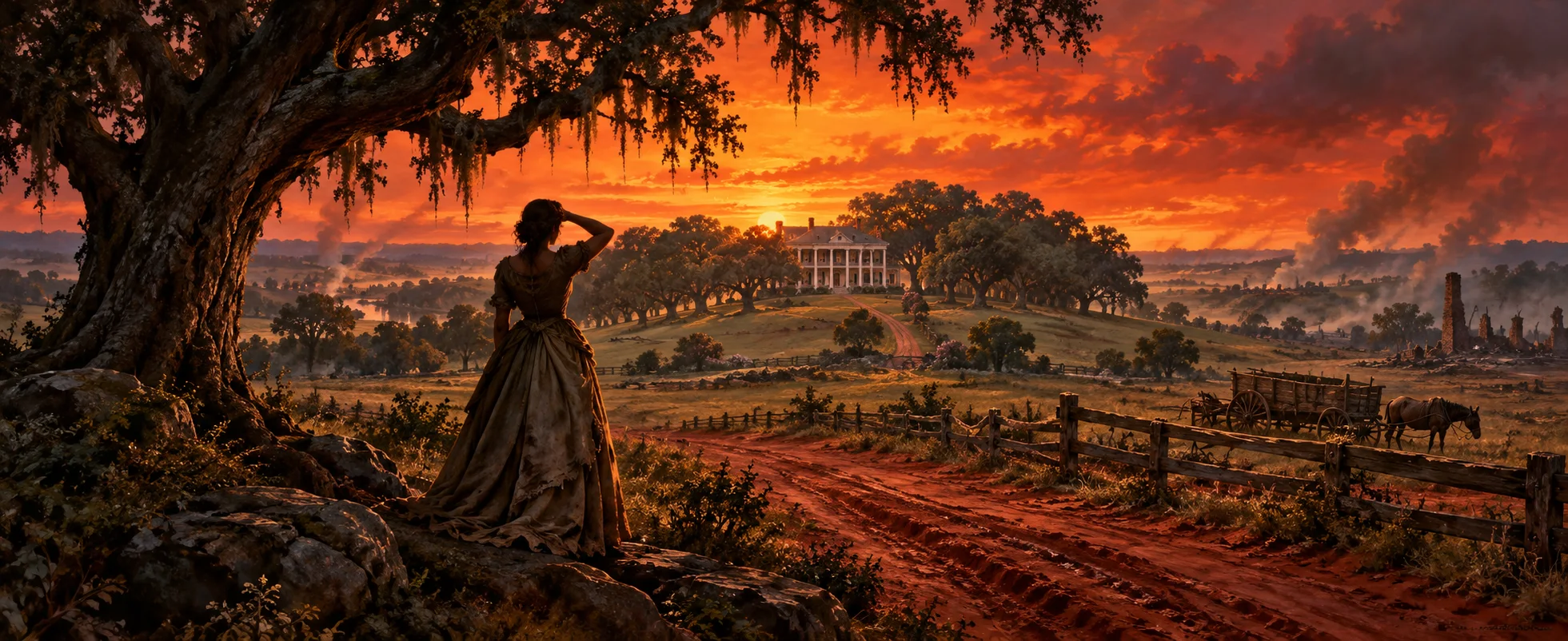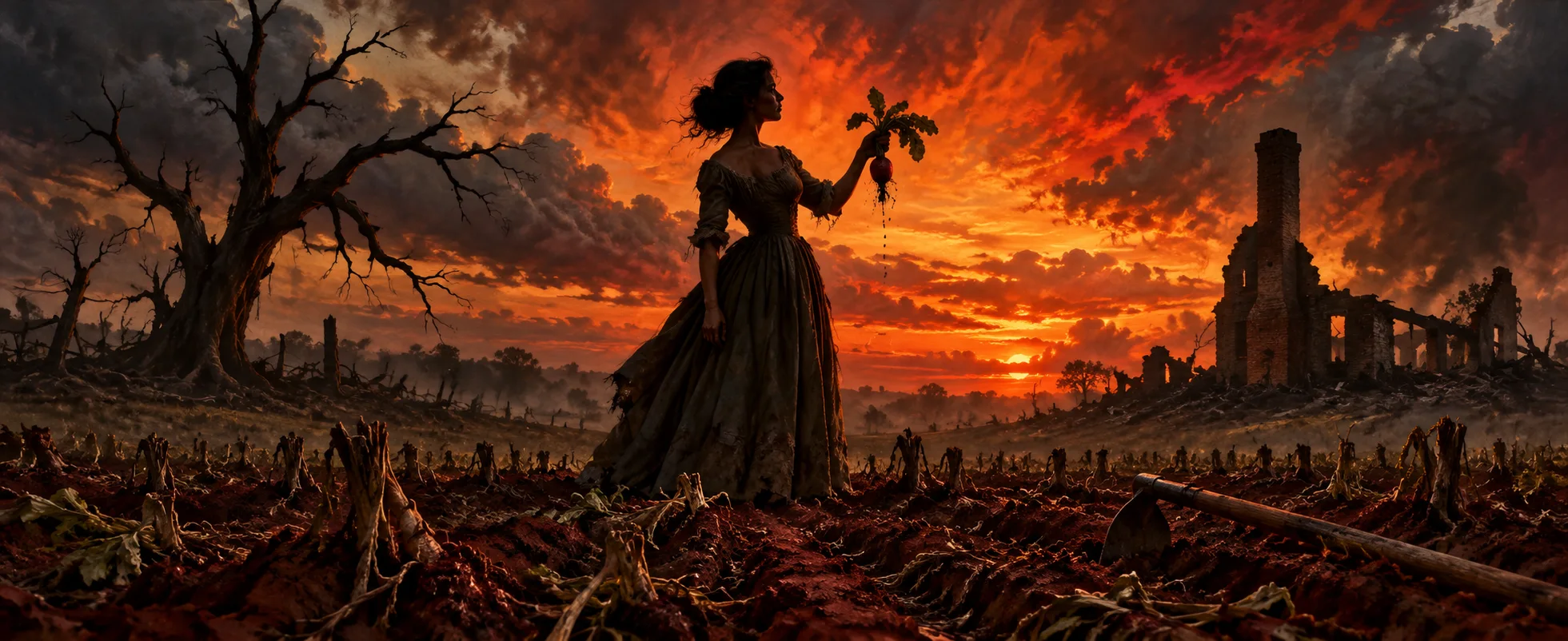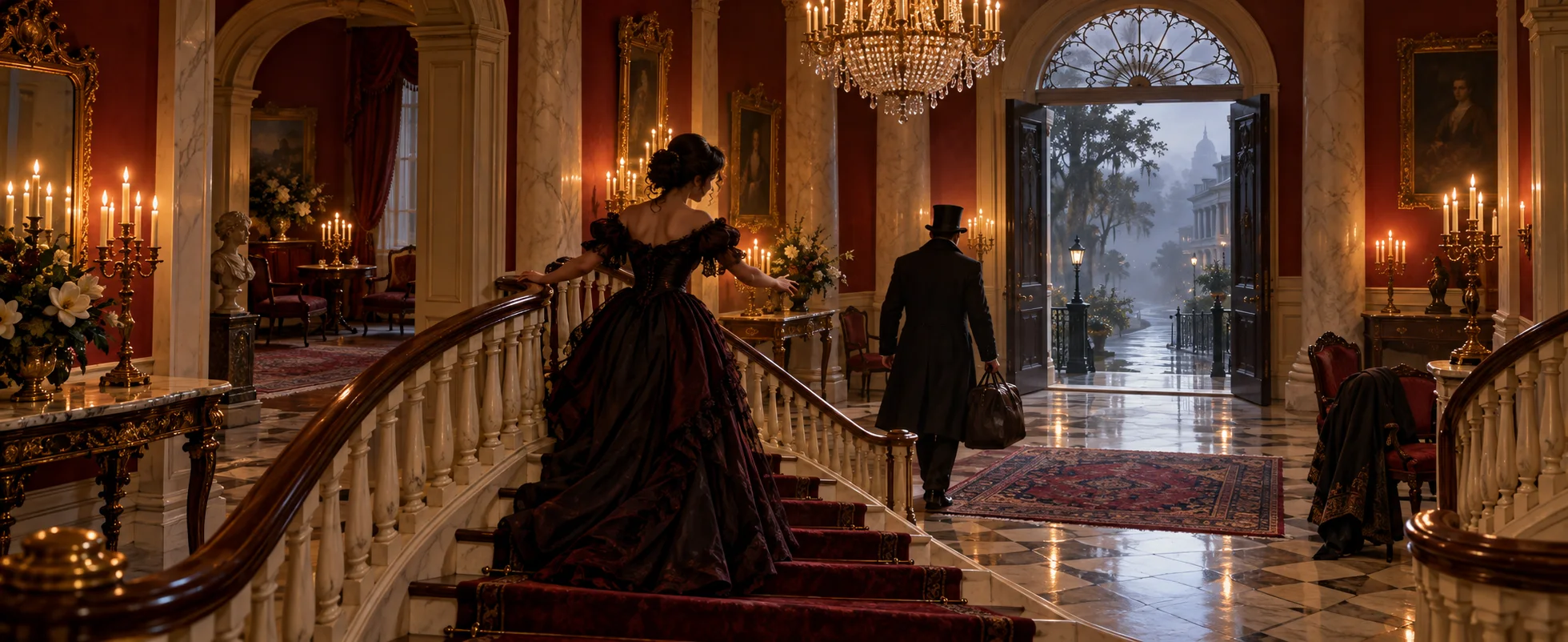
Original artwork, not a still
Frankly, my dear, I don't give a damn.
— Gone with the Wind · 1939
Behind the line
What it means
Our interpretation.
Rhett has spent a decade chasing a woman who only wants him once he is leaving, and this is the moment the chase ends, with the polite 'my dear' sharpening the cut. The word 'damn' shocked 1939 audiences, and a myth of a fine for it has outlived the facts. Fans use it as the last word on any relationship, job or argument that someone has finally stopped caring about.
Context reviewed
In context
Spoilers for Gone with the WindShow the scene
At the end of Gone with the Wind (1939), Bonnie, the daughter of Rhett Butler and Scarlett O'Hara, has died in a riding accident, and Melanie has just died too. Rhett prepares to leave Atlanta. Scarlett, realising at last that it was Rhett she loved and not Ashley, pleads with him to stay and asks where she is to go and what she is to do. This is his reply, and he walks off into the early morning fog. In Margaret Mitchell's 1936 novel he says only 'My dear, I don't give a damn'; the film added 'Frankly'.
Sources (2)
- Frankly, my dear, I don't give a damn, WikipediaOpening sectionReference checked
- Gone with the Wind (film), WikipediaPlot and Production sectionsReference checked
Context reviewed