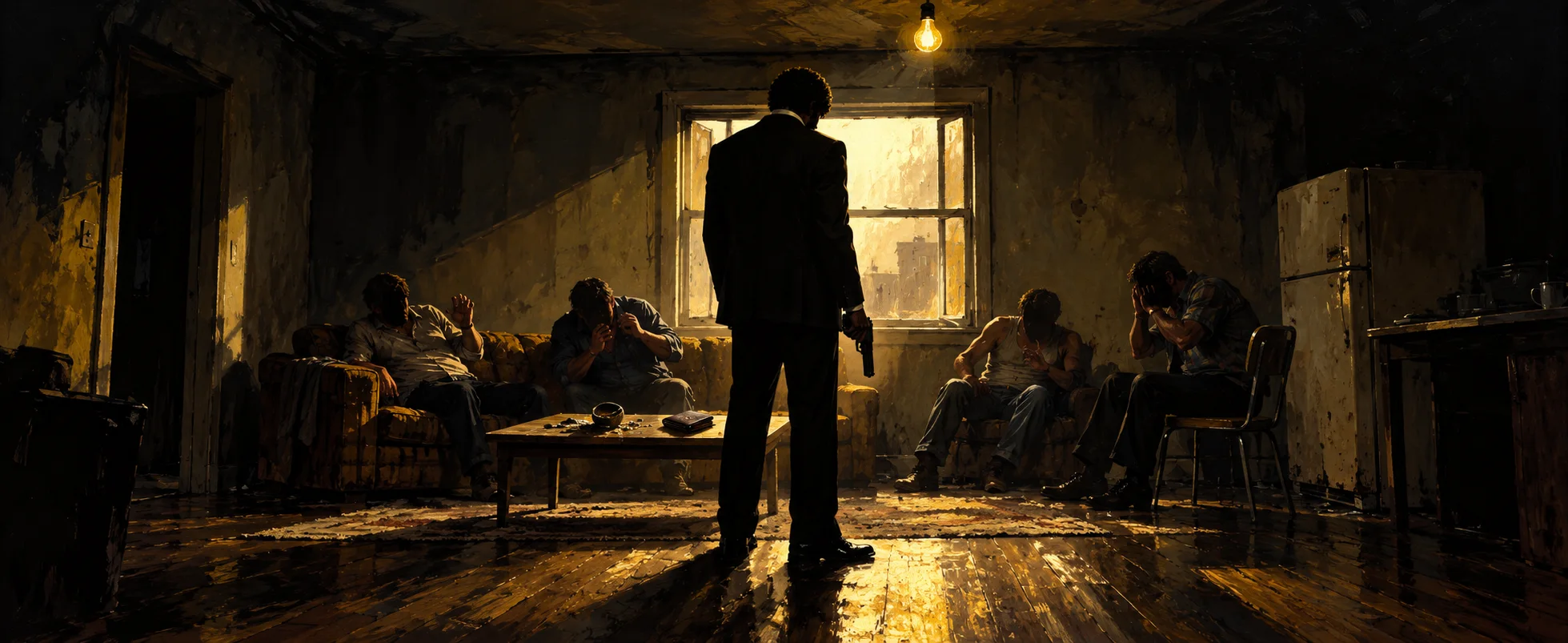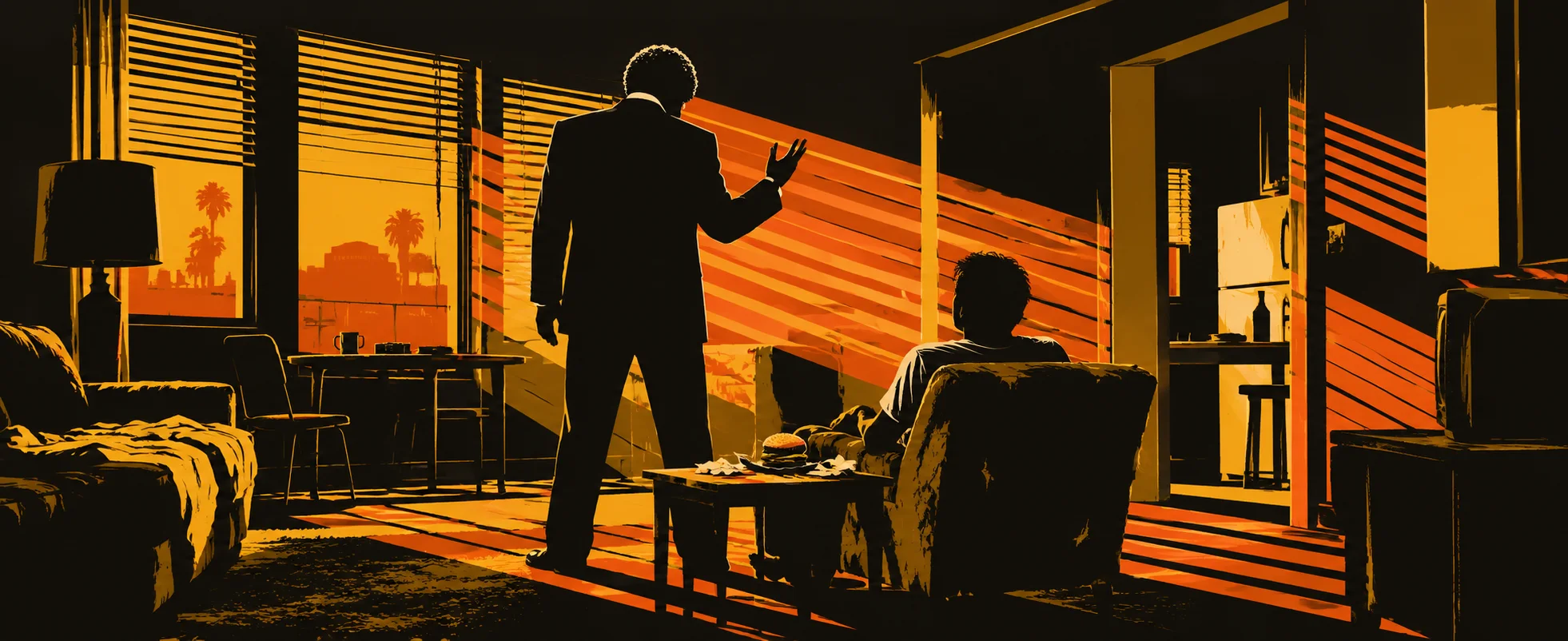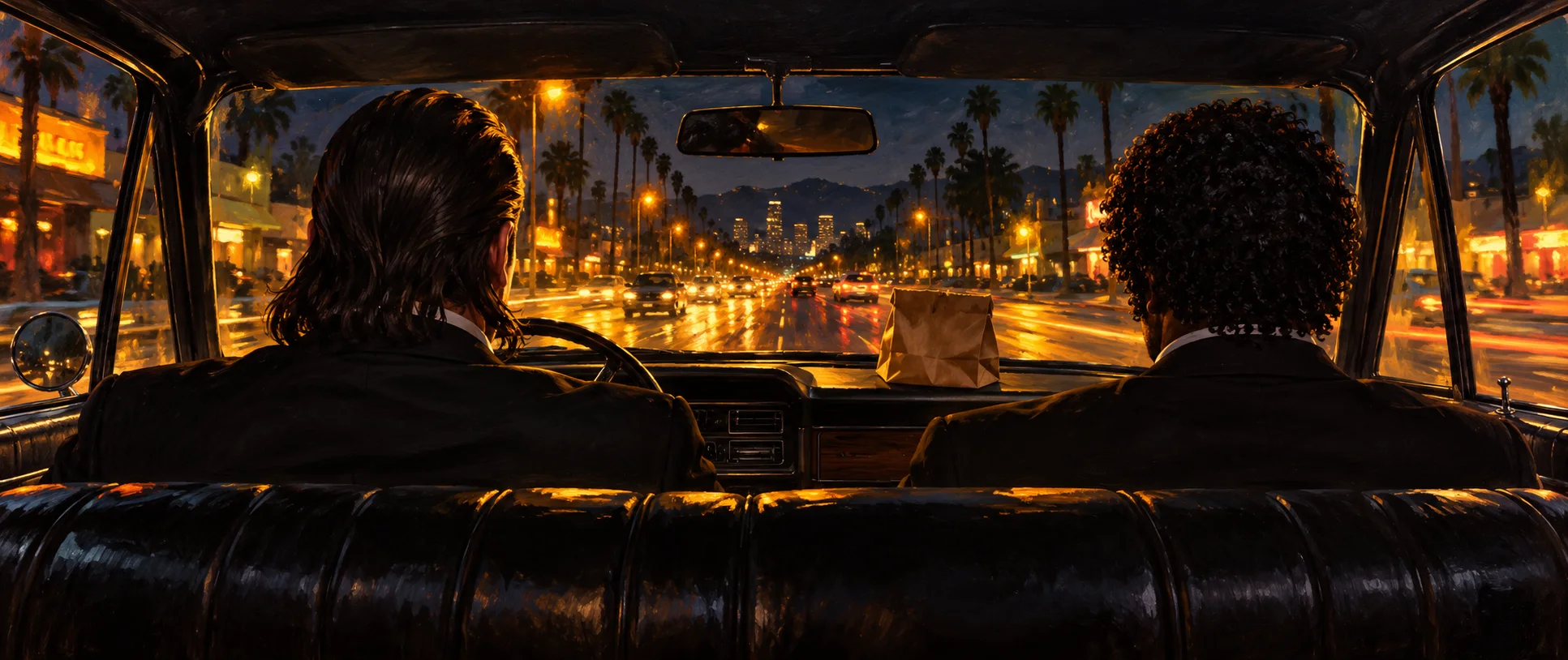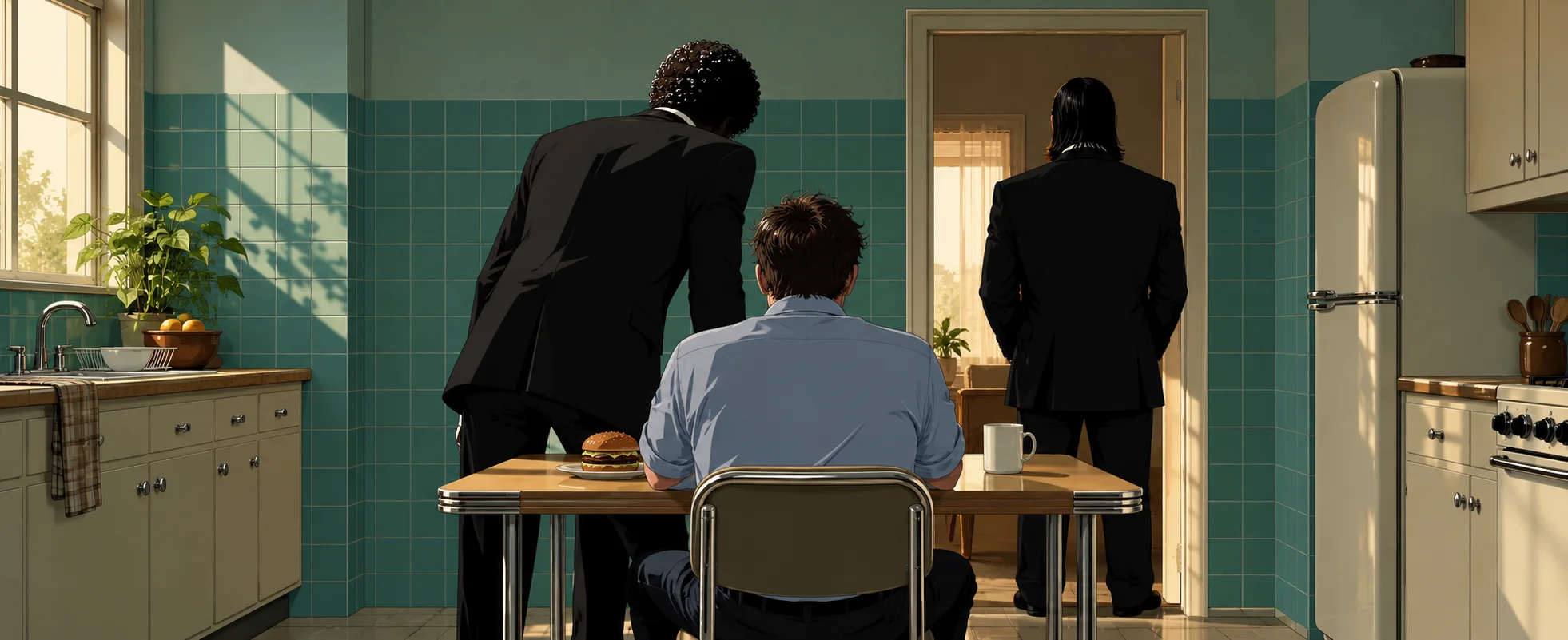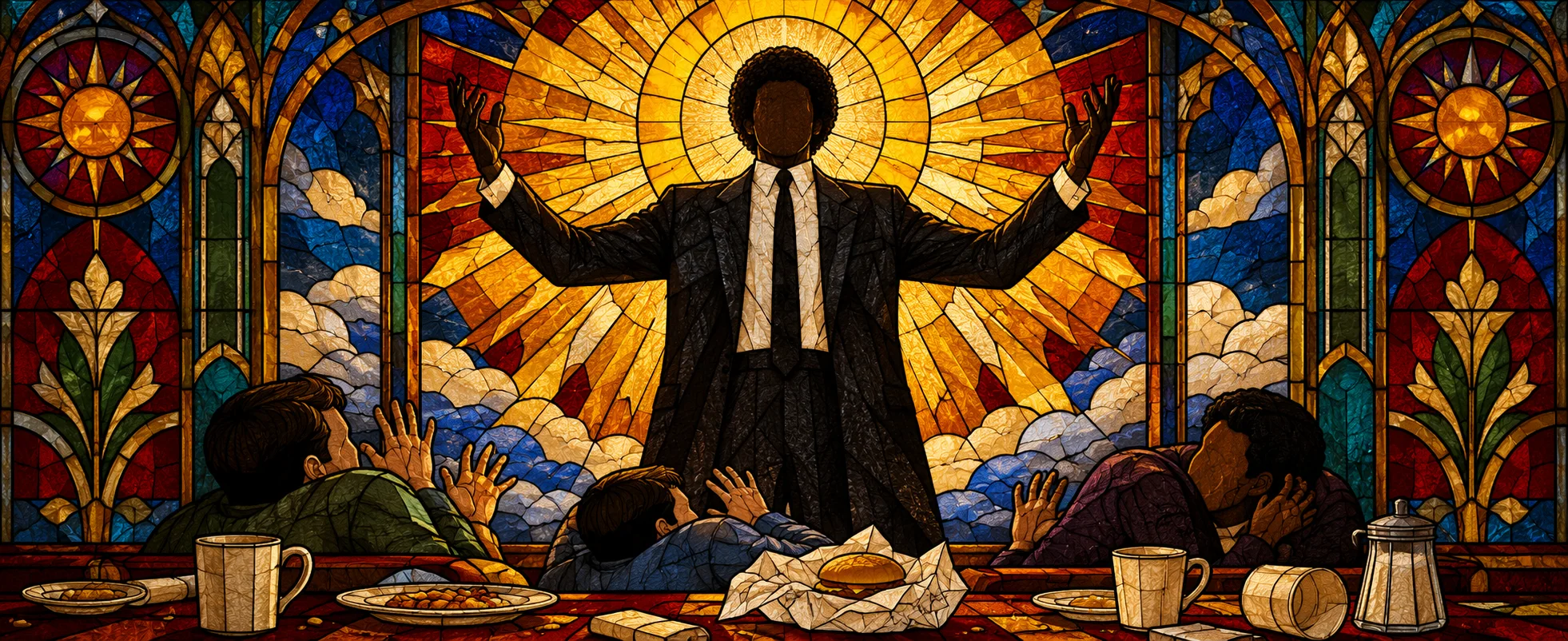
Original artwork, not a still
And you will know My name is the Lord when I lay My vengeance upon thee.
— Pulp Fiction • 1994
Behind the line
What it means
Our interpretation.
It is the point where the verse stops sounding like comfort and turns into a promise of violence, delivered with total calm. As a catchphrase it has outlived the scene: the vengeance-upon-thee ending is the part fans recite, parody and print on merchandise, usually in a very low voice.
Context reviewed
In context
Spoilers for Pulp FictionShow the scene
These are the closing words of Jules Winnfield's Ezekiel 25:17 recitation in Brett's apartment, delivered just before he and Vincent kill Brett. The film repeats the passage in the diner epilogue, almost word for word, but the final line changes there to "you will know I am the Lord when I lay My vengeance upon you". The apartment version, which ends on the name of the Lord and the vengeance laid upon thee, is the one this line comes from.
Sources (2)
- Pulp Fiction, WikipediaSection "Jules' Bible passage"Reference checked
- Pulp Fiction (1994) script transcript, Springfield! Springfield!Brett's apartment sceneReference checked
Context reviewed