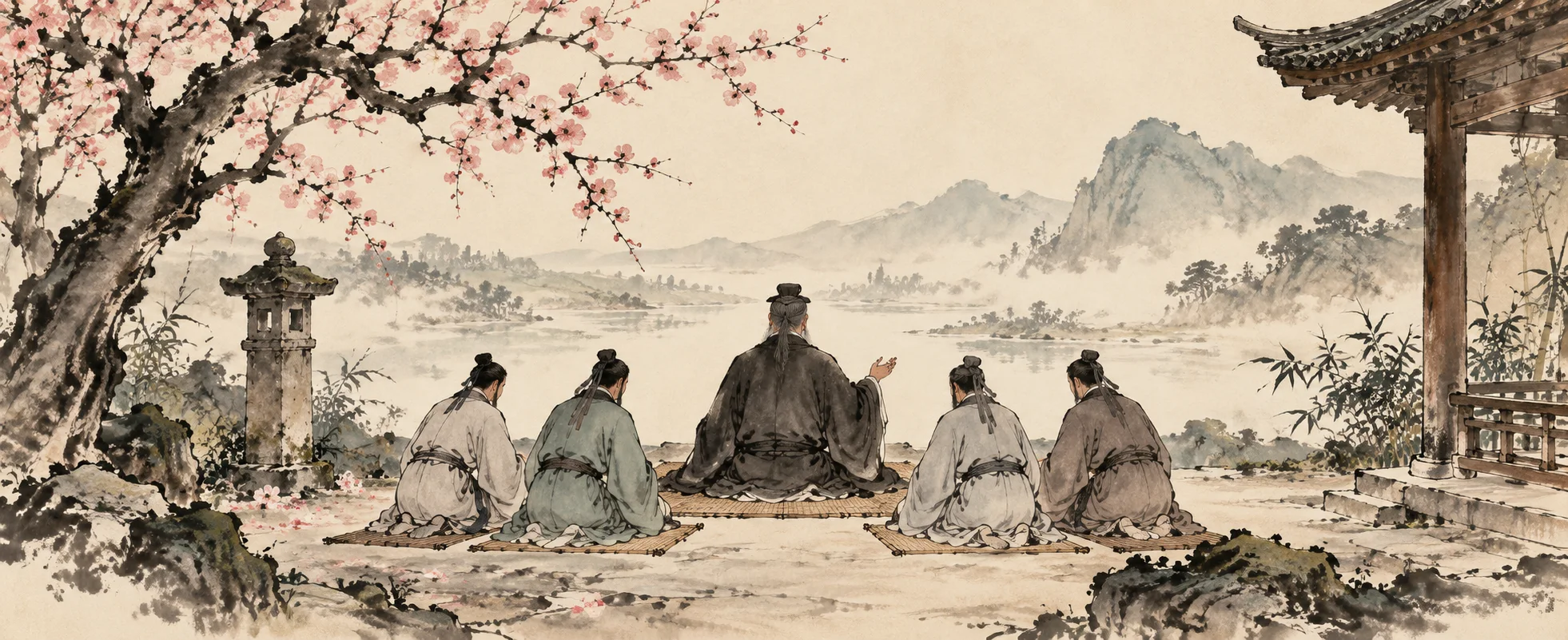
Original artwork, not a still
Only the wisest and stupidest of men never change.
Behind the line
What it means
Our interpretation.
The saying is blunt about the two extremes: the very wise and the very stupid are fixed, and everyone in between can still be moved. In its popular form it works as a quip against stubbornness and a defence of changing your mind. Quote sites often give it as a free-floating Confucius saying, but it is one specific chapter of the Analects.
Context reviewed
In context
May contain spoilersShow the scene
This saying comes from the Analects, the collection of sayings of Confucius traditionally compiled by his followers. It is Book 17 (Yang Huo), chapter 3. One English translation says that only the wise of the highest class and the stupid of the lowest class cannot be changed. The popular wording 'never change' is a looser paraphrase of the same remark. Scholars date much of the Analects to the Warring States period, with its final form coming under the Han dynasty.
Sources (2)
- Wikiquote: ConfuciusChapter XVII, Yang Huo, Book XVII chapter IIIReference checked
- Wikipedia: AnalectsIntroductionReference checked
Context reviewed