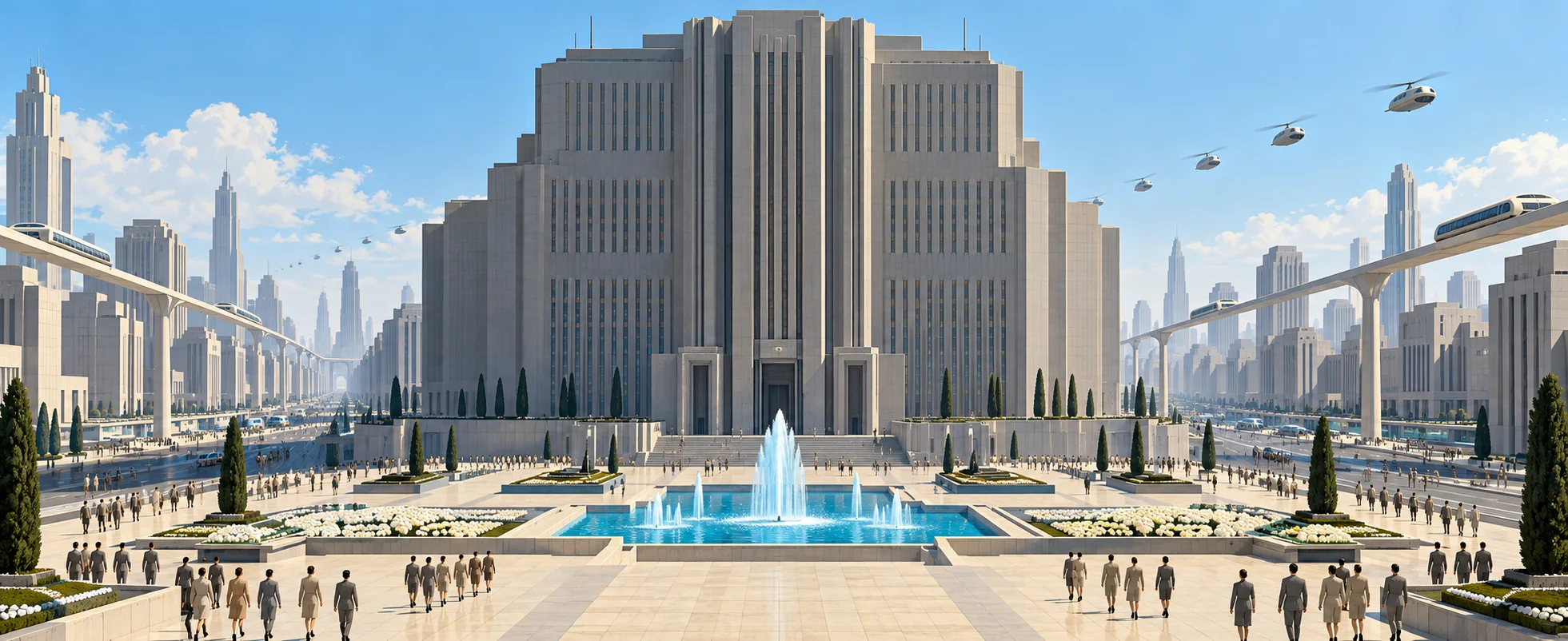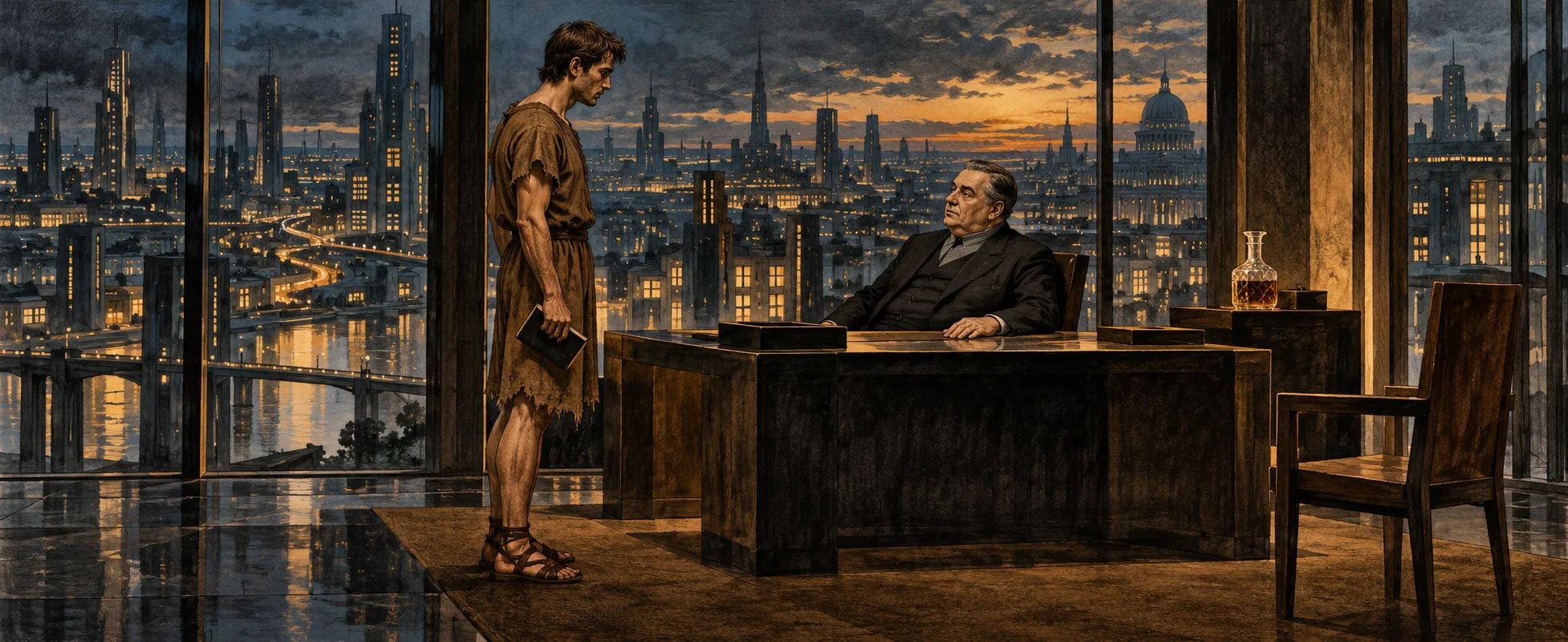
Original artwork, not a still
Brave New World ‧ 1932
I'm claiming the right to be unhappy.
Behind the line
What it means
Our interpretation.
This is the novel's argument boiled down: a world where nobody suffers against a man who would rather have his pain along with his poetry. John's cry is quoted by anyone who thinks comfort can cost too much. The book never makes the answer easy, since Mond is calm, kind and persuasive, and John's own refusal ends in the book's grimmest scene.
Context reviewed
In context
Spoilers for Brave New WorldShow the scene
Chapter 17 of Brave New World (1932). John the Savage, raised on a New Mexico reservation, faces Mustapha Mond, the World Controller for Western Europe, after Bernard and Helmholtz are sentenced to exile on islands. Mond defends a world that gave up God, art and risk for comfort; John answers that he wants God, poetry, danger, freedom, goodness and sin. Mond sums that up as claiming the right to be unhappy, and John defiantly accepts it. Mond then refuses John's request to join the exiles, and John retreats to a lighthouse near Puttenham, where the novel ends with his death.
Sources (2)
- Wikiquote: Brave New Worldsection Chapter 17Reference checked
- Wikipedia: Brave New WorldPlotReference checked
Context reviewed