Original artwork, not a still
Through the Looking-Glass ‧ 1872
'Twas brillig, and the slithy toves did gyre and gimble in the wabe.
Behind the line
What it means
Our interpretation.
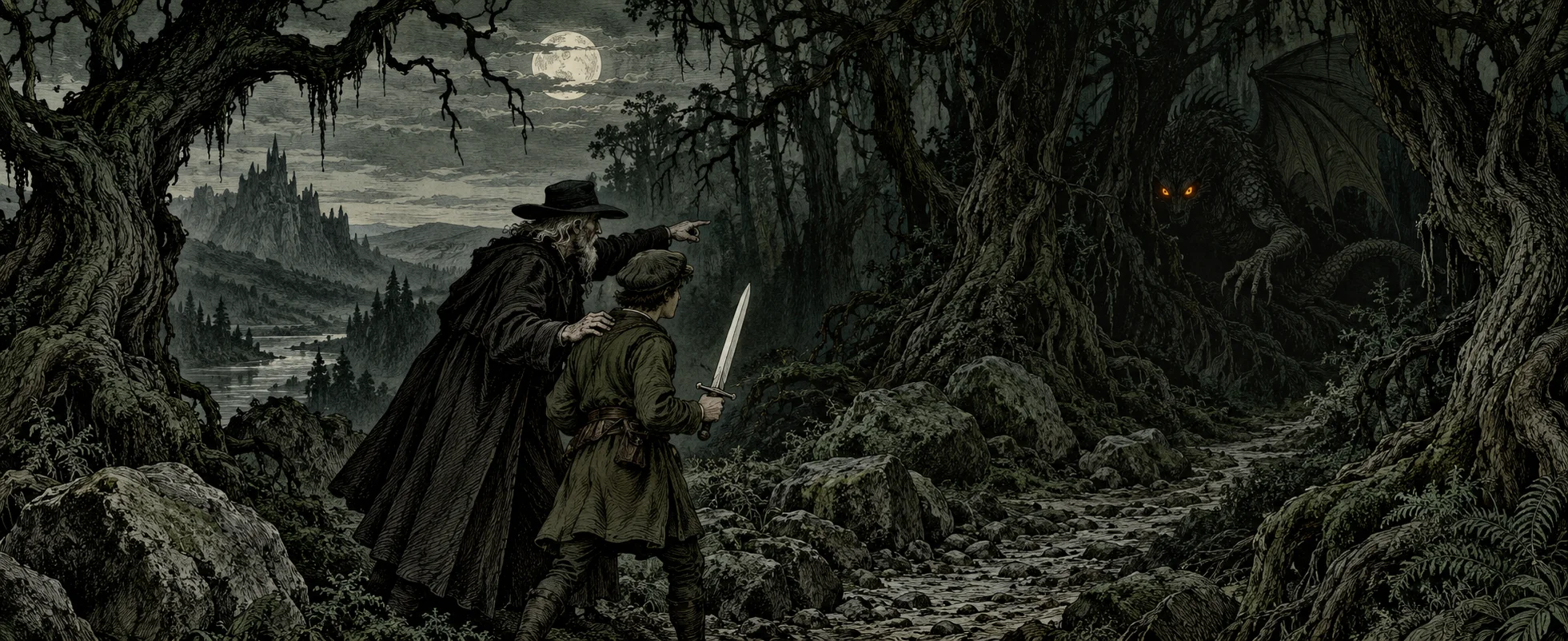
Almost none of the words exist, yet the sentence has grammar, mood and a setting, so readers feel they understand it. Alice says it fills her head with ideas though she cannot say which, and that is the poem's trick. Coined words such as "chortle" and "galumph" come from this poem, and the opening is still the shorthand for delightful nonsense.
Context reviewed
In context
Spoilers for Through the Looking-GlassShow the scene
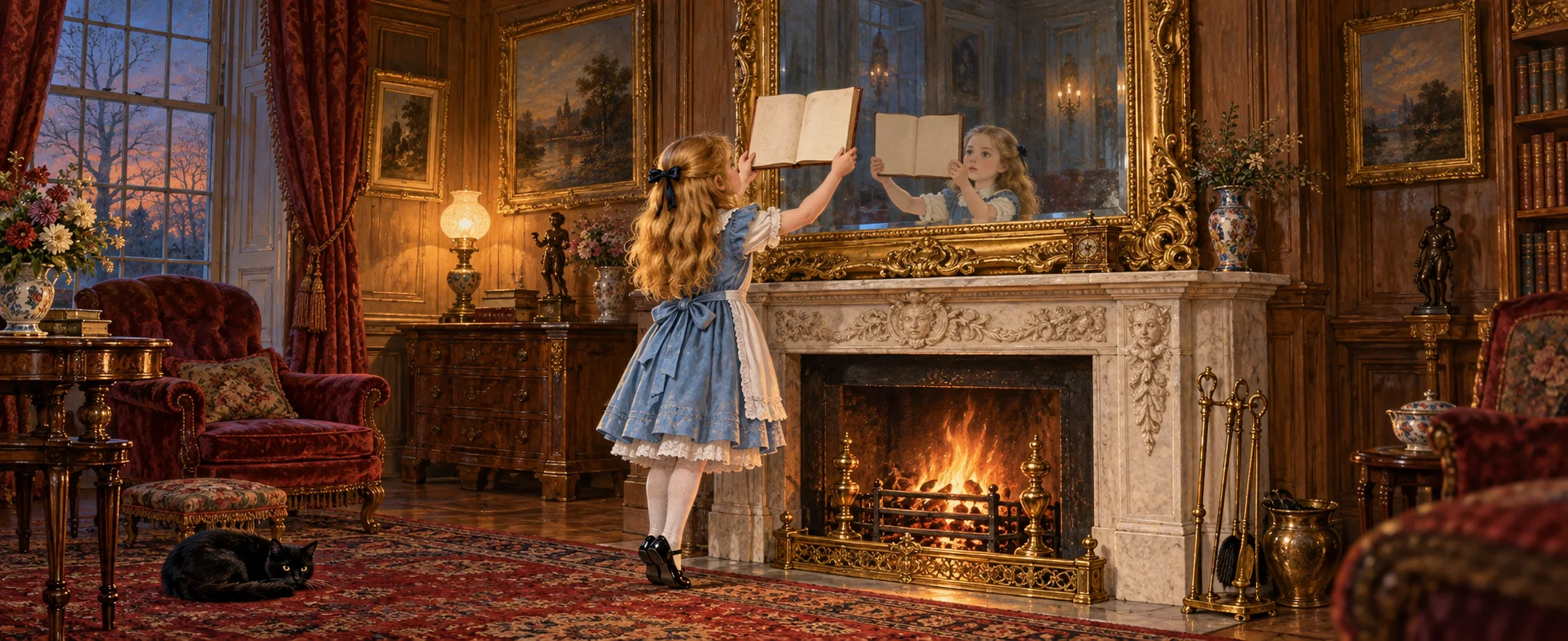
These are the opening lines of "Jabberwocky", which Alice finds in Chapter I, "Looking-Glass House", of Through the Looking-Glass. The poem is printed in mirror writing in a book in the looking-glass room, and she holds it up to a mirror to read it. Carroll wrote the first stanza about a decade earlier, and it was printed in 1855 in Mischmasch, a periodical he wrote and illustrated for his family, as "Stanza of Anglo-Saxon Poetry". In the book, Humpty Dumpty later explains its nonsense words to Alice.
Sources (2)
- Project Gutenberg: Through the Looking-GlassChapter I, Looking-Glass HouseReference checked
- Wikipedia: JabberwockyOrigin and publicationReference checked
Context reviewed