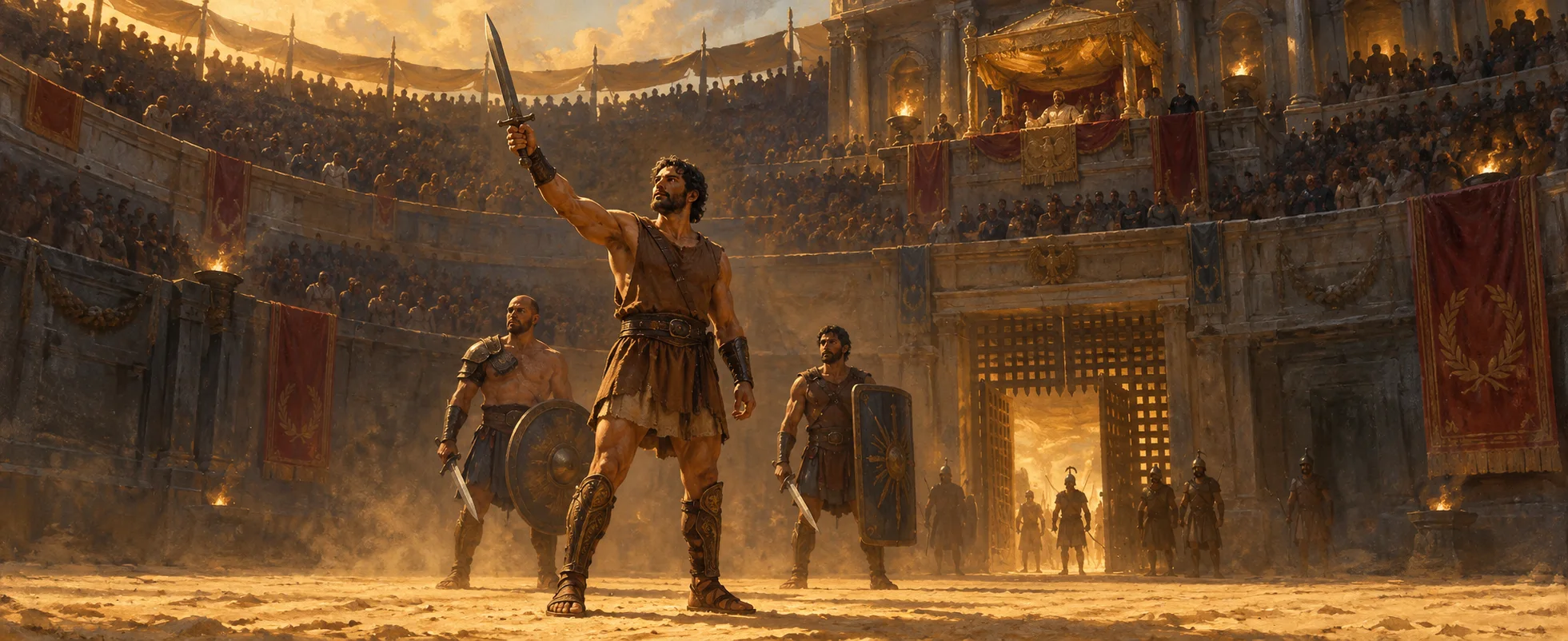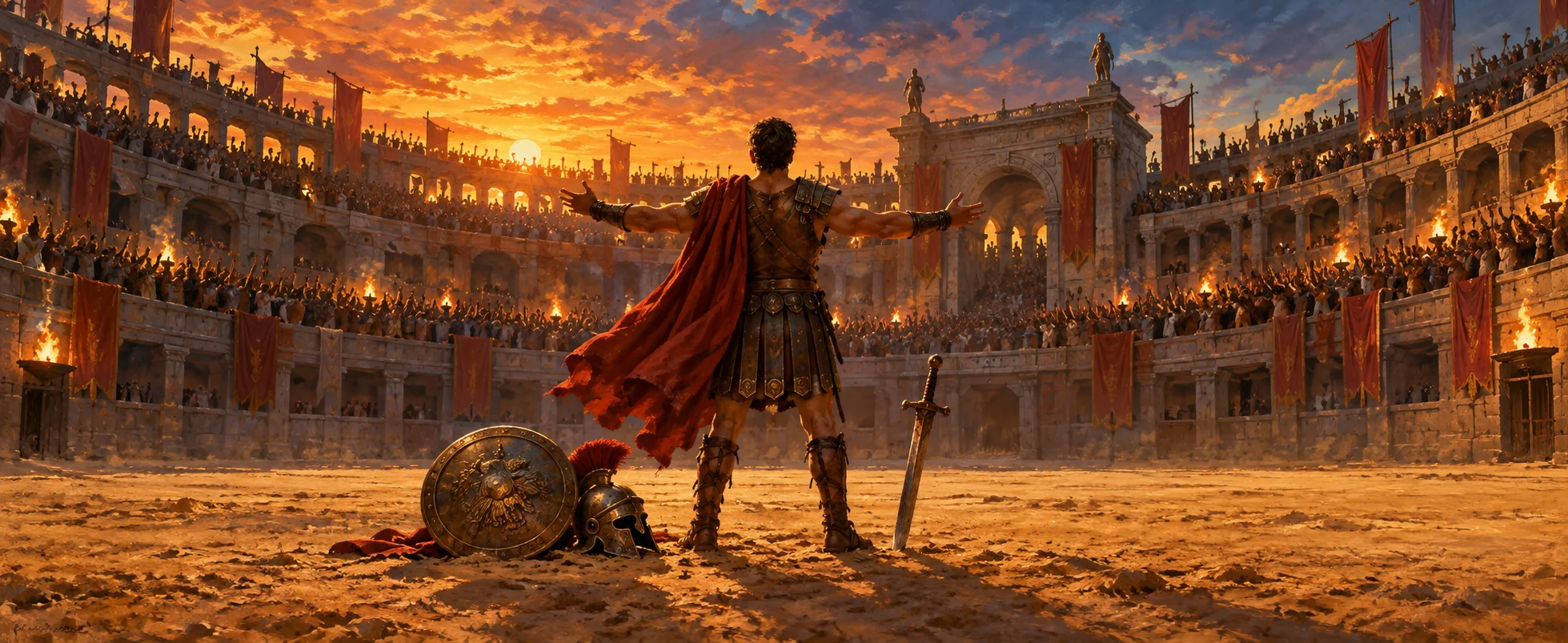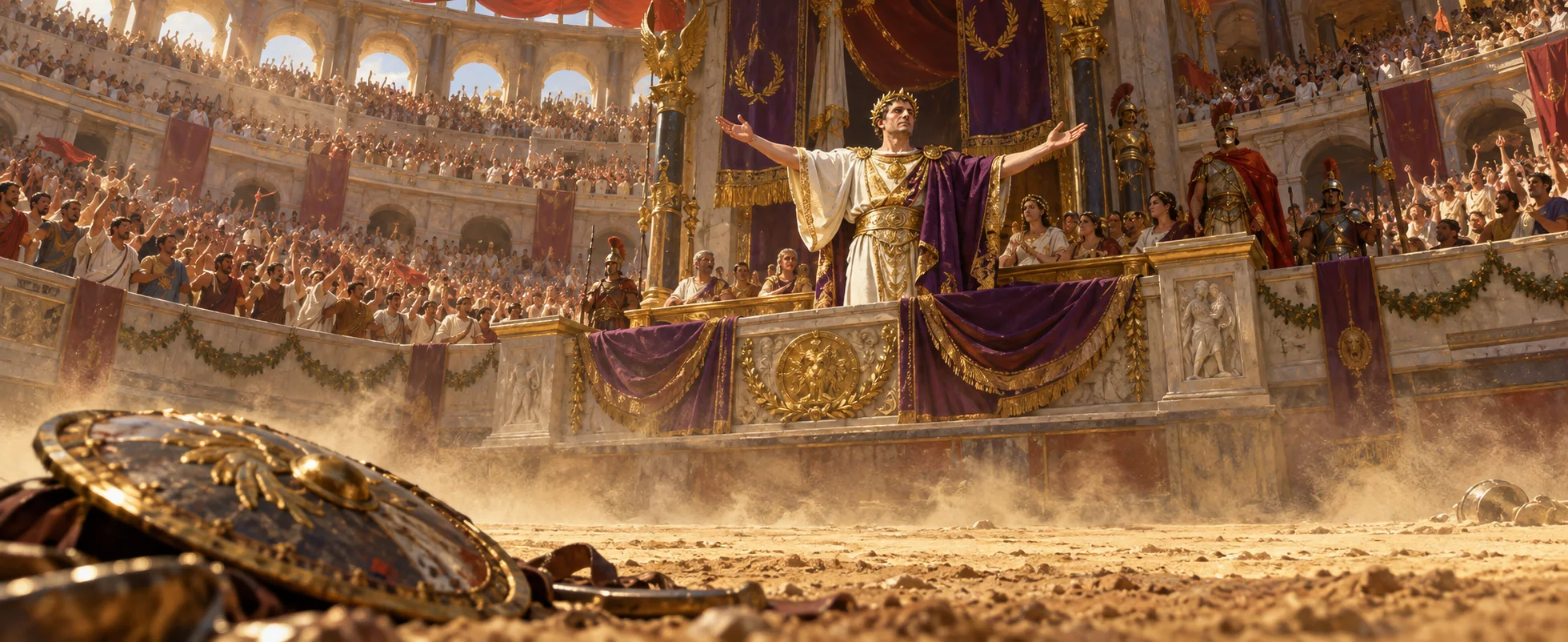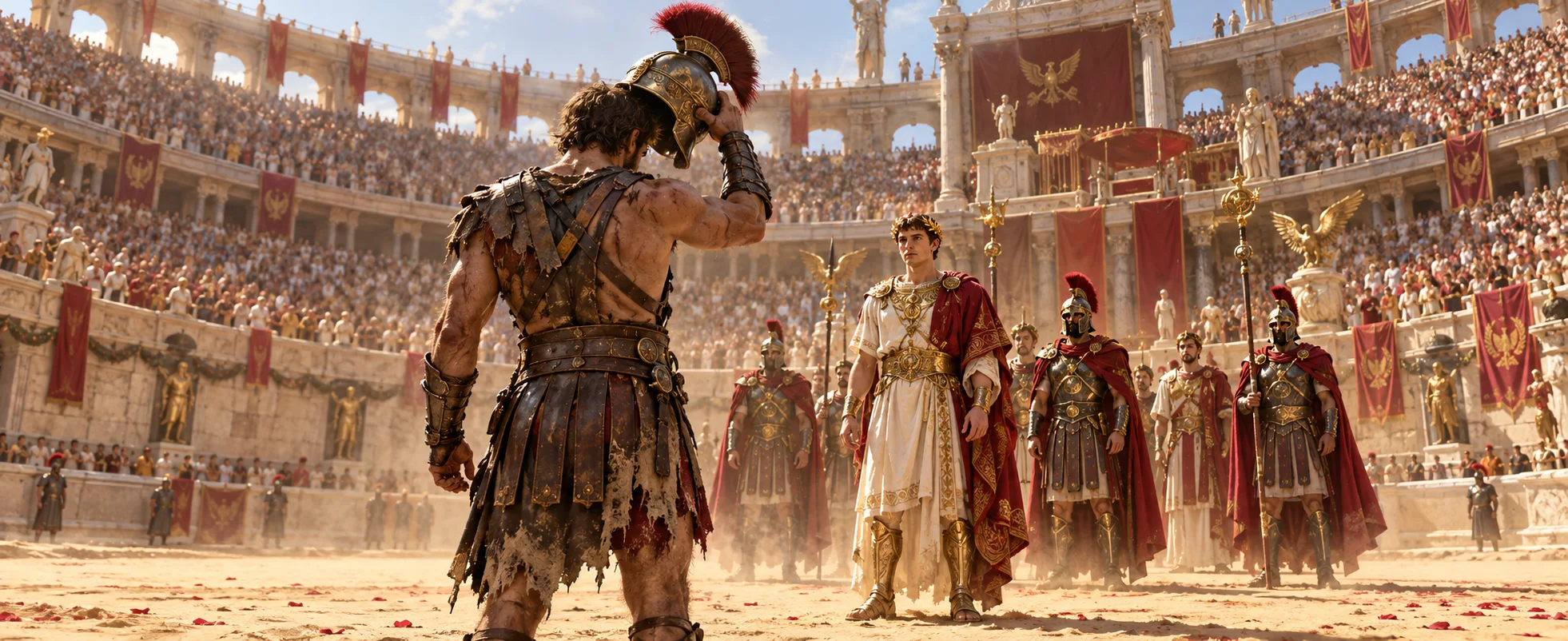
Original artwork, not a still
My name is Maximus Decimus Meridius, commander of the Armies of the North, General of the Felix Legions, loyal servant to the true emperor, Marcus Aurelius. Father to a murdered son, husband to a murdered wife. And I will have my vengeance, in this life or the next.
Behind the line
What it means
Our interpretation.
It is one of cinema's great reveal speeches because it works as a list of everything Commodus took away, each title stripped off in turn until only the vow is left. The structure is so clean that it has been parodied as a template: fans swap in their own titles and finish on a grievance. It is also the moment the film stops being about survival and becomes a revenge story.
Context reviewed
In context
Spoilers for GladiatorShow the scene
In Gladiator (2000), Maximus is a general turned slave who has been sold to a gladiator trainer. In Rome's Colosseum he leads a team of gladiators in a mock re-enactment of the Battle of Zama and wins against the odds. Emperor Commodus comes down to the sand to congratulate the masked champion and demands his name. Maximus removes his helmet and says who he is, in front of the emperor who had him sentenced to death and murdered his family. The crowd starts to chant, so Commodus cannot have him killed on the spot.
Sources (3)
- Wikipedia: Gladiator (2000 film)PlotReference checked
- Wikiquote: Gladiator (2000 film)Maximus sectionReference checked
- Gladiator Wiki: Maximus Decimus MeridiusBiographyReference checked
Context reviewed