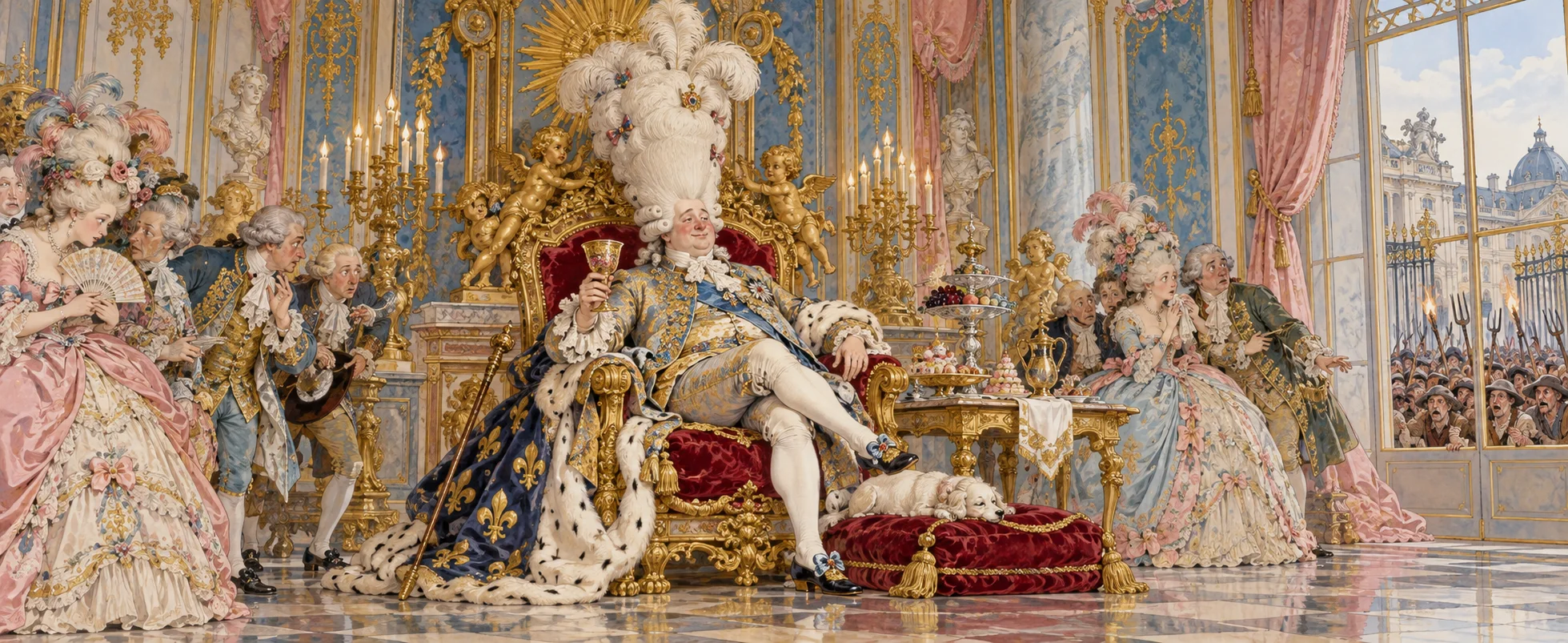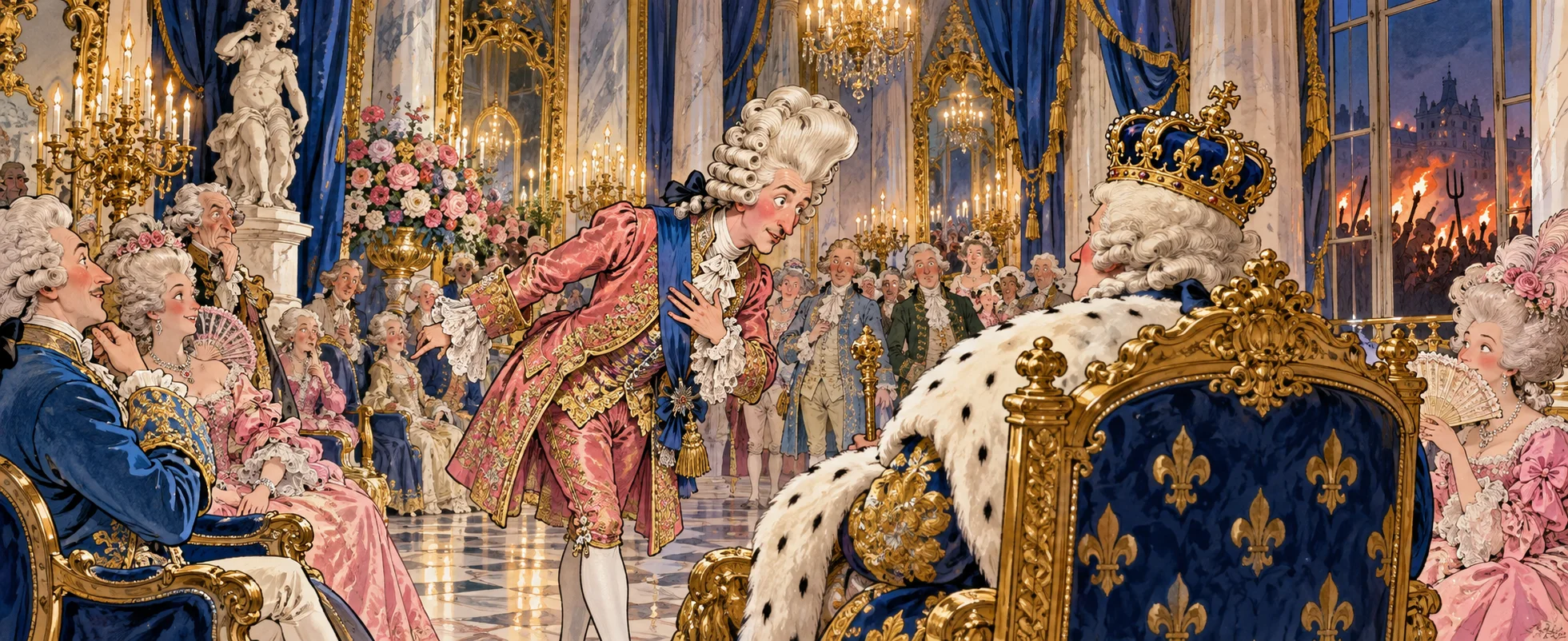
Original artwork, not a still
Sire, the peasants are revolting.
— History of the World: Part I · 1981
Behind the line
What it means
Our interpretation.
A pun that works because revolting means both rebelling and disgusting, with Mel Brooks's king gleefully picking the second meaning. It is pure Brooks: a historical event reduced to wordplay and delivered with a straight face. Fans quote it for any crowd that is both angry and unpleasant, and the misquoted version, with the Sire added, is the one that stuck.
Context reviewed
In context
Spoilers for History of the World: Part IShow the scene
In the French Revolution section of Mel Brooks's History of the World, Part I (1981), Harvey Korman plays Count de Monet, adviser to the self-indulgent King Louis XVI, played by Brooks. The count arrives on urgent business to warn the king that the people are revolting. Louis takes the word the wrong way and agrees that they stink. The sequence also has the king shooting peasants like clay pigeons in a game of skeet, and it sets up the plot to hide him by swapping him for a look-alike servant, Jacques, who holds the nobles' buckets.
Sources (2)
- Wikiquote: History of the World: Part ICount de Monet and King Louis exchangeReference checked
- Wikipedia: History of the World, Part IPlot, The French Revolution, and CastReference checked
Context reviewed