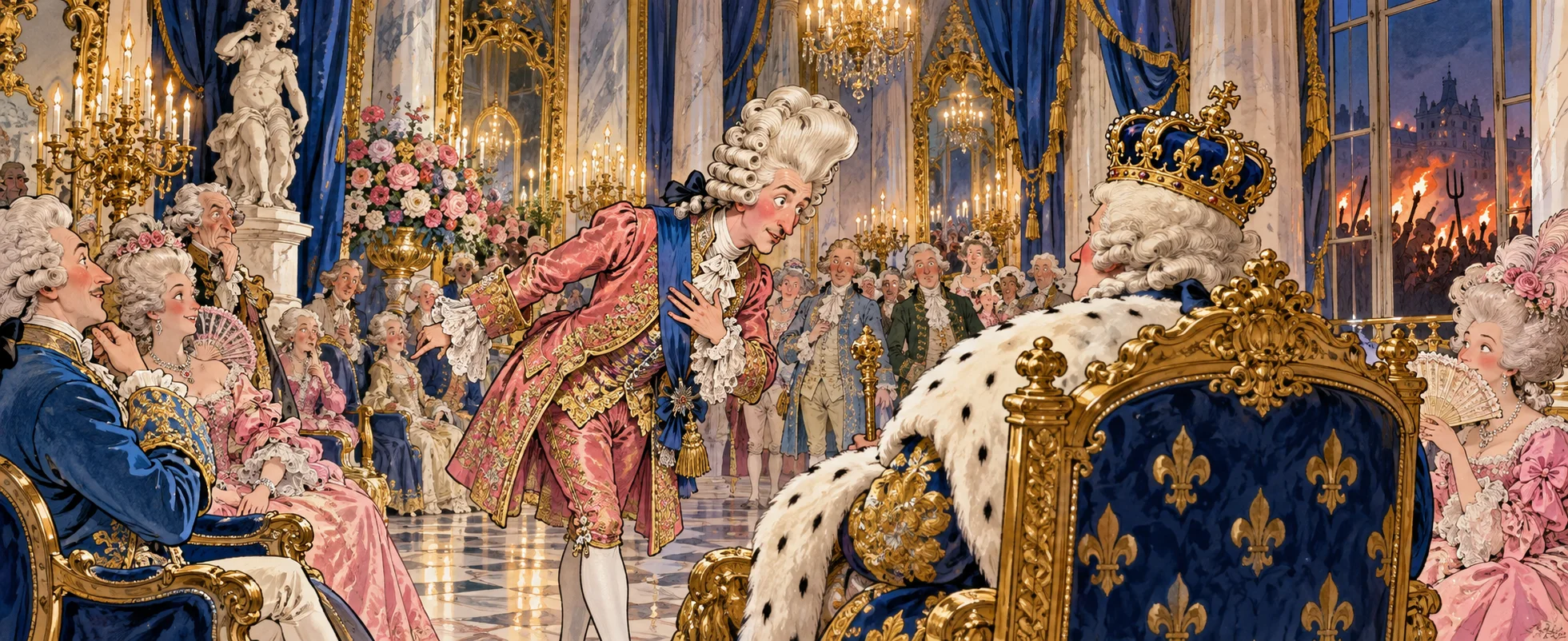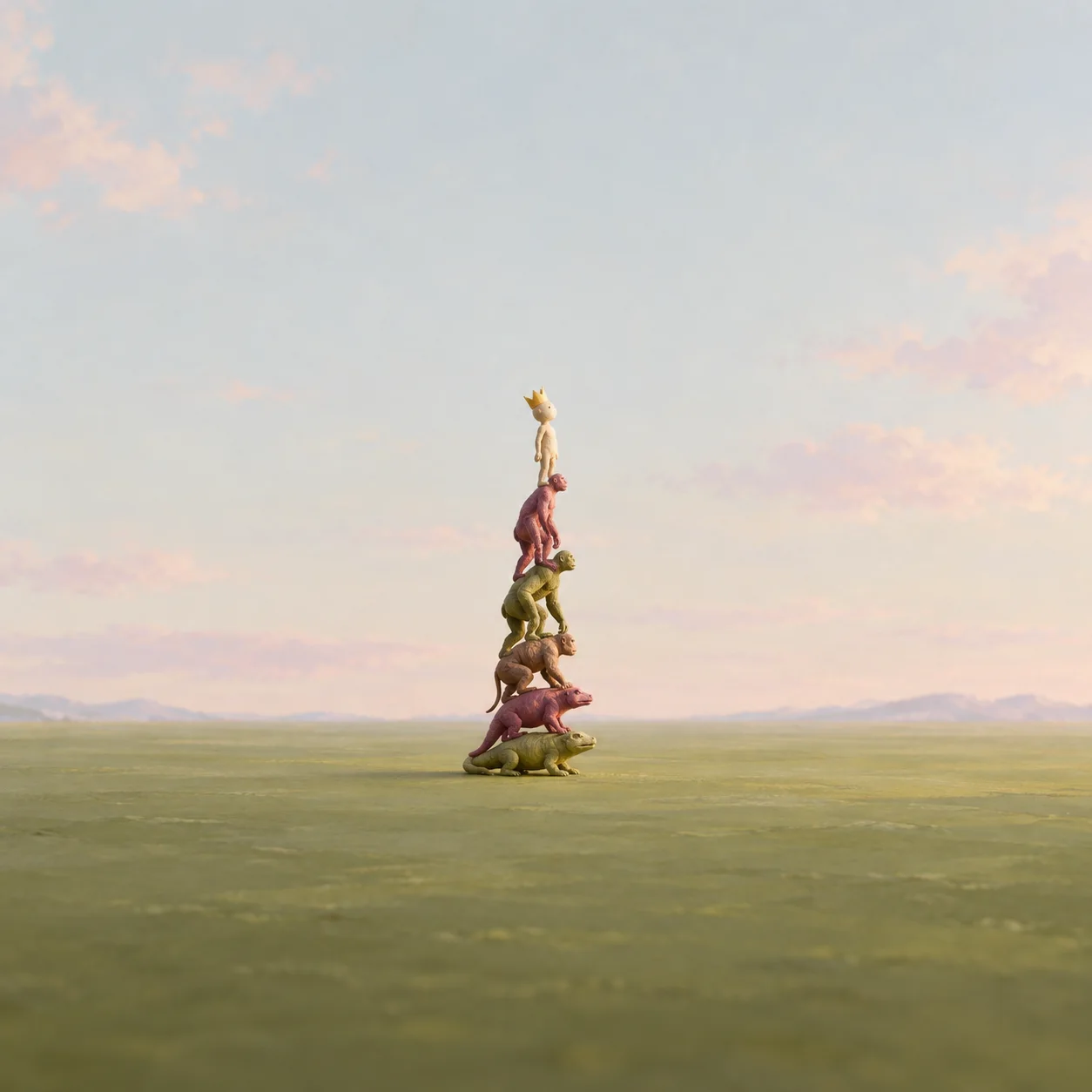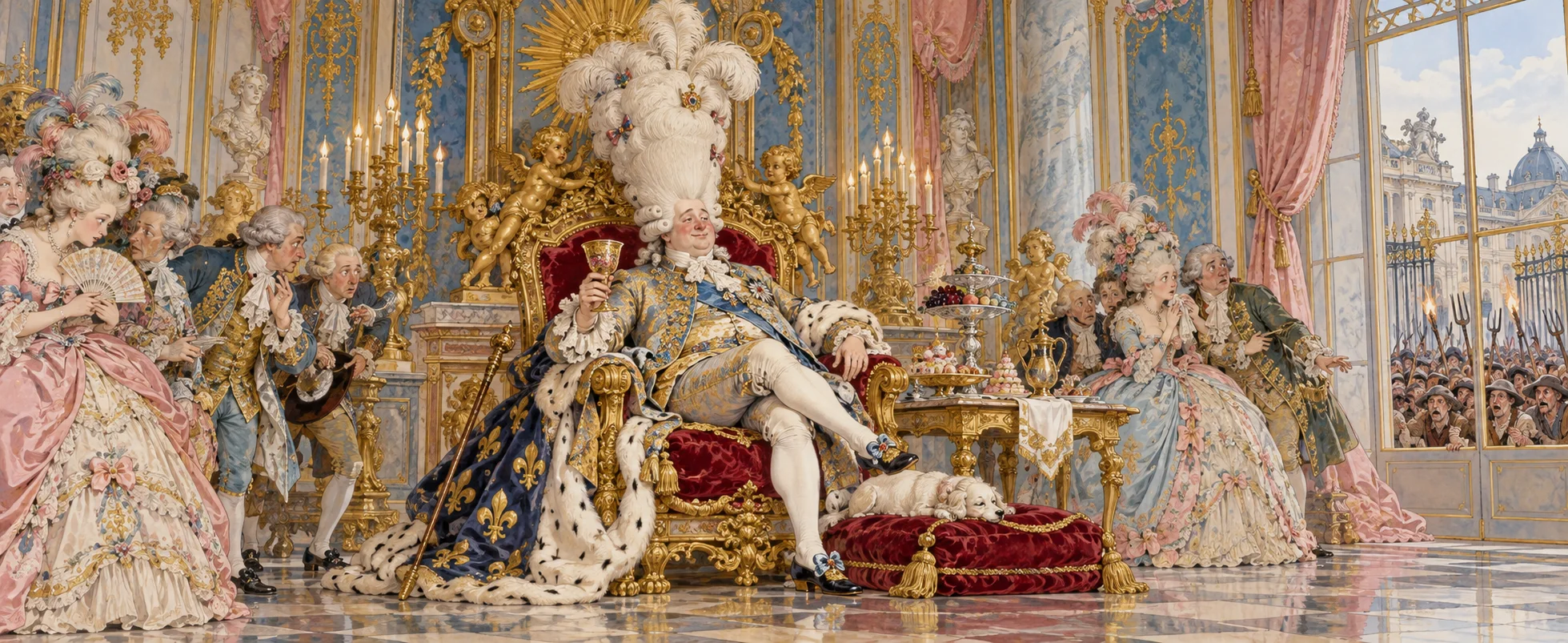
Original artwork, not a still
It's good to be the King.
— History of the World: Part I ‧ 1981
Behind the line
What it means
Our interpretation.
Louis says it less as a boast than a shrug: absolute power as a permanent holiday, from a king too pleased with himself to notice the mob forming outside. The line became the standard catchphrase for enjoying rank and perks, and it gave a 2007 Mel Brooks biography its title. Anyone with the best seat, the last biscuit or the corner office can say it and be understood.
Context reviewed
In context
Spoilers for History of the World: Part IShow the scene
In the French Revolution segment of Mel Brooks's 1981 sketch anthology History of the World, Part I, Brooks plays King Louis XVI, a monarch who uses peasants as clay pigeons, flinging them into the air for a game of skeet, and who answers a warning that the people are revolting with "they stink on ice". "It's good to be the king" is the refrain he repeats through his scenes at court. His adviser, the Count de Monet, then notices that Louis is the double of Jacques, the garçon de pisse who holds buckets for the nobles (also Brooks), and hatches a decoy plan.
Sources (4)
- History of the World, Part I (Wikiquote)King Louis scenes, 'repeated line' entryReference checked
- History of the World, Part I (Wikipedia)Intro and plot, The French RevolutionReference checked
- It's Good to Be King (Wikipedia disambiguation)entry for the catch phraseReference checked
- Mel Brooks (Wikipedia)BibliographyReference checked
Context reviewed