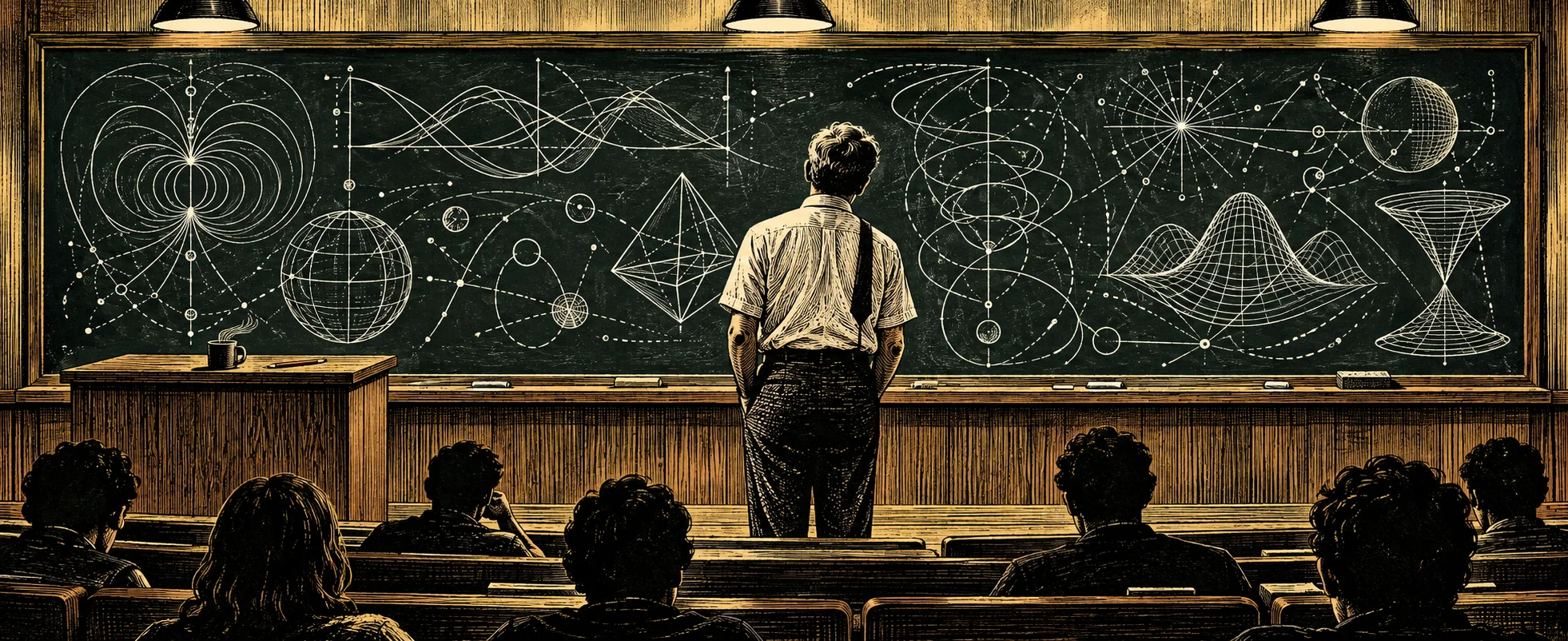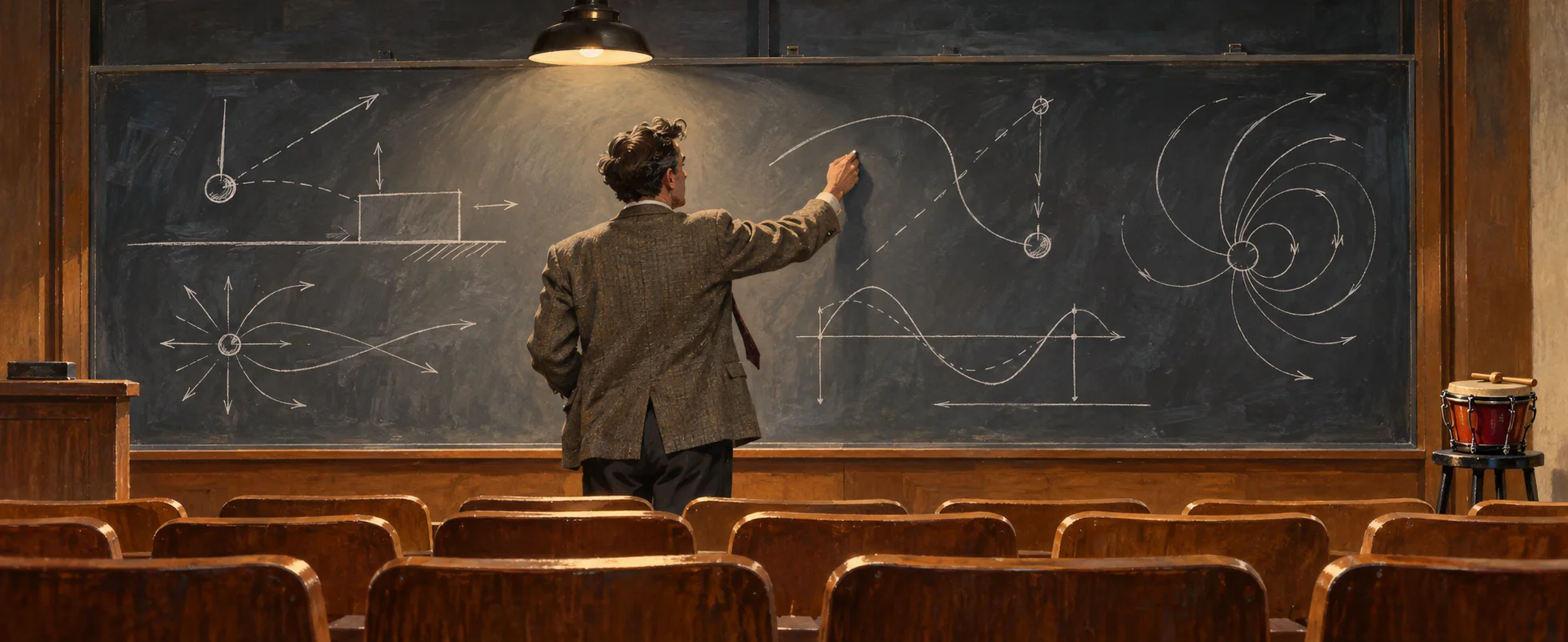
Original artwork, not a still
The truth always turns out to be simpler than you thought.
Behind the line
What it means
Our interpretation.
It is Feynman's rule of thumb for doing science: if your theory keeps growing exceptions and machinery, suspect it. The line works as advice far beyond physics, which is why programmers, designers and writers quote it against over-engineering, usually next to Occam's razor. It sounds like a mild comfort but is really a challenge: the simple answer is out there, and you probably have not found it yet.
Context reviewed
In context
May contain spoilersShow the scene
Richard Feynman says it in 1964, in the seventh of his Messenger Lectures at Cornell University, "Seeking New Laws", later published as The Character of Physical Law. He is describing how physicists hunt for a new law: first you guess, then you test the guess against experiment. Feynman remarks that beginners tend to guess in one of two ways, too simply or too elaborately, and that the elaborate guesses merely look right. His point is that real answers, once found, turn out to be simpler than expected. The BBC recorded the lecture series and published it as a book in 1965.
Sources (2)
- Wikiquote: Richard FeynmanThe Character of Physical Law (1965), chapter 7 "Seeking New Laws", p. 171Reference checked
- Wikipedia: The Character of Physical LawLeadReference checked
Context reviewed